
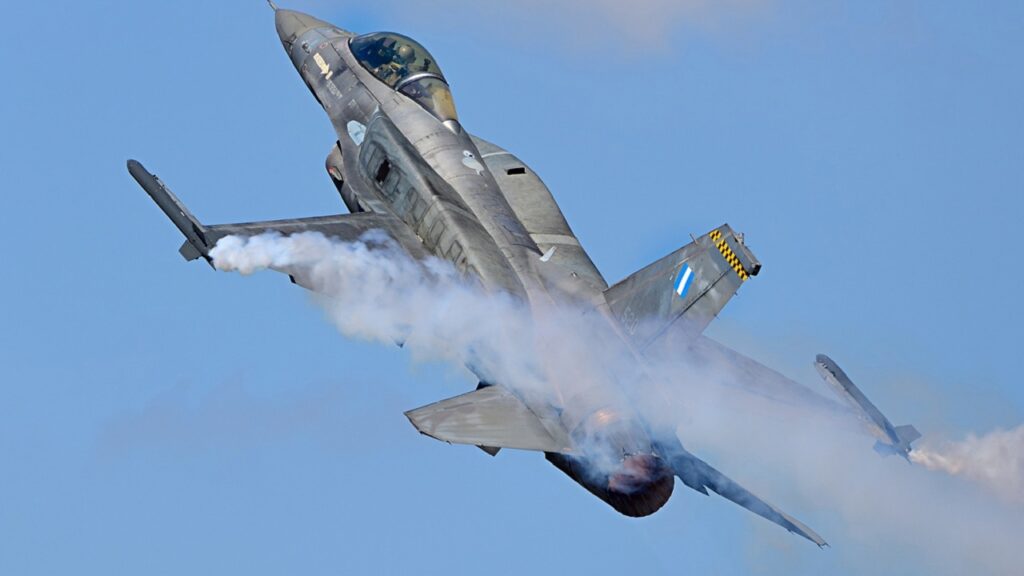
Summary and Key Points: The Hellenic Air Force maintains a massive fleet of 227 fighter aircraft—larger than that of France or the UK—primarily to counter perceived security threats from neighboring Turkey, with whom it has long-standing disputes over Aegean sovereignty and the division of Cyprus.
-Greece is aggressively modernizing its capabilities, upgrading F-16s to “Viper” standards and acquiring 24 Dassault Rafales and 20 F-35A Lightning II stealth fighters.
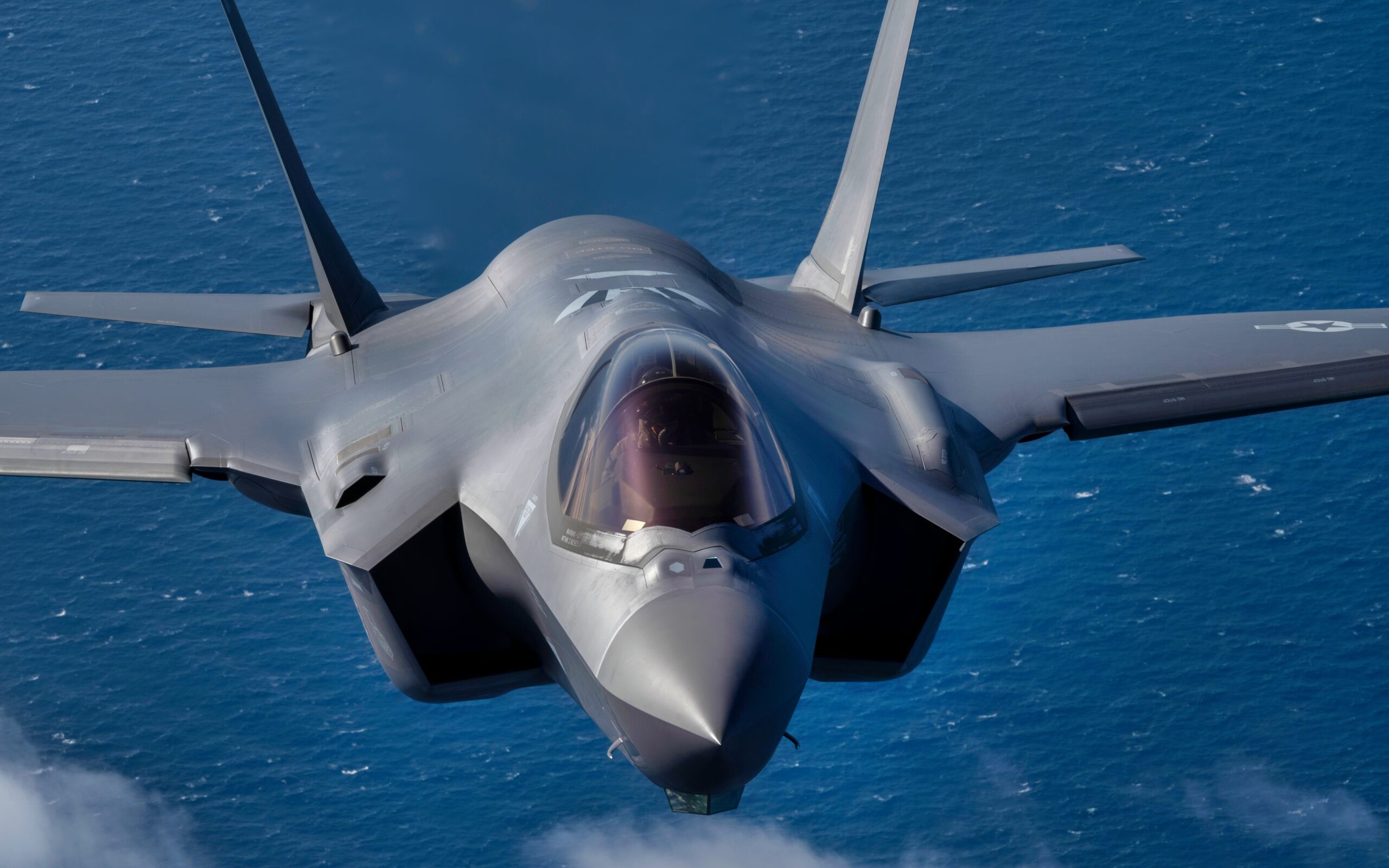
A U.S. Air Force F-35A Lightning II participating in NATO exercise Ramstein Flag 24 flies over the west coast of Greece, Oct. 4, 2024. Over 130 fighter and enabler aircraft from Greece, Canada, France, Hungary, Italy, Poland, Portugal, Romania, Spain, Sweden, United Kingdom and United States are training side by side to improve tactics and foster more robust integration, demonstrating NATO’s resolve, commitment and ability to deter potential adversaries and defend the Alliance. (U.S. Air Force photo by Tech. Sgt. Emili Koonce)
-This strategic pivot aims to give Greece a qualitative edge over Turkey, which was removed from the F-35 program after purchasing the Russian S-400 system, ensuring Greek air superiority in the Eastern Mediterranean by 2030.
-The Hellenic Air Force of Greece has one of NATO’s largest fighter air fleets, with around 227 fighters. This is more than that of France and the UK.
Why Does Greece Have More Fighter Jets Than the UK?
Greece operates an eclectic mix of fighter aircraft, including F-16s with Block 70/72 “Viper” upgrades, Dassault Rafales, Mirage 2000-5s, and F-4E Phantoms. The Hellenic Air Force’s future plans center on acquiring 20 F-35A Lightning II stealth fighters from the United States, with the option to purchase 20 more.
By 2030, the Greeks aim to have approximately 200 combat-ready fighter aircraft divided among three types: F-35A Lightning II, F-16 Block 70/72 “Viper,” and Dassault Rafale F3R.
Lt. Gen. Michael J. Schmidt, F-35 program executive officer, said the F-35 will provide “exceptional capability to the Hellenic Air Force, build interoperability between our allies and strengthen the combat effectiveness for all of NATO.”
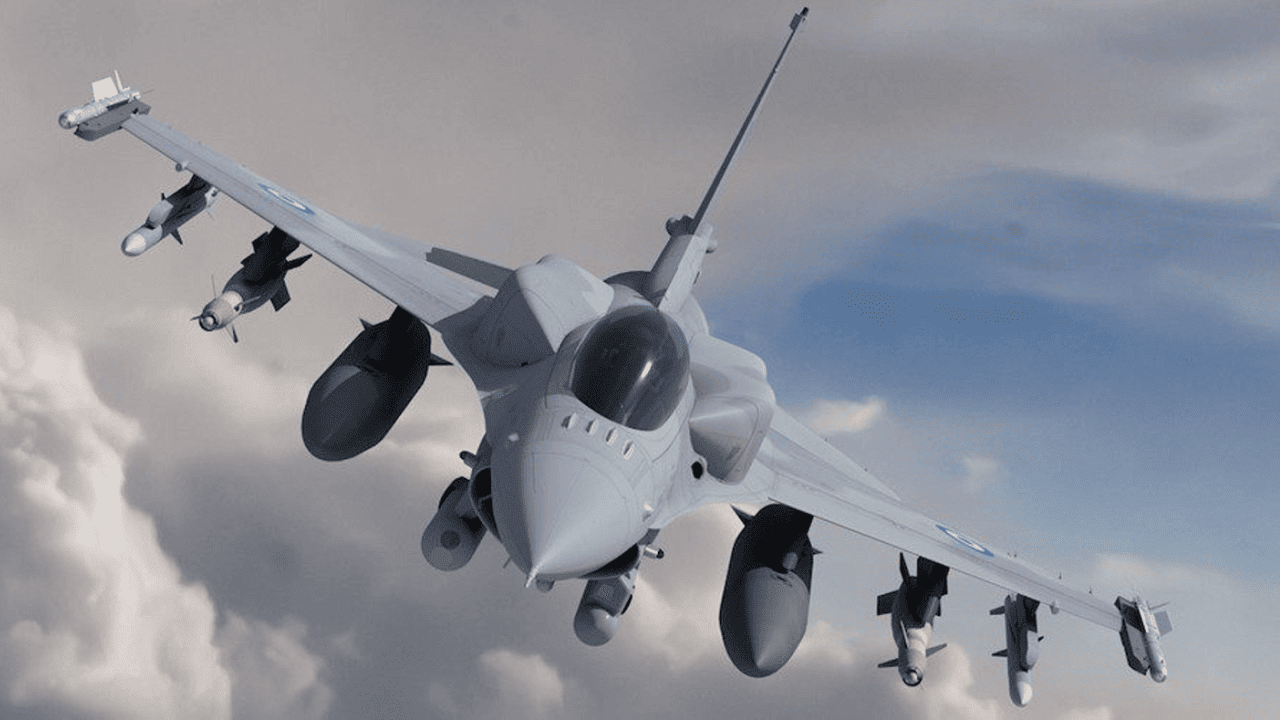
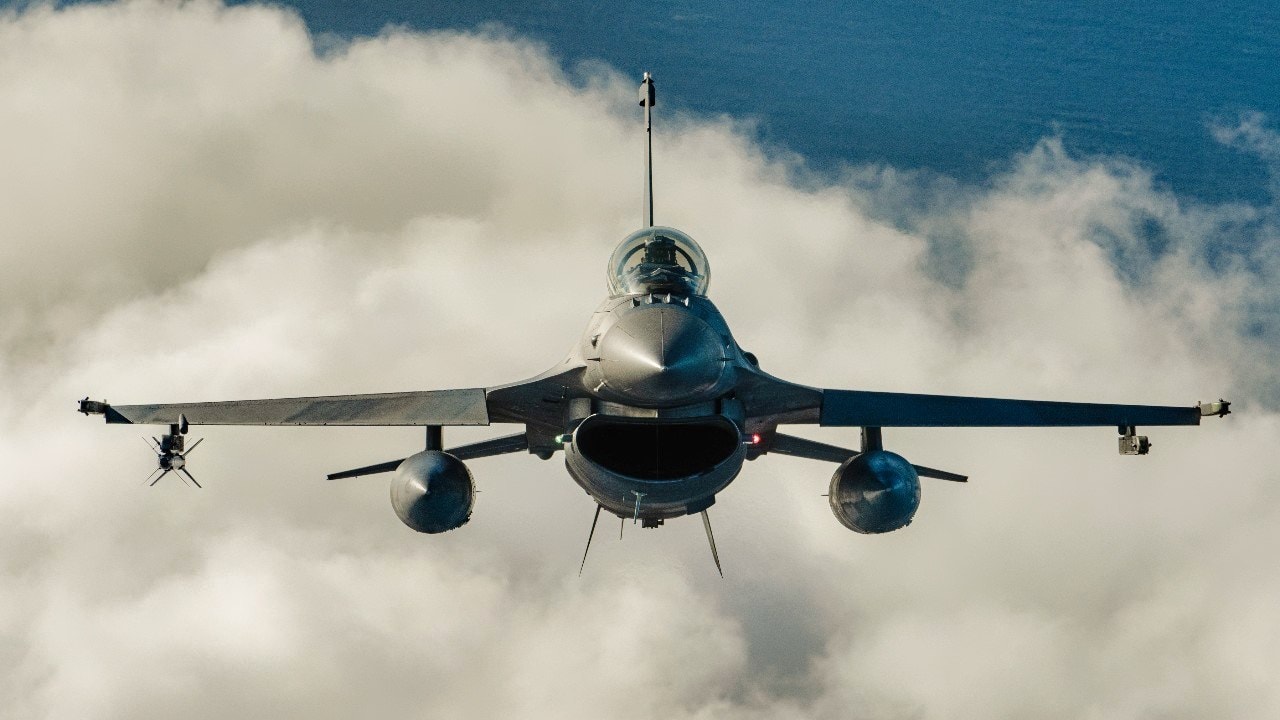
Greece F-16 fighter jet. Image Credit: Creative Commons.
Bridget Lauderdale, Lockheed Martin’s vice president and F-35 general manager, said the company has a long F-16 relationship with Greece and said the F-35 is “the only fighter suitable to strengthen Greece’s sovereignty and operational capability with allies.”
Greece maintains such a large, technologically advanced fighter jet fleet primarily to counter perceived security threats from neighboring Turkey and to defend its extensive Aegean island territory.
Driven by long-standing geopolitical tensions, Greece utilizes its air force as its primary deterrent.
Geopolitical Tensions with “Ally” Turkey:
The primary driver is the ongoing rivalry with Turkey, involving disputes over Aegean Sea sovereignty, airspace, and maritime rights. Turkey currently has an even larger fighter fleet, but with Greece buying the F-35, it will vault Greece ahead of Turkey in a qualitative leap.
The fifth-generation stealth fighter would mark a major shift in the balance of power between the two powers. Turkey was removed from the F-35 Joint Strike Fighter program in 2019 after purchasing and accepting delivery of the Russian S-400 air defense system.
The U.S. argued that the S-400 is incompatible with NATO systems and, crucially, that Russian personnel operating it could learn to detect the F-35’s stealth capabilities.
The two countries share a long and difficult history marred by disputes over territorial sovereignty, particularly in the Aegean Sea and Eastern Mediterranean.
These disputes include disagreements over maritime boundaries, airspace, and territorial disputes.
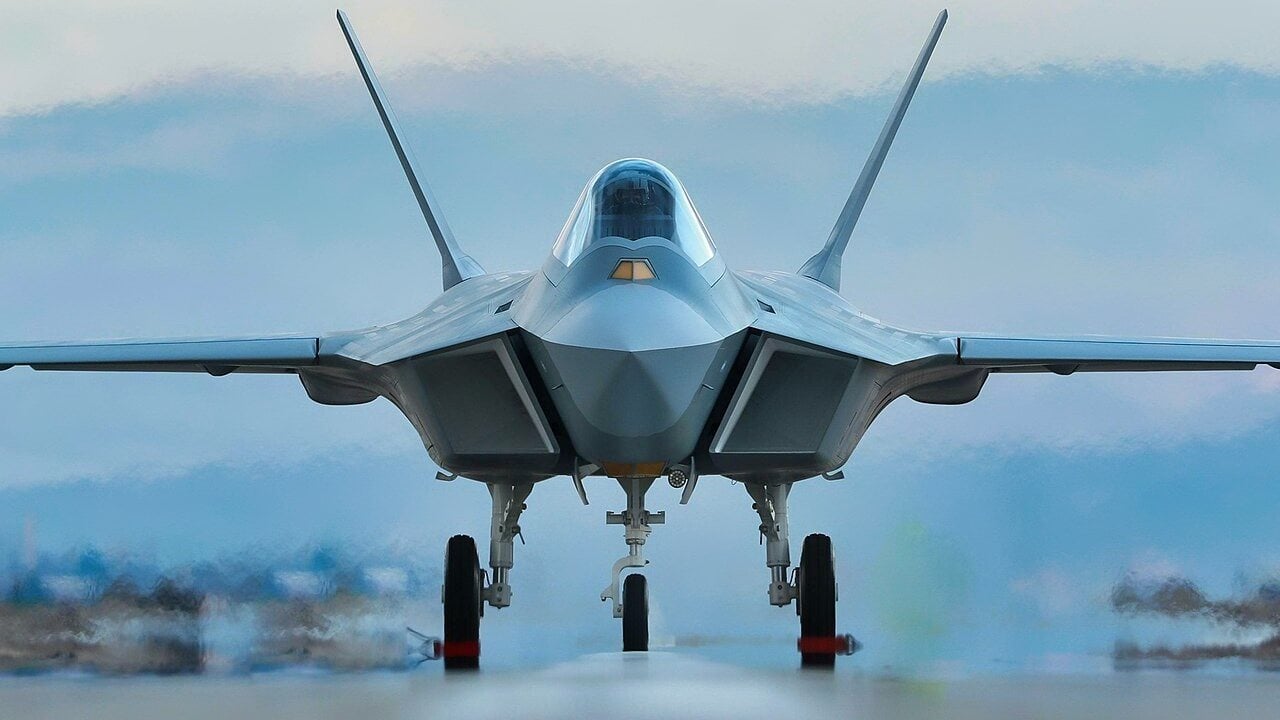
Kaan Stealth Fighter from Turkey. Image Credit: Creative Commons.
Although Greece and Turkey became members of NATO in 1952, conceivably to combat the influence of the Soviet Union, a common threat, their shared membership in the alliance has not resolved these conflicts, which continue to shape their defense priorities today.
The two countries distrust each other’s motives, as evidenced by the Turkish invasion of Cyprus.
Turkish Invasion Of Cyprus in 1974:
Turkey invaded Cyprus in 1974 in response to a Greek-backed coup aiming to unite the island with Greece (Enosis), with Turkey acting as a guarantor state to protect Turkish Cypriots and prevent annexation, resulting in the island’s de facto partition into a Turkish-controlled north and a Greek Cypriot south, a division that persists today.
Following Cyprus’s independence in 1960, tensions simmered between the Greek Cypriot majority and the Turkish Cypriot minority, with differing aspirations for the island’s future.
On July 15, 1974, a coup orchestrated by the Greek military junta overthrew Cyprus’s President Makarios and installed Nikos Sampson, a proponent of Enosis (union with Greece).
Citing the 1960 Treaty of Guarantee and its role as a guarantor power, Turkey launched a military invasion, initially calling it a “peaceful intervention” to restore constitutional order and protect Turkish Cypriots from persecution.
The invasion, in two phases, led to Turkey seizing control of the northern third of the island, creating a UN-patrolled buffer zone.
The invasion resulted in the mass displacement of citizens. Thousands of Greek Cypriots fled south, and Turkish Cypriots moved north, intensifying ethnic separation.
MEDITERRANEAN SEA (Feb. 3, 2022) – United States F/A-18 Super Hornets and Greek F-16 Fighting Falcons conduct air-to-air training over the Ionian Sea as a part of Neptune Strike 2022, Feb. 3. Neptune Strike 2022 highlights NATO’s ability to integrate the high-end maritime capabilities of a carrier strike group to ensure high operational readiness across the Alliance and the defence and protection of all Allies. It is the first time since the Cold War that a full US carrier group comes under NATO command.(Photo by French Master Sergeant Malaury Buis)
In 1983, the Turkish Cypriots declared the self-proclaimed Turkish Republic of Northern Cyprus (TRNC), recognized only by Turkey.
The island remains divided, with the internationally recognized Republic of Cyprus in the south and the TRNC in the north, a situation stemming directly from the 1974 events.
Fighter Aircraft: The Basis Of Each Country’s Defense Doctrine:
Greece relies on its air force as a key deterrent, focusing on maintaining a large number of high-quality combat aircraft. The F-35 Lightning II is a significant upgrade for the Hellenic Air Forces. Turkey, however, is developing its own indigenous fifth-generation fighter, TAI TF Kaan, although only two prototype aircraft currently exist.
Despite this, Turkey has signed its first major export deal with Indonesia, valued at $10 billion, for 48 TAI TF Khan aircraft. Turkey targets initial deliveries by 2028—an aggressively fast schedule compared to Western programs.
Given the proximity of many islands to the Turkish mainland, air power is considered essential for surveillance, interception, and national security. Both air forces employ the F-4 Phantom jet as a reconnaissance and surveillance platform.
Greece is currently investing heavily in 5th-generation capabilities, including the purchase of 20 Lockheed Martin-made F-35s and 24 Dassault-made Rafale jets to maintain a strategic advantage. By 2030, following upgrades planned by the Hellenic Air Force, Greece could have an Air Force second only to Israel in the region.
Greece continues to adhere to NATO spending commitments. As one of the few NATO members consistently spending over 2 percent of its GDP on defense, the nation prioritizes maintaining high military readiness. Greece also maintains one of the largest and most capable tank fleets in Europe, with more than 850 main battle tanks in active service, including advanced models such as the Leopard 2A6 HEL and Leopard 2A4/GR.
The Hellenic Air Force’s fleet, following the receipt of the upgraded F-16 Block 70/72 “Viper” and the F-35A Lightning II aircraft, will ensure superiority in the Eastern Mediterranean against its “ally” in Turkey.
About the Author: Steve Balestrieri
Steve Balestrieri is a National Security Columnist. He served as a US Army Special Forces NCO and Warrant Officer. In addition to writing on defense, he covers the NFL for PatsFans.com and is a member of the Pro Football Writers of America (PFWA). His work was regularly featured in many military publications.