
In recent weeks, the military posture of the United States and Israel across the Middle East has shifted in ways that many defense analysts interpret as exceeding routine deterrence signaling and moving into the realm of concrete operational preparation. The scale, composition, and geographic dispersion of deployed assets increasingly point to contingency planning for a sustained military campaign against Iran — one that could last not days, but weeks or even months.
According to assessments by Western defense observers, the emerging configuration suggests a phased operational concept. An initial wave would likely focus on degrading Iran’s integrated air defense network, suppressing radar and command-and-control nodes, and striking key airbases. This would be followed by successive rounds of precision-guided strikes using additional air, naval, and stand-off assets against strategic military infrastructure, missile production facilities, and selected elements of Iran’s nuclear and drone programs.
Jon, a senior editor of the UK Defence Journal, has noted that the overall force posture aligns with a campaign model rather than a single punitive strike. In such a scenario, the opening phase would be designed to establish air superiority and freedom of maneuver, enabling follow-on operations with reduced risk to U.S. and Israeli aircraft. This concept mirrors previous Western air campaigns in Iraq, Serbia, and Libya, albeit against a far more capable and regionally embedded adversary.
Source: alarabiya
A key indicator reinforcing this assessment is the nature of recent U.S. deployments. The arrival of the USS Abraham Lincoln aircraft carrier strike group provides a mobile air wing capable of sustained high-tempo operations. Carrier-based fighters, supported by airborne early warning aircraft and electronic warfare platforms, significantly expand strike capacity and command-and-control resilience.
Complementing naval aviation, the forward deployment of F-15E Strike Eagles adds long-range, heavy payload strike capability well suited for hardened and deeply buried targets. The presence of MQ-9 Reaper drones enhances persistent intelligence, surveillance, and reconnaissance coverage, while P-8A Poseidon aircraft extend maritime and overland surveillance, including tracking missile launches and naval movements.
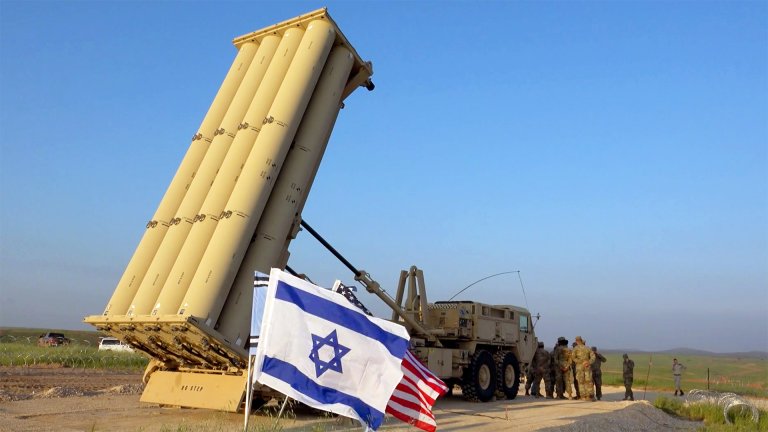
Equally notable is the expansion of missile defense coverage in the region. Additional Patriot batteries and Terminal High Altitude Area Defense (THAAD) systems are being positioned to protect U.S. bases, partner infrastructure, and population centers from ballistic and cruise missile threats. This layered defensive architecture is not merely symbolic. It reflects an expectation that any major strike on Iran would trigger retaliatory missile and drone attacks across multiple theaters.
Source: twz
From Washington’s perspective, this posture serves two overlapping purposes: deterrence and readiness. U.S. Secretary of State Marco Rubio recently underscored the vulnerability of American forces, noting that between 30,000 and 40,000 U.S. personnel are stationed in nine locations across the Middle East, all within range of Iranian missiles and drones. His remarks framed the buildup as necessary to ensure that the United States can defend itself if Iran chooses to attack U.S. forces or facilities.
Yet Rubio also acknowledged a deeper strategic uncertainty: the political endgame. He stated that no one can provide a simple answer to who would govern Iran if the Supreme Leader were removed or if the regime were to collapse. This admission highlights a central dilemma facing Western planners. Military power can degrade capabilities and impose costs, but it cannot easily engineer a stable political outcome inside a complex, ideologically driven state of more than 85 million people.
On the Iranian side, official messaging has grown increasingly uncompromising. Tehran has warned that any attack, regardless of its scale or declared intent, would be treated as an act of all-out war. Iranian officials insist that their response would be comprehensive, not limited to a single front or domain. This posture is consistent with Iran’s long-standing doctrine of asymmetric and multi-layered retaliation, leveraging both conventional capabilities and a network of regional partners.

Source: Engelsberg Ideas
Iran’s arsenal includes thousands of ballistic and cruise missiles, an expanding inventory of long-range drones, and naval assets designed to threaten shipping in the Persian Gulf and the Strait of Hormuz. Beyond its own forces, Tehran maintains influence over armed groups in Lebanon, Iraq, Syria, and Yemen, providing multiple vectors through which pressure could be applied simultaneously.
Regional officials cited in Western analyses indicate that high-precision U.S. strikes are actively being considered as part of contingency planning. U.S. Central Command has also announced upcoming military readiness exercises, reinforcing the impression that forces are being positioned for rapid escalation if diplomatic channels fail.
Timing assessments circulating among defense analysts further heighten the sense of imminence. One frequently cited indicator is the movement of strategic bombers. Analysts note that if bomber deployments are observed within a 48-hour window, it would suggest that a strike package is nearing finalization, potentially pointing to operations over a weekend timeframe. According to these assessments, most other asset movements required for an initial campaign phase are already in place.
Source: futureuae
While Washington and Jerusalem have not publicly confirmed any decision to launch military action, the convergence of deployments, exercises, and rhetoric has narrowed the gap between signaling and execution. This ambiguity is deliberate. It preserves strategic surprise while applying psychological pressure on Tehran.
European political messaging has also shifted in tone. German Chancellor Friedrich Merz recently stated that the Iranian regime’s “days are numbered,” arguing that it lacks the legitimacy to govern. He added that while the timeframe is uncertain, the direction of history is not in Tehran’s favor. Such statements represent one of the strongest public condemnations of Iran’s leadership by a major European power in recent years.
Merz also expressed frustration that the European Union has not yet reached consensus on designating the Islamic Revolutionary Guard Corps (IRGC) as a terrorist organization. Germany supports such a designation and views it as a means of applying maximum possible pressure on the Iranian regime. The lack of unanimity within the EU, however, reflects lingering divisions over how far to go in aligning with U.S. and Israeli hardline approaches.
Taken together, these developments suggest that the confrontation over Iran is entering a more dangerous phase. The diplomatic track has not collapsed, but it is increasingly overshadowed by military planning. Unlike previous cycles of tension, the current environment features a more robust and visible alignment between U.S. and Israeli force postures, combined with a growing European willingness to publicly question the legitimacy of Iran’s leadership.
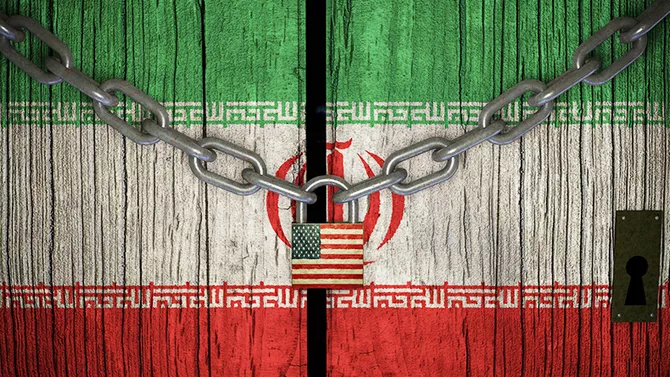
Source: caspianpost
At the same time, the risks of escalation are exceptionally high. A large-scale campaign against Iran would almost certainly provoke regional conflict, disrupt global energy markets, and test the resilience of U.S. alliances. Even if initial strikes were militarily successful, they would not resolve the fundamental political question of Iran’s future.
For policymakers, this creates a paradox. The accumulation of military power may be intended to strengthen diplomacy by demonstrating resolve. Yet the same buildup increases the probability of miscalculation, accidents, or preemptive action by one side or the other.
The current moment is therefore best understood as a strategic inflection point. The military tools for a prolonged confrontation are being assembled. Whether they are ultimately used will depend on decisions taken in Washington, Jerusalem, and Tehran in the coming weeks. What is increasingly clear, however, is that the era of treating the Iran issue as a purely diplomatic challenge is giving way to a phase in which hard power considerations dominate planning.
In this sense, the posture of U.S. and Israeli forces is not merely about signaling strength. It reflects a sober assessment that the long-running standoff with Iran may be approaching a decisive, and potentially transformative, stage.
By Tural Heybatov