
The Australian government’s Net Zero Plan sets an ambitious pathway to cut emissions. While it centres on renewables, land sinks, and hard-to-abate sectors, it points to biobased materials like timber in reducing emissions from construction and fuels but to meet urgent goals this decade, we must embrace faster biobased partners beyond traditional timber.
Spinifex is an opinion column. If you would like to contribute, contact us to ask for a detailed brief.
Current policy and funding default to plantation timber on 25–30 year cycles. This is vital but too slow for the decisive decade to 2035. The “time value of carbon” means a tonne sequestered or avoided now has far more impact than one in 2050.
Fast-growing biobased crops: what are they and why do they matter?
Fast-growing crops like engineered bamboo, industrial hemp, flax and miscanthus can be harvested in three to seven years. They deliver quick carbon capture and circular product streams.
Bamboo species (like dendrocalamus asper) sequester 30-50 tonnes of carbon dioxide a hectare, a year in suitable climates. Hemp captures 10-22 tonnes of carbon dioxide a hectare, a year in early seasons for construction and food. Residues produce biochar for soil storage and bio-oil for drop-in fuels.
One integrated system advances three net zero goals: construction decarbonisation, land-sector sinks, and renewable fuels.
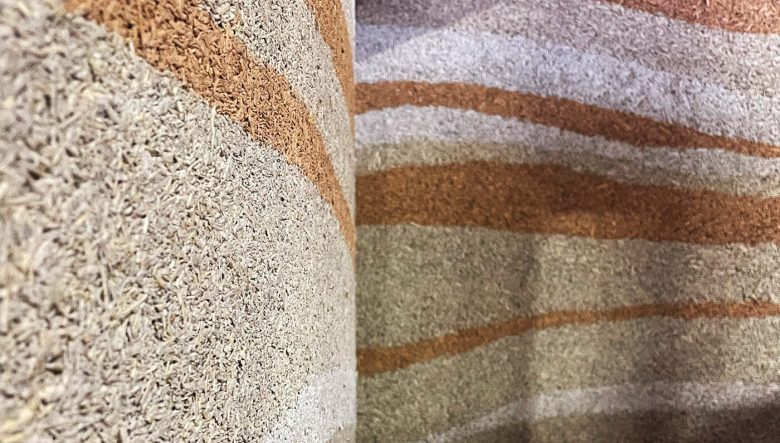 Hempcrete is set to be “used extensively in the University’s Forestry and Timberyards redevelopment”. Photo: Woods Bagot
Biobased materials in action: integrated systems and demonstrated success
Biobased materials are increasingly being used in Australia for residential homes, eco-villages, and commercial developments. More than a hundred hempcrete constructions have been completed, such as the University of Tasmania’s Forestry Building. The First Building at the Bradfield City development also highlights engineered bamboo battens as an important feature in sustainable design, demonstrating the practicality of these materials.
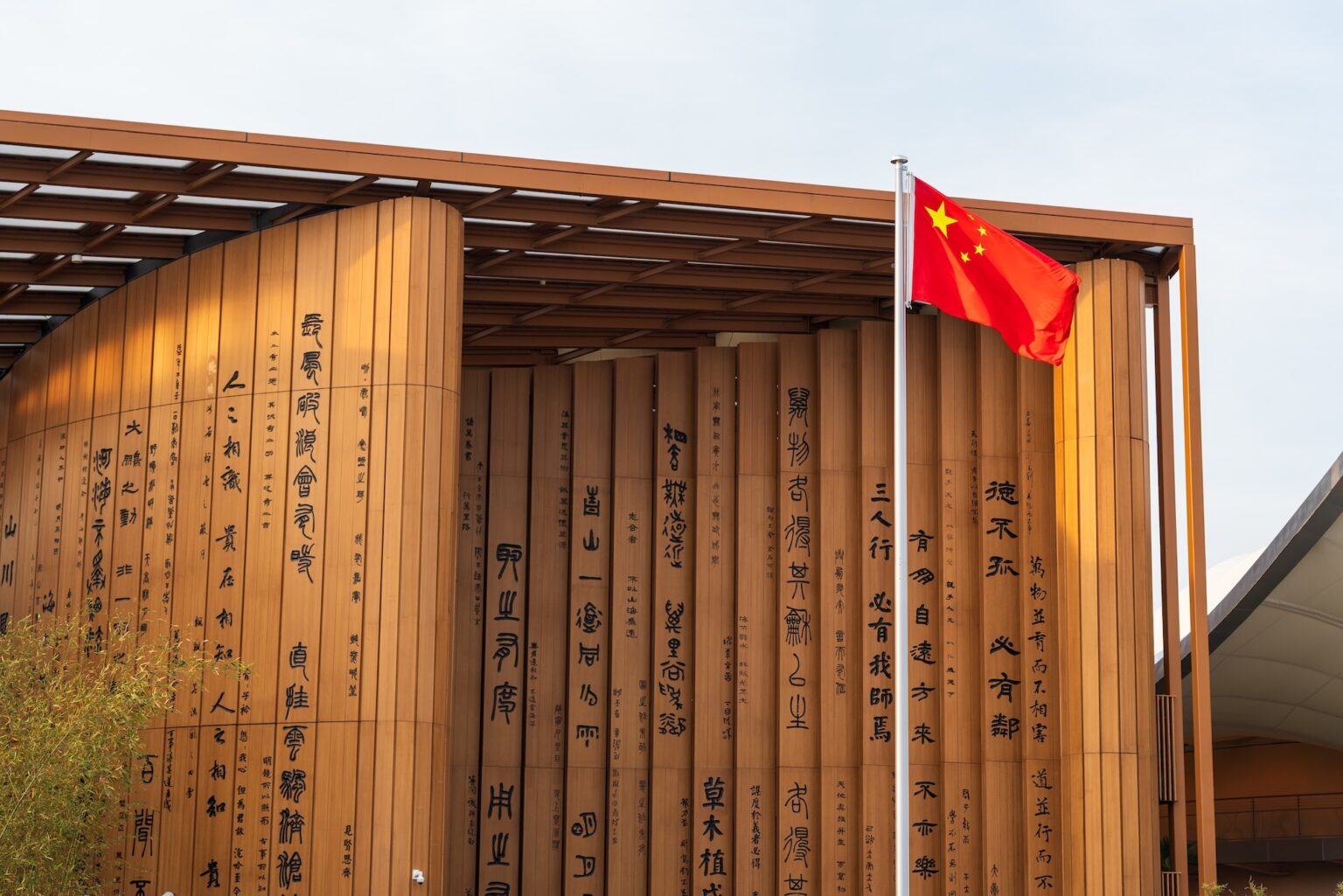
Globally, engineered bamboo has scaled in projects like the Chinese Pavilion at Expo 2025, Osaka.
Project BEAM in the Philippines also demonstrates bamboo’s viability in commercial developments.
The absurdity of timber-only modelling
These opportunities remain invisible in modelling because abatement models rely on radiata pine, blue gum, and native regrowth data. No datasets exist for engineered bamboo or hemp under Australian conditions. This creates a loop: limited data leads to low modelled impact, which leads to a low priority and persistent gap.
As Climateworks Centre notes, “There is no path to net zero without nature,” but timber-only solutions overlook faster options.
A 2025 report by academic group Net Zero Australia calculated 200,000 hectares of new forest would be needed yearly to reach net zero by 2050. Yet it makes no mention of fast-growing biobased alternatives that sequester carbon faster while supporting jobs and land use. Nor does it address the time value of carbon. In a nation racing to build 1.2 million homes over five years, it’s absurd to model net zero on timber-centric solutions.
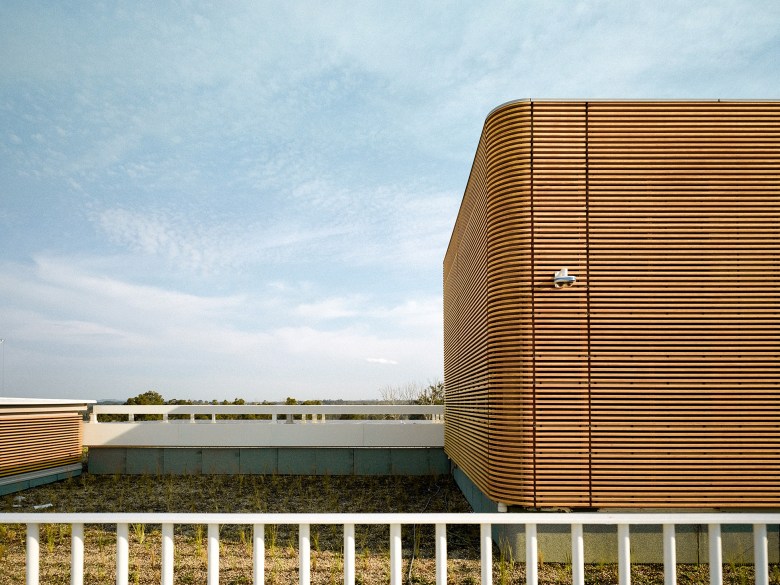 The First Building at Bradfield City has used bamboo battens. Photo: House of Bamboo/Vinchy Wu
Policy gaps and opportunities: moving beyond timber
Industrial hemp has received some research funding and bamboo is still absent from national strategies and funding programs, even though it has proven its performance overseas.
The Great Koala National Park in NSW, announced in September 2025, intends to protect 476,000 hectares of timber. However, it also halts timber harvesting, which raises concerns for 1,700 workers still recovering from the 2020 bushfires. Independent MP Michael Regan told ABC Sydney that national parks can outperform logging through ecotourism and environmental credits. Fast-growing crops like bamboo also offer new jobs in processing
Under the National Housing Accord NSW must deliver 377,000 homes a year until 2029 (which requires around 160,000 meter square of structural hardwood annually). But with 40 per cent of the native hardwood industry gone and blackbutt prices up 46 per cent since 2020, the numbers simply don’t add up. A 2024 review by the NSW Independent Pricing and Regulatory Tribunal review showed native logging lost $29 million in 2023–24 and recommends a feasibility review in 2028 if economics don’t improve.
Meanwhile, laminated veneer lumber (LVL) imports surged 63 per cent to 205,343 cubic metre in the year ending October 2025. China supplied 69 per cent of this, at 68 per cent below the average price. This highlights Australia’s growing reliance on imports amid domestic shortages.
The table below shows the opportunity. One hectare of dendrocalamus asper bamboo can yield enough material for over 100 homes within seven years and supports annual harvests for decades, far outpacing traditional timber.
Right now, the bamboo industry has no dedicated support to make this possible.
Australia should adopt fast-growing biobased options, regenerate marginal lands, and support communities in transition.
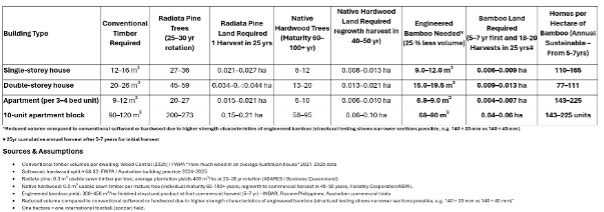 Table 1: timber vs engineered bamboo: land required and harvest frequency over 25 years
Social and environmental co-benefits: more than just carbon
Fast-growing biobased systems deliver benefits far beyond carbon capture. Well-managed bamboo plantations can provide a habitat for native wildlife and act as biodiversity corridors when integrated with conservation plantings and natural buffers. Perennial grasses and bamboo restore soil structure, reduce erosion, and rehabilitate degraded farmland through above-ground harvesting that leaves roots intact. Partnerships with First Nations groups can ensure culturally appropriate land management and economic opportunities, while diversifying rural economies and offering resilient income streams for regions in forestry transition.
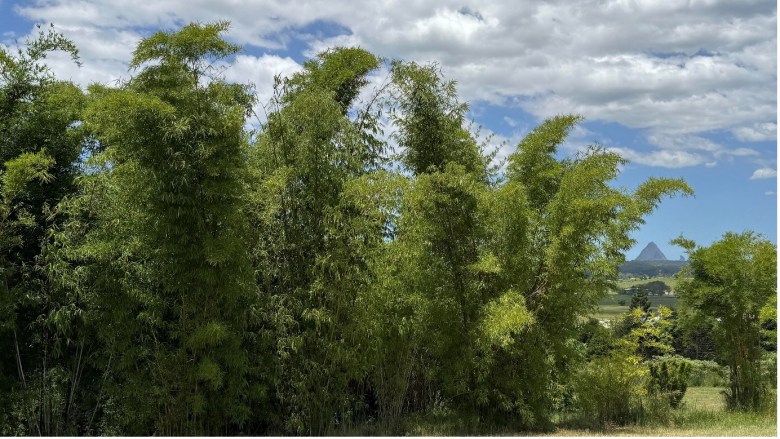 Fast-growing bamboo at Woodford, Queensland – Used to create their own structures onsite.
Recommendations and next steps: turning vision into action
Governments and industry should:
- Recognise the time value of carbon in funding decisions under the Net Zero plan, Powering Australia plan, and National Reconstruction Fund
- Create a “Rapid Biobased Materials” eligibility category in the Australian Sustainable Finance Taxonomy
- Open a $300-500 million demonstration window in the National Reconstruction Fund for integrated fast-biobased projects
- Broaden the Clean Energy Finance Corporation’s support to include biobased ventures
- Establish a taskforce to publish a National Biobased Materials Roadmap by mid-2026
Leading the way with fast-growing partners
Australia has the land, climate and expertise to lead in rapid, circular biobased systems. Timber opened the door. Welcoming fast-growing partners like bamboo, hemp, and perennial grasses, while working closely with Indigenous communities, delivers the most effective path to net zero, today.
Related