
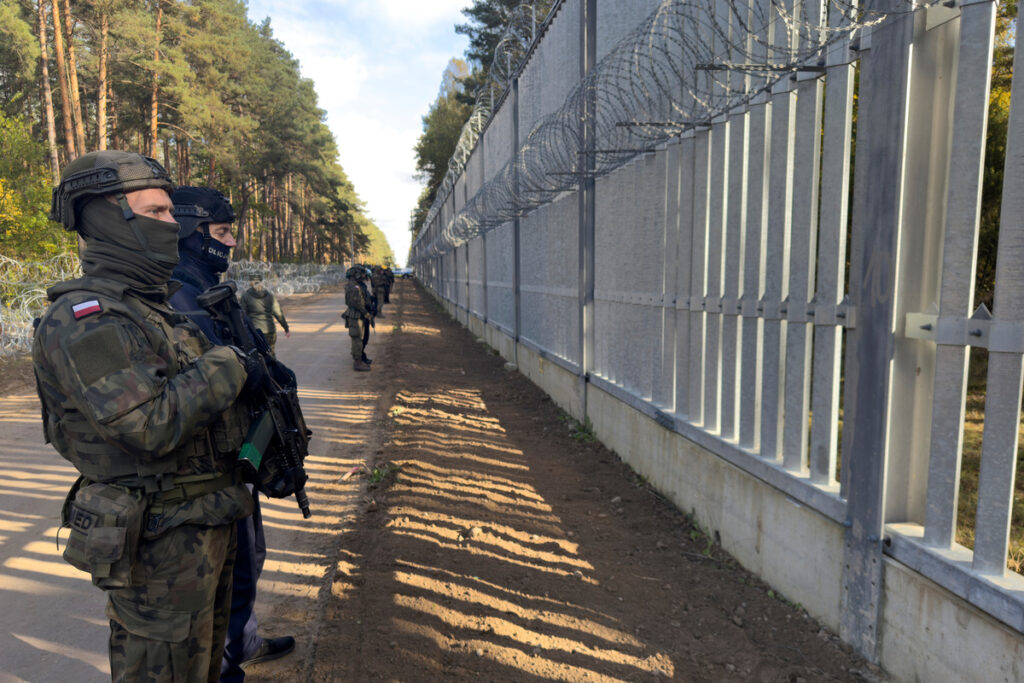
“Balloon-like objects” crossed over into Poland from Belarus overnight, Warsaw’s military said on Thursday, in what it described as a “hybrid” action against one of the countries forming NATO’s eastern flank.
Why It Matters
Polish authorities say several waves of balloons carrying illegal cigarettes have traveled from Belarus into Polish airspace in little over a month.
Balloons ferrying contraband can be considered part of hybrid warfare tactics, a term referring to a range of activities stopping short of open fighting, like cyberattacks, information campaigns or the targeting of vulnerable infrastructure.
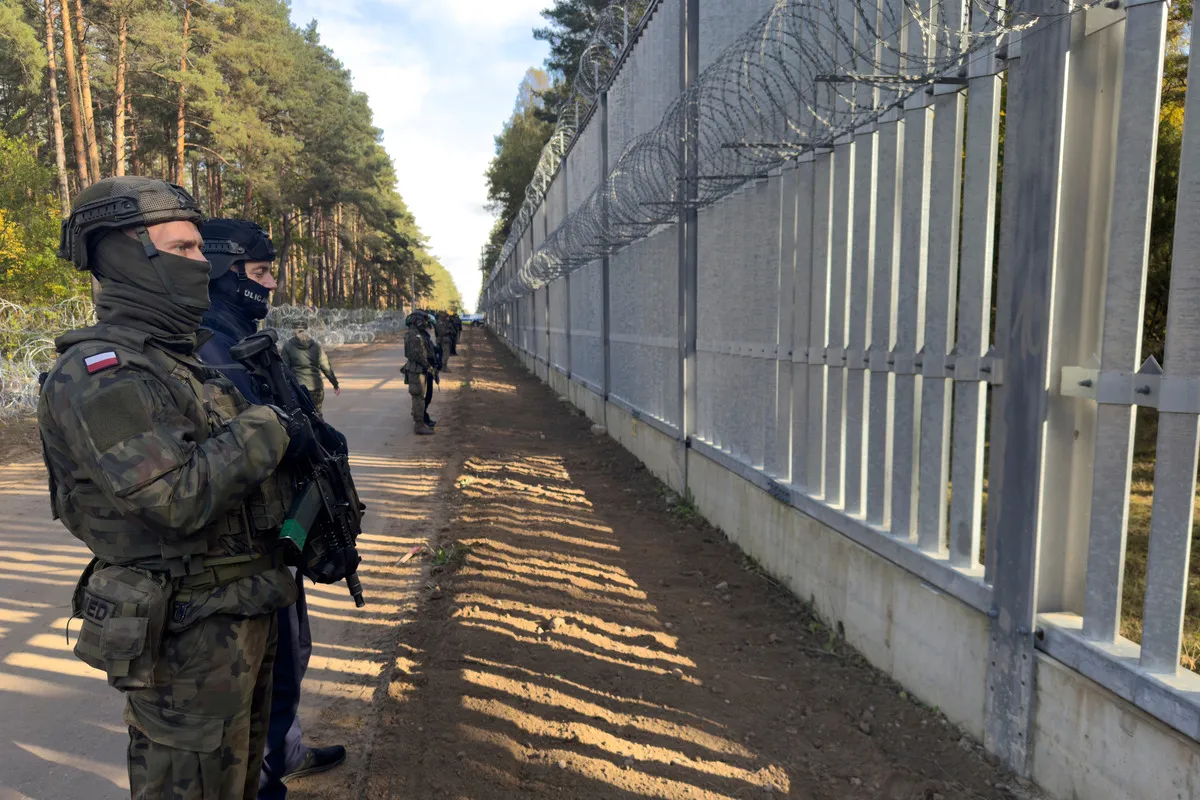
NATO countries, particularly those close to Russian territory on the alliance’s eastern edge, have increasingly warned Russia is highly skilled in hybrid warfare. Belarus is one of Moscow’s very closest allies, and Poland—along with the Baltic states of Estonia, Latvia and Lithuania—are building up their land-based defenses close to Belarusian and Russian soil.
What To Know
Polish military radars “continuously” tracked the objects, Poland’s Operational Command said in a statement posted online on Thursday.
Authorities put in place “temporary restrictions” on civilian activity as a precaution for a chunk of airspace over its Podlaskie region, northeast of Warsaw and pressed up against the Belarusian border.
“It should be emphasized that this type of incident fits into the catalog of hybrid actions that Poland is dealing with on the eastern flank,” Warsaw’s military said.
Newsweek has reached out to Minsk’s Foreign Ministry for comment via email.
Poland summoned the Belarusian charge d’affaires earlier this month over a previous airspace breach by objects thought to be smuggling balloons, Polish media reported.
National police said on January 17 the country had seen an uptick in smuggling balloons filled with illegal cigarettes near the Belarusian border.
“We are fully aware that the current situation is an element of broader hybrid actions,” police said at the time. “Their goal is not only to test our systems, but above all to provoke social unrest.”
Polish police said on December 26 that the country’s military had informed its officers that “several dozen flying objects, most likely so-called smuggling balloons,” had crossed into Poland from Belarus on Christmas Eve.
Police searching Poland’s border areas located seven balloons. RMF 24 radio reported 59 balloons had violated Polish airspace.
Balloons carrying cigarettes from Belarus forced Lithuanian officials to shutter the country’s main airport in the capital, Vilnius, for several hours in October 2025.
NATO announced in September it would increase its air presence along NATO’s eastern edge, two days after roughly 20 Russian drones crossed over into Poland on September 10. Moscow said at the time it had not deliberately targeted the country, but Polish Prime Minister Donald Tusk said the incident marked “the closest we have been to open conflict since World War II.”
What People Are Saying
“The situation is being monitored on an ongoing basis, and the forces and resources of the Armed Forces of the Republic of Poland remain ready to carry out tasks related to the protection of Polish airspace,” the Polish military said on Thursday.
In a polarized era, the center is dismissed as bland. At Newsweek, ours is different: The Courageous Center—it’s not “both sides,” it’s sharp, challenging and alive with ideas. We follow facts, not factions. If that sounds like the kind of journalism you want to see thrive, we need you.
When you become a Newsweek Member, you support a mission to keep the center strong and vibrant. Members enjoy: Ad-free browsing, exclusive content and editor conversations. Help keep the center courageous. Join today.

