
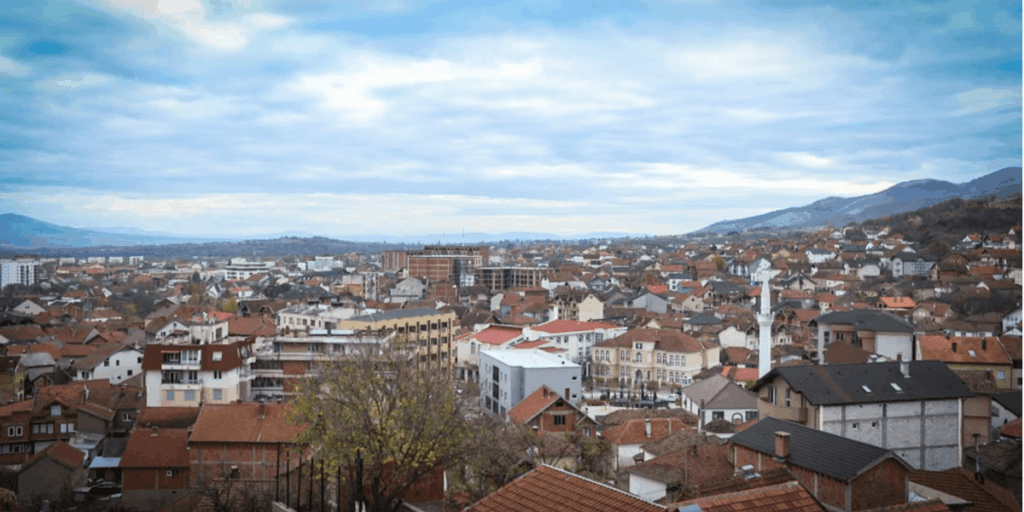
The millions allocated for years by the Kosovo Government for the Presevo Valley – intended as support for the national survival of Albanians in southern Serbia – have opened an internal political front.
Albanian parties there accuse each other of misuse of funds, selective favoritism, and lack of transparency.
At the center of the debate is the role of the Albanian National Council (ANC) – the institution through which funds are managed, as well as its relations with local political parties.
This council and Government of Kosovo signed the Memorandum of Cooperation in 2022, with the aim of “protecting and promoting the rights of Albanians, as well as preserving and cultivating the Albanian language, art, culture and identity in the Presheva Valley”.
In the first two years of the memorandum’s implementation, the fund allocated by the Kosovo Government was 2 million euros each year. In 2024, this amount increased to 3 million euros, and in 2025 to 4 million euros – although the implementation of the latter funds has not yet begun.
Where does this money go?
The Mayor of Bujanovac, Arbër Pajaziti, from the Front for Change coalition, says that the funds allocated by the Kosovo Government have not produced visible results on the ground.
“You can’t see a concrete sign that there is any left of all these funds that the Kosovo Government is giving,” he tells Radio Free Europe.
He emphasizes that his criticisms are not intended to question the Kosovo Government’s support for the Presheva Valley, which he considers necessary, but rather the way in which, according to him, it is managed.
According to Pajaziti, the 2022 fund in particular – executed a year later – was misused by the NKSH and individuals associated with the Party for Democratic Action (PVD).
He claims that part of the funds were distributed to non-governmental organizations, behind which, according to him, stand people close to this party that leads the KKSH.
“A good portion of the funds have ended up in the pockets of party officials,” says Pajaziti, adding that, for this reason, many funds allocated in 2023 have not been implemented for civil society projects, but only for supplying students with textbooks and for student scholarships.
Without providing any more concrete evidence, Pajaziti has made similar claims in comments to several media outlets in Serbia.
Response of the ANC and other municipalities
The President of the Albanian National Council, Enkel Rexhepi, rejects these claims.
He says that the funds were used for concrete projects and that the beneficiaries were not selected on a party basis.
“The effects are not measured by political statements, but on the ground – in the media, in institutions, in cultural projects and in the real lives of citizens,” he tells Radio Free Europe.
According to Rexhepi, the two million euro fund for 2022 was executed 100 percent during the following year, while in 2023 only 14.5 percent was realized, due to delays from elections within the National Assembly.
For 2024, 60.96 percent of the three million euros have been executed, while the distribution of the 4 million euros in 2025 is expected to reach 78.39 percent, through public competitions announced by the National Council of the Republic of Albania.
Rexhepi cites as examples the functioning of local television stations, the support of sports clubs, and the free distribution of textbooks to over 30 primary school students in the Valley.
According to him, hundreds of students have also benefited from scholarships for studies.
“We must understand that we live in a small community and, like anywhere else, organizations and individuals are often interconnected through professional, social, or even political commitments. This does not imply abuse, but is a reality of small societies,” says Rexhepi.
He adds that professionals close to the Front for Change coalition, where Pajaziti comes from, have also been engaged in the projects.
This coalition – which includes the Alternative for Change, the Movement for Reform and the Movement for Bujanovac – currently has no representation in the National Assembly.
The Party for Democratic Action, the Movement for Democratic Progress, the Democratic Party of Bujanovac, and the Albanian Democratic Party are represented there.
The Mayor of Presheva Municipality, Ardita Sinani, from the Party for Democratic Action, estimates that the financial support of the Government of Kosovo has had a direct impact on improving the lives of citizens.
“The benefits are tangible and multidimensional, both in Presevo and throughout the Presevo Valley,” she tells Radio Free Europe.
According to Sinan, the aid has included several key sectors, especially education, where pupils have benefited from free books, while students have benefited from scholarships.
She adds that sports clubs for youth and children have also been supported, a special program has been implemented to support children with disabilities, and the renovation of a facility that is being transformed into a Music School and Museum in the municipality of Presheva has been financed.
As part of this support, Sinani also mentions the financing of lobbying activities for the internationalization of the issue of the violation of the rights of Albanians in the Presheva Valley.
As a result, a group of American lawmakers asked the US State Department last week to investigate allegations of discrimination against Albanians in Serbia.
Afrim Ferati, one of the three Albanian assembly members in the Municipal Assembly of Medvedja and head of the KKSH branch in this municipality, considers the financial support from the Government of Kosovo as necessary and positive for the Albanian community.
It avoids political clashes between local parties and emphasizes the community’s gratitude for the help coming from Kosovo.
Ferati admits that the funds could be managed better and with fewer procedures, but he does not believe in massive misuse.
“I don’t believe what is being said about massive misuse. Maybe we can talk about the quality of the management of the funds, but we expect there to be an improvement in the process of their allocation,” he tells Radio Free Europe.
The position of the Government of Kosovo
The current Government of Kosovo also rejects claims of a lack of effects on the ground.
“If someone claims that ‘there are no visible effects’, this is at least incorrect and does not coincide with or reflect the reality and the impact that the support provided by our institutions has had on the lives of Albanians in the Valley,” Klisman Kadiu, media advisor to the acting Deputy Prime Minister, Besnik Bislimi, tells Radio Free Europe.
According to him, the process includes control, reporting and monitoring mechanisms at every stage of implementation.
“…and the funds have been used exclusively for financing projects, in accordance with the Memorandum of Cooperation and the relevant annexes,” he adds.
In this video from the archive you can learn more about why Albanians decide to abandon the Valley.
Why are Albanians leaving the Presevo Valley?
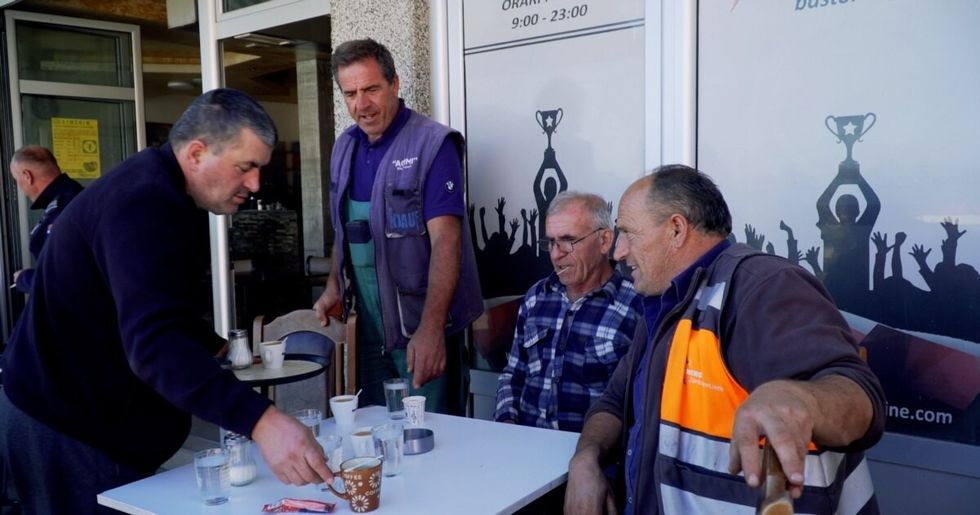 Why are Albanians leaving the Presevo Valley? www.europeaneurope.org
Aid or political instrument?
However, the mayor of Bujanovac expresses suspicion that Pristina’s cooperation has been focused mainly with the PVD and not with local elected institutions.
He recalls that two officials from the PVD – Ardita Sinani, currently mayor of the Municipality of Presheva, and Ragmi Mustafi, head of the PVD branch in Bujanovac – were advisors in the Kosovo government cabinet, led by Albin Kurti.
“The Kosovo government has helped and is helping only the Party for Democratic Action,” which, as he says, “it wants to strengthen through the fund.”
Kosovo Government officials declined to comment on this claim.
Sinani, meanwhile, sees the accusations in the context of local political developments, citing the results of the 2024 municipal elections and the creation of a municipal majority in Bujanovac with the votes of Serb parties.
In these circumstances, she says, political rhetoric is often conditioned by the need to preserve the majority – which is also reflected in the public discourse towards Kosovo.
According to her, the politicization of support from Kosovo does not serve the public interest of the citizens of the Presevo Valley.
Blocked support for farmers
In this entire discussion, one of the most problematic points remains support for Albanian farmers in the Presheva Valley.
Rexhepi, from the KKSH, admits that around one million euros allocated for this purpose have not been implemented, as they have been blocked by the Ministry of Human Rights and Minorities in Serbia.
According to him, this ministry canceled subsidies for Albanian farmers in January 2025, on the grounds that the AAC has no competence in the field of agriculture, thus also relying on a decision of the Administrative Court in Niš.
He says that the reason for this decision was also a letter sent earlier by the Alternative for Change – part of the Front for Change – which had notified Serbian institutions about the competition announced by the National Council of Serbia.
“The consequences have been directly suffered by farmers, who have no fault in this political clash,” says Rexhepi.
Pajaziti, on the other hand, says he has offered a solution, proposing that the funds be transferred to the Municipality of Bujanovac to be distributed through it.
But Rexhepi rejects this possibility, arguing that such a thing is legally impossible and would result in unequal distribution, as the municipality is multiethnic.
According to him, the financial support of the Government of Kosovo is dedicated only to the Albanian community in the Presheva Valley, and the NKSH has the responsibility for the advancement of Albanians in these lands.
Rexhepi emphasizes that the council is taking all legal and institutional steps to challenge the decision of the Serbian authorities and restore support for farmers, communicating regularly with relevant institutions, international partners and the Government of Kosovo.
He insists that the main obstacle to the activity of Kosovo institutions in the Presevo Valley remains the government in Belgrade and its local structures.
More than 60.000 Albanians live in the Valley, making up the fourth largest minority in Serbia, according to the last population census in 2022.
Their only representative in the Serbian Parliament is MP Shaip Kamberi from the Party for Democratic Action.
Efforts to turn aid from Kosovo into a topic of political conflict “are harmful to Albanian interests,” Rexhepi concludes.