

Geopolitics now steer supply chain strategy, and boards feel the pressure. Companies pull manufacturing closer to home through reshoring and nearshoring, chasing stability after years of shocks. The legal bill follows close behind, according to Allianz Commercial, and it isn’t small.
Pandemic fallout, trade wars, tariffs, and regional conflicts rewired how executives think. Covid-19 exposed brittle supply chains, fast.
Directors now talk resilience more than unit cost, sometimes awkwardly, sometimes mid-quarter. The shift looks deliberate, yet messy.
Key Highlights
- Geopolitics now dictates supply chain strategy. Reshoring and nearshoring are no longer cost plays – they’re risk responses driven by pandemics, wars, tariffs, and sanctions.
- Resilience beats unit cost, but not cleanly. Boards prioritise stability over efficiency, often mid-cycle and under pressure, leading to uneven execution and trade-offs.
- Reshoring sharply increases legal and D&O exposure. Moving operations into the US lowers trade risk but exposes directors to the world’s most aggressive litigation environment.
- Legal inflation is reshaping location economics. Class actions and regulatory enforcement now consume a material share of corporate legal budgets, altering reshoring ROI.
- Geopolitical risk is now a standing board agenda item. Directors face rising personal liability for slow adaptation, misjudged geopolitical signals, and governance failures.
The directors and officers liability insurance market in the United States continues to experience pressures from new technologies, economic volatility, and geopolitical tensions. D&O liability premiums have declined significantly in recent years, with some renewal accounts seeing rate reductions of 20–40%.
Reshoring surge lifts D&O and litigation risk
Data backs it up. A Bank of America survey of 1,200 firms shows almost 60% expect production to keep moving back to the US if tariffs stay high.
Labour gaps and expensive domestic capacity complicate those plans. Automation fills part of the hole. It’s not elegant, but it keeps factories running.
Foreign companies move too
Groups across industrial gases, semiconductors, pharmaceuticals, automotive, technology, and food retail expand US operations to blunt tariff exposure. The logic works on paper. Allianz Commercial flags a trade-off boards don’t love talking about. Litigation exposure jumps.
The US offers the most aggressive legal environment on the planet, full stop. Heather Fong, North America head of product development for financial lines at Allianz Commercial, spells it out.
Directors from outside the US, and domestic boards pulling operations back home, face a sharp rise in legal and D&O risk. The upside exists. The courtroom risk follows immediately.
Spending figures underline the problem in D&O insurance

A 2025 survey of US companies posting more than $1 bn in revenue shows class action costs eating 14.6% of total legal budgets. That equals roughly $3.9 bn.
According to Beinsure analysts, legal inflation now factors into location strategy discussions, quietly, sometimes uncomfortably.
Allianz Commercial thinks those costs push reshoring economics toward a breaking point for some firms. Trade exposure drops. Litigation exposure climbs.
Boards weigh both, and some stall. The supply chain debate keeps moving, even when the numbers argue back.
Recent estimates of state-based conflicts
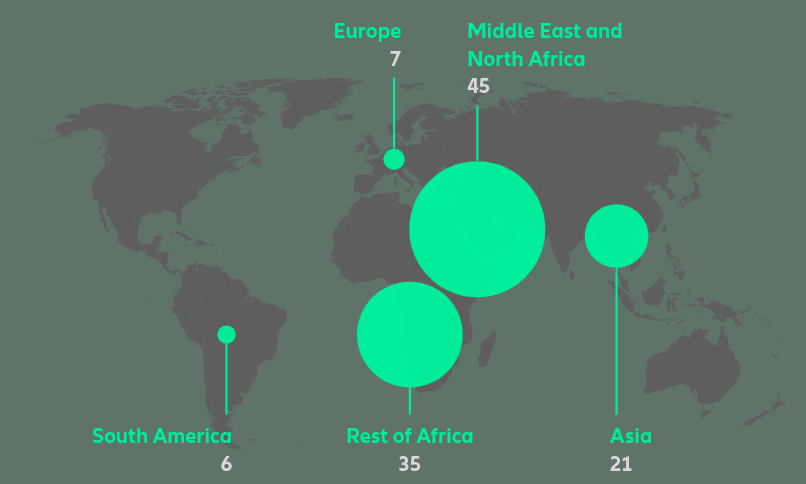 Source: Geneva Academy, RULAC.org. Graphic: Allianz Commercial
These conflicts, combined with the fluctuation in tariffs, are fueling a sense of global economic instability and accelerating deglobalization.
Companies across energy, chemicals, and logistics reworked supply chains under time pressure, often mid-cycle. Higher input costs bled into transport, production, and pricing decisions. Some fixes stuck. Others still wobble.
Geopolitical shocks drive cascading risk
Geopolitical instability keeps stacking pressure on corporate operations, balance sheets, and boardrooms. Data from the Geneva Academy counts more than 110 active state-based conflicts worldwide, clustered heavily across the Middle East, Africa, and Asia. The scale alone shifts risk assumptions.
Recent shocks show how fast disruption spreads. Russia’s invasion of Ukraine rattled energy markets almost overnight.
According to the European Central Bank, oil prices jumped 40% and gas prices surged 180% within two weeks of the attack.
Prices later cooled, though energy costs stayed elevated enough to hit consumer demand and strain margins.
Visualizing Supply Chains in Distress
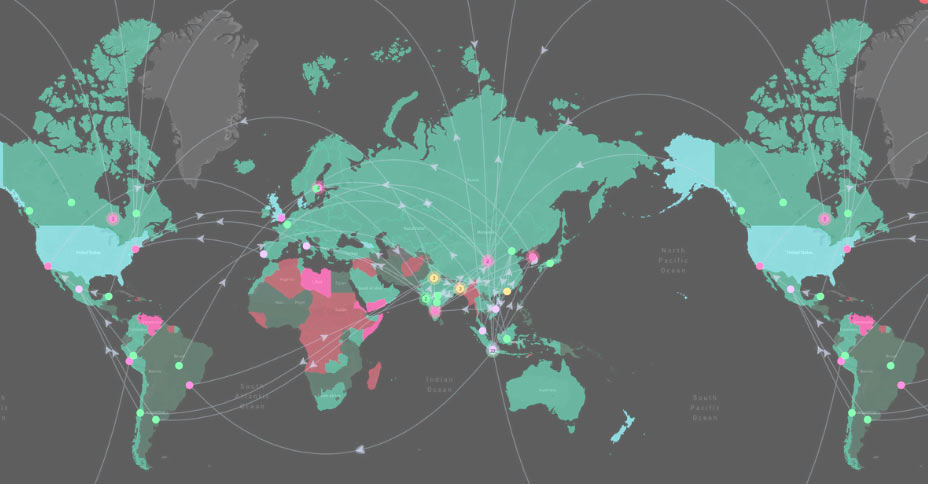 Source: SourceMap
There is no better way to show the impact of major disruptions on supply chains than to convey the level of risk involved through a clear, impactful, visual device.
This visual representation of a supply chain’s vulnerabilities highlights hidden risks, and helps procurement professionals to build risk management into the supplier selection process.
Also, with the benefit of the tool, purchasing departments can be more sensitive to warnings such as weather alerts, and better positioned to take preemptive action to mitigate the negative impacts of impending disruptions.
Sanctions added another layer of exposure
Expanding international regimes tightened regulatory oversight and widened enforcement risk. Boards now face deeper scrutiny for compliance failures, with personal liability increasingly part of the conversation.
Allianz frames the pattern bluntly
Geopolitical shocks trigger cascading disruption across sectors. Missed signals or slow adaptation leave firms exposed to financial loss, reputational damage, and operational failure.
According to Beinsure analysts, directors no longer treat geopolitics as background noise. It sits on the agenda, every meeting, whether invited or not.
Geopolitical risk drives rising D&O exposure and boardroom liability
For directors and officers, exposure now rises faster than many internal risk models suggest. Allianz warns that executives face personal accountability when they misjudge geopolitical developments, delay adapting business models, or fail to keep pace with shifting legal and regulatory frameworks across jurisdictions.
Liability emerges through several channels at once, creating cumulative pressure on leadership teams.
Shareholder lawsuits, regulatory penalties, and enforcement actions increasingly target both companies and individual decision-makers, tightening the space for error. As a result, geopolitical risk has moved sharply up the corporate agenda and rarely leaves it.
Survey data reflects this shift in boardroom priorities. Deloitte’s latest resilience survey shows geopolitical and economic uncertainty ranking as the top concern for boards in 2025.
Directors discuss it constantly, often without clean answers or clear precedent.
Allianz adds a more tactical perspective. Geopolitics functions not only as a source of disruption but also as a potential competitive lever for companies responding with discipline and speed.
According to Beinsure analysts, the gap between winners and laggards shows up less in strategy documents and more in execution quality, governance rigor, and how much risk leadership accepts openly.
From risk to resilience as geopolitics reshapes board oversight

According to Allianz Commercial, geopolitical intelligence now sits inside enterprise risk management, not on the sidelines. Scenario-based planning moves alongside supply chain oversight and cyber exposure, reshaping how organisations structure risk discussions at board level.
Viewing geopolitical conditions through a business lens helps companies spot threats early, before pressure builds.
Continuous monitoring of emerging and active hotspots becomes mandatory in an unstable market environment, not optional.
Board response now affects insurance outcomes
How companies manage geopolitical stress increasingly influences directors’ and officers’ underwriting decisions.
Insurers assess whether boards retain access to geopolitical specialists, external advisers, and governance frameworks built to manage elevated global exposure.
Treating geopolitical risk as part of risk and strategy management protects continuity and sharpens competitive positioning over time.
According to Allianz, accelerating deglobalisation and renewed reshoring force boards into difficult trade-offs. Resilience and opportunity compete directly with rising litigation exposure, especially in the US.
Legal risk escalates fast and, in some cases, outweighs the intended benefits of supply chain realignment, according to Beinsure analysts.
FAQ
Covid-19, trade wars, tariffs, and regional conflicts exposed how fragile globalised supply chains really are. Executives now view geopolitics as an operational risk, not background noise.
Stability. A Bank of America survey shows nearly 60% of firms expect production to continue moving back to the US if tariffs remain elevated.
Labour shortages, higher domestic costs, and limited capacity. Automation fills gaps but introduces execution risk and capital strain.
The US has the most plaintiff-friendly legal system globally. As Allianz Commercial notes, both foreign and domestic boards see immediate jumps in litigation exposure once operations move stateside.
A 2024 survey of US firms with over $1bn in revenue shows class action costs consuming 14.6% of total legal budgets, roughly $3.9bn. Legal inflation is now quietly factored into site-selection decisions.
Conflicts disrupt energy, logistics, commodities, and compliance simultaneously. Russia’s invasion of Ukraine triggered immediate spikes in oil and gas prices, forcing rapid, often imperfect, supply chain rewiring.
Liability risk rises fast. Shareholder lawsuits, regulatory penalties, and enforcement actions increasingly target individuals, not just companies. Deloitte’s 2025 resilience survey ranks geopolitical and economic uncertainty as boards’ top concern.
………………….
QUOTES: Heather Fong – North America Head of Product Development for Financial Lines at Allianz Commercial, Ralph Viand – product development and multinational lead for financial lines at Allianz Commercial, Eric Wedin – Head of Financial Lines, North America, at Allianz Commercial
by Nataly Kramer – Lead Insurance Editor at Beinsure Media