
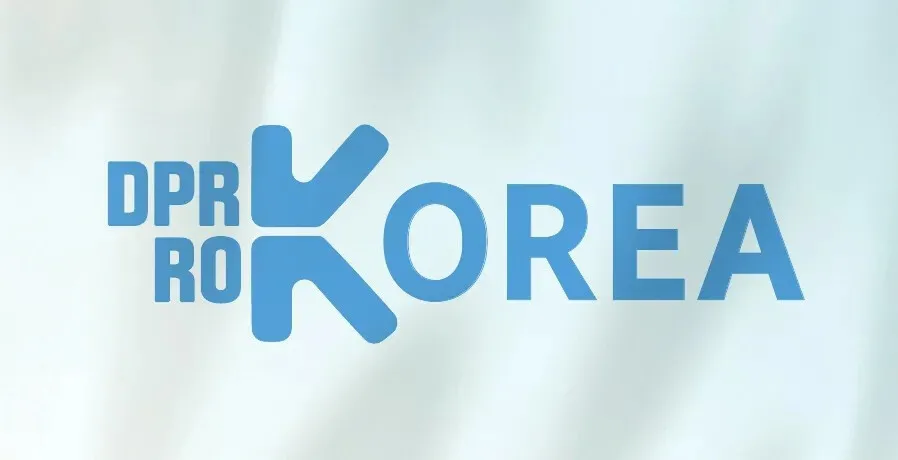
A flag created by the Hankyoreh Foundation for Reunification and Culture, embodying the relationship between the Democratic People’s Republic of Korea (North Korea) and the Republic of Korea (South Korea) as one between two countries oriented toward integration. The foundation plans to use this flag while cheering on the teams from both Koreas at the AFC Women’s Asian Cup in Australia this year. (Hankyoreh Foundation for Reunification and Culture)
There is much speculation about what path the Democratic People’s Republic of Korea — as North Korea refers to itself* — will embark on at the upcoming congress of its ruling Workers’ Party of Korea.
The most recent party congress, held in January 2021, was a landmark event that heralded major, fundamental changes for the country. One of the biggest shifts has been North Korea moving from a poor and isolated power developing nuclear weapons to a nuclear power that is overcoming its poverty and isolation.
Regardless of whether its status as a nuclear power is acknowledged by the outside world, it’s no secret that North Korea has greatly improved its nuclear arsenal. In addition, Pyongyang has ended a chill in relations with Beijing and is bolstering cooperation with Moscow to such a degree that even the term “strategic alliance” seems to be selling their relationship short.
In regard to both the economy at large and people’s standard of living, it seems clear that North Korea is blowing past its goals both in growth and grain production while steadily progressing on its regional development plans. In short, the DPRK of today is something new entirely.
There’s also been a dramatic change in the DPRK’s relations with the US. After 1990, Pyongyang’s ultimate objective was to forge a new relationship with Washington. Kim Jong-un had hoped to achieve that through the “uncanny power” (his words) of his relationship with US President Donald Trump, which was symbolized by their three in-person meetings and 20-some-odd letters.
But since 2019, Kim has abandoned those efforts and moved rapidly in a new direction. That’s why the 2021 party congress declared its chief posture to be long-term conflict with the US.
After raising Kim’s hopes only to dash them, Trump is back in the White House and sending overtures to Kim with every chance he gets. That has aroused considerable curiosity about how the DPRK’s stance toward the US might shift in the upcoming party congress — a once-in-five-year party convention.
The change in inter-Korean relations has been devastating. Three inter-Korean summits in 2018 had kindled high hopes about a breakthrough in the relationship. But those hopes have been snuffed out since 2019, when the relationship plunged into icy waters.
In late 2023, Kim maintained that South Korea has always pursued “unification by absorption” regardless of whether conservatives or liberals were in power. He has rejected the ideal of a shared Korean identity and the dream of reunification, adopting in their place a narrative of two hostile states.
Along the way, South Korean President Yoon Suk-yeol — who sought to goad North Korea into a possible war with drone incursions — has been impeached and removed from office, paving the way for a new administration.
South Korea’s new leader, President Lee Jae Myung, has been making various overtures with the hope that the North will come around, but so far those have proven inadequate. North Korea is firmly convinced that South Korea’s basic hostility toward the North will outlast any change of government.
That has prompted concerns that the DPRK’s “two hostile states” narrative will be explicitly adopted in the party congress.
Changes in the DPRK’s relations with Russia and China have been shocking.
After a period of prolonged chill, Pyongyang-Beijing thawed to the point of six summits being held between March 2018 and June 2019, and amicable relations seemed to be on the verge of being restored. But the breakdown of the Korean Peninsula peace process sent DPRK-China relations back into icy territory when Pyongyang declared nuclear arms to be the foundation of the state and enacted a nuclear-use doctrine, which was later incorporated into its constitution.
China visibly bristled at the DPRK’s demands to be acknowledged as a nuclear weapons state, which clashed with its own position. That’s when the DPRK turned to Russia, whose invasion of Ukraine had lengthened into a war of attrition. Pyongyang offered thousands of troops to fight on Moscow’s behalf; in return, Russia recognized it as a nuclear state.
This turn of the tables allowed the DPRK to effectively secure a tacit toleration of its nuclear status from China. This was demonstrated by Russia declaring the “impossibility” of the DPRK’s denuclearization on its behalf and by China keeping its mouth shut on the subject.
Based on such results, the upcoming 9th WPK Congress is likely to focus on foreign policies that bolster the cooperation and coordination Pyongyang has established with Moscow and Beijing.
What will be most interesting to see is what sort of policy line the DPRK adopts regarding South Korea and the US during the party congress. The prospects aren’t great. But there is a faint chance for change in its attitude toward the US.
During a speech to the Supreme People’s Assembly on Sept. 21, 2025, Kim Jong-un said, “If the United States, freeing itself from its absurd pursuit of [another country’s] denuclearization and recognizing the reality, wants genuine peaceful coexistence with us, there is no reason for us not to come face to face with it.”
“Personally, I still have a good memory of the current US President Trump,” he said.
As indicated by such remarks, the DPRK appeared to be open to contact with the US around the time of the Asia-Pacific Economic Cooperation summit held in South Korea. But Pyongyang’s condition was that the US give up its demands for the DPRK’s denuclearization, which Washington didn’t accept, so the meeting never happened.
Considering all this, the upcoming party congress is likely to announce that the DPRK is “prepared” to engage in both conflict and dialogue with the US in a gesture that is supposed to betray a willingness to hold another summit with the US.
We also need to pay attention to what will happen in terms of sanctions, which are the biggest obstacle to relations between the DPRK and the US.
Many authorities, both within the ROK and beyond, believe that the DPRK will demand that sanctions be eased or lifted, but such analyses are based on an outdated version of the DPRK. In 2018-19, the more desperately Kim wished for sanctions to be eased, the harder a stance Trump adopted.
Defining this problem as one pertaining to the dignity of his country, Kim resolved at the 8th WPK Congress in 2021 to use sanctions as an opportunity to achieve self-reliance and self-sufficiency.
During another speech he made in September 2025, he asked the rhetorical question, “For what should we turn to ‘denuclearization’? To avoid sanctions?” to which he answered a thunderous “Never. Never ever.”
He went on to say that the sanctions have “taught us a lesson on how to get stronger, and developed tolerance and resistance in us so that we will not yield to any pressure.”
“There will be no negotiations, and never at that, with our enemy states to exchange something with them, obsessed with trying to get free from their sanctions,” Kim declared.
Trump sang a different tune. As he embarked on his tour to Japan and South Korea on Oct. 27, 2025, he noted sanctions as a possible topic up for discussion.
“Well, we have sanctions,” Trump said. “That’s pretty big to start off with. I would say that’s about as big as you get.”
Through such comments, Trump attempted to leverage the agenda of sanctions to pull off a last-minute meeting with Kim. The different stances taken by the two countries when it comes to sanctions show that, if a DPRK-US summit materializes, Trump will either be the first to raise the issue or that the issue itself will not be discussed with much earnestness. This underscores the need for observers to shift their thinking about the problem of sanctions.
Considering this context, the DPRK’s core policy stance toward the US that will be outlined in the upcoming 9th Congress of the Workers’ Party of Korea will focus on “peaceful coexistence” between nuclear powers. The US has a precedent of initially adopting hard-line approaches toward the nuclear armament of hostile nations like the Soviet Union and China, only to later choose peace.
Recently, some within US government circles have begun arguing for a shift to arms control and peaceful coexistence, considering the total denuclearization of the DPRK no longer feasible. However, acknowledging the DPRK as a nuclear weapons state will be no easy feat, even for Trump. If he keeps stubbornly calling for denuclearization, any chance of a summit between the two countries will go out the window.
Another option that exists between the two choices is to turn a blind eye: the US could ignore the DPRK’s demand to be recognized as a nuclear power while setting aside demands for the country’s denuclearization. Instead, it could focus on other agendas while putting the freeze on nuclear weapons on the table.
The other agenda in question is an official end to the Korean War. During the October 2025 summit between South Korea and the US, Trump commented, “I will say this, the Korean Peninsula — I know you are officially at war, but we will see what we can do to get that all straightened out.” Before the very first North Korea-US summit in June 2018, Trump mentioned the need to end the state of war, calling the Korean War “the longest war,” noting it had gone on for almost 70 years.
As someone who has boasted about ending eight conflicts worldwide since taking office last year, it stands to reason that he would be keenly interested in ending the Korean War. This need to end the war also intersects with Kim’s call for peaceful coexistence, as the most viable way to end the Korean War and pursue peaceful coexistence lies in signing a peace treaty.
As such, there is a possibility of changes to the relationship between the DPRK and the US, with the party congress being one opportunity for such change. What, then, lies on the horizon for inter-Korea relations?
The Lee administration has successfully eased tensions on the border after pushing to halt the floating of trash-filled leaflets across the border and stopping loudspeaker propaganda broadcasts. The administration has also upheld three core principles for its policy toward Pyongyang so as to achieve the goal of peaceful coexistence: respect for the DPRK’s system, scrapping plans for unification by absorption, and ceasing hostile acts.
However, the DPRK has not changed its stance on fundamental issues, nor has it changed its stance on such issues. Despite saying that peace is needed when approaching its age-old enemy, the US, it is leaving almost no room for such peaceful coexistence with South Korea. Why is this the case?
We must understand their logic if we are to have any hope in coming up with a prudent response. Even since the Lee administration launched, the DPRK has been finding fault with the territorial clause of the South Korean Constitution.
“In the first Constitution of the ROK fabricated and promulgated in July 1948, Syngman Rhee stipulated that ‘the territory of the ROK covers the Korean peninsula and its attached islands,’ thus codifying its inborn nature which is the most hostile to our state,” Kim said in his September 2025 speech. “Through [its] government has changed more than 10 times and the Constitution has undergone revision nine times in the ROK so far, nothing has changed in the territory-related article of the Constitution.”
Kim harshly criticized Seoul for being “subordinate” in its alliance with the US and continued to denounce the Lee administration’s plan for a massive increase in defense spending, saying that the plan “far surpass[ed] that of the Yoon Suk-yeol regime, that earned notoriety for its confrontational fanaticism against the DPRK.”
“We will enshrine in a national law that we and the ROK are two states sharing the border, which are heterogeneous from each other and which can by no means become one,” declared Kim.
If the DPRK continues to pursue this policy, the decisions of the 9th Congress of the WPK and the country’s revised constitution will explicitly define the relations between the two countries as being hostile.
This is where we can clearly see the discord between the DPRK and the Lee administration. While many believe that the Yoon administration ruined the friendly relations between the two Koreas cultivated by the Moon Jae-in administration, Pyongyang believes that, no matter which administration is in power, Seoul harbors a hostility toward its northern counterpart. Unless this perception is corrected, we cannot rule out the possibility that the two Koreas will never participate in dialogue during Lee’s term.
What should happen next? I believe that the Lee administration must take concrete steps to properly implement the “peaceful coexistence of the two Koreas” it has been advocating for. A key step for this is to relinquish the claim to jurisdiction over the northern half of the Korean Peninsula. It will be necessary to address the territorial clause when conducting discussions over amending the Constitution.
If this is a mid-to-long-term task that requires national consensus and bipartisan cooperation, it is vital to identify what steps can be taken immediately. Abolishing the “Chungmu plan,” an operation that has existed in paper since 1991 as a response to a sudden change in the DPRK that would prompt unification through absorption, is one such step. Another step would include the exclusion of wartime occupation and unification operations against the DPRK from the ROK-US Combined Forces Command’s operational plans and military exercises.
It is also worth considering whether the Lee administration’s principle of ruling out unification through absorption and its decision to expand and strengthen the Marines, which focuses on landing operations, to form a four-pronged military structure, can be considered a wise pairing. The government also ought to ponder its denial of any attempts at unification through absorption while continuing to call the DPRK “North Korea” (bukhan), which implies that the country is still part of Korea (hanguk).
I believe that going in this direction effectively counters the DPRK’s “hostile two-states” theory while aligning with our belief in the South that the two countries can coexist in peace. South Korea’s Chungmu plan and the US-South Korea alliance’s doctrine of forceful unification in times of crisis showcased confidence that stemmed from the advent of the unipolar system of the US in the 1990s and South Korea’s decisive victory over which system would rule over which in the Korean Peninsula.
Yet the world has changed so dramatically, simply saying that it has completely transformed would be an understatement. But how much longer must we cling to the outdated notion that we have a historical claim to North Korea? It’s a question I ask because only once we let go of this obsession will we be able to pave the way for a grand transformation of South Korea before we tackle inter-Korean relations.
By Cheong Wook-Sik, director of the Hankyoreh Peace Institute and director of the Peace Network
*For more on why the author uses the term DPRK for North Korea, see:https://english.hani.co.kr/arti/english_edition/english_editorials/1137832.html
Please direct questions or comments to [english@hani.co.kr]