
Introduction
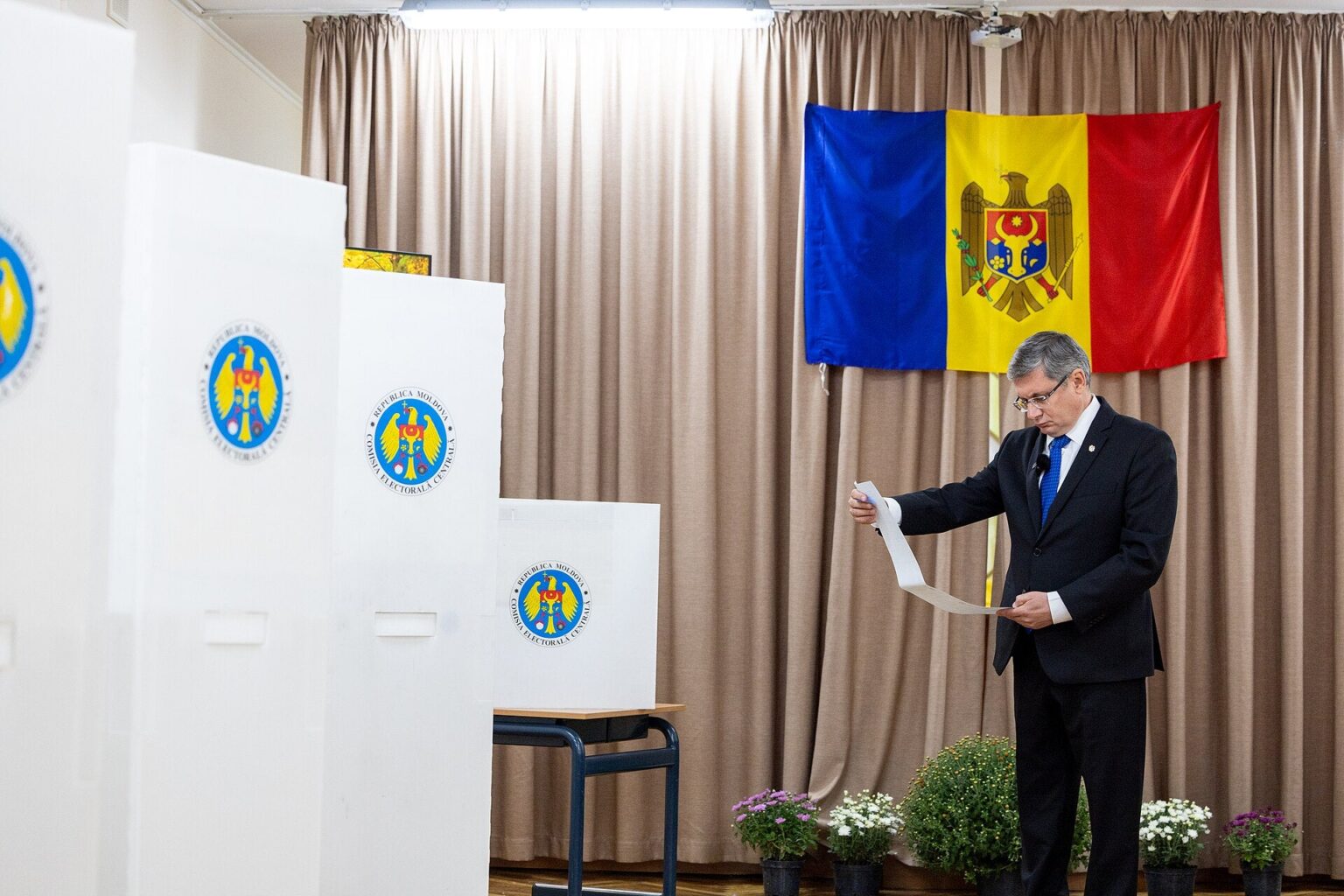
In September 2025, Moldova held parliamentary elections under an unprecedented barrage of Russian foreign information manipulation and interference (FIMI). What made these elections distinctive was not the Kremlin’s tactics—by now familiar across the Europe’s eastern flank—but Brussels’ response. As a policy premiere, the EU deployed a Cybersecurity Reserve Unit beyond its borders, marking a new phase of the bloc’s cyber diplomacy.
This article argues that the EU’s efforts to safeguard Moldovan elections against Russian FIMI represents a pivotal moment for continental strategic autonomy. As the current Trump administration diminishes Washington’s support for partners in the region, Brussels demonstrated both the will and the emerging operational capacity to defend democratic processes in its backyard. The piece proceeds in three parts. First, it examines the spectrum of Russian FIMI operations targeting Moldova’s elections. Second, it analyzes Chișinău’s domestic countermeasures and their limitations. Finally, it assesses the EU’s deployment of cyber diplomacy tools and proposes policy recommendations for strengthening them.
Russian FIMI in Moldova’s 2025 Parliamentary Elections
Reports of international electoral monitoring missions note that the parliamentary elections held on September 28, 2025, were affected by a series of FIMI operations sponsored by Moscow. The vectors through which this interference campaign was carried out ranged from illicit financing and electoral corruption to the widespread dissemination of disinformation narratives on social media.
Moldovan authorities successfully identified a foreign-funded organized crime network, attributed to the Russian Federation, that coordinated vote-buying schemes through Telegram groups and the TAITO app. As an element of novelty compared to other elections in Moldova, these schemes involved the use of cryptocurrency and electronic cards linked to accounts at Russian banks. Another novel element was the organization of paid protests. For example, oligarch Ilan Șor, residing in Moscow, announced he would pay $3,000 USD per person to participate in anti-government protests.
Social media platforms, especially TikTok and Telegram, were central vectors of manipulation and disinformation. TikTok removed hundreds of inauthentic accounts operated by actors within the Russian Federation that aimed to undermine the pro-EU government and promote opposition political figures aligned with Moscow’s foreign policy objectives. AI-generated content was used for spreading anti-government messages. In parallel, the Russian Foreign Intelligence Service (SVR), via the state news agency TASS, promoted an alarmist false narrative that the European Union planned to occupy Moldova and that NATO intended to attack Transnistria.
Several cyber attacks also targeted the websites of public institutions and the Central Electoral Commission. A major distributed denial-of-service (DdoS) attack on election day forced authorities to block the entire “host.md” platform, resulting in approximately 4,000 websites going offline. Bomb threats were also reported at polling stations both in Moldova and within the diaspora—including Romania, Italy, Spain, Belgium, and the United States—causing temporary disruptions to voting as the threats intended to discourage pro-European voters from coming to the polls. These coordinated tactics used by the Russian Federation sought to erode public confidence in democratic processes and institutions, with the wider goal of reversing Moldova’s path toward European integration and transforming the small Eastern European state into another Belarus—a vassal state of Moscow with no prospects of escaping its sphere of influence.
Chișinău’s Response Against Russian FIMI
The pro-European government in Chișinău responded to these provocations by adopting a comprehensive set of legislative and law enforcement measures, strengthening critical infrastructure protection, and engaging in strategic communications campaigns. Some measures proved more contested than others: Moldova’s SIS intelligence service, for example, exercised its authority to block over 100 websites, including Russian news portals and pro-Kremlin webpages during the campaign. In line with international sanctions, the government froze the financial resources of Irina Vlad, leader of the “Heart of Moldova” Party, along with other representatives of Russian proxy parties. Despite domestic contestations, international observers described Chișinău’s actions as a “decisive and measured response.”
Public messaging on the risks of electoral corruption and the consequences of vote selling further contributed to deterrence, as did the high-profile investigations carried out by the Anti-Corruption Prosecutor’s Office. These efforts led to the initiation of 13 criminal cases and 122 detentions across Moldova for violations of the electoral campaign legislation. The Center for Strategic Communication and Countering Disinformation (StratCom), a governmental institution established in 2023 with a clear mandate to counter disinformation and FIMI, focused on debunking and pre-bunking Russian narratives, while informing legal beneficiaries about Moldovans’ exposure to information warfare.
Despite these hardline institutional measures, Moldova—Europe’s poorest country—remains highly vulnerable to destabilization operations orchestrated by the Russian Federation. Moldova remains particularly weak in the cyber defense space. In the ITU’s 2024 Global Cybersecurity Index, Moldova was ranked only at the “Establishing” level, with technical capabilities and capacity development measures noted as areas where the government needs to invest additional resources. By contrast, Georgia, another post-Soviet state, was placed in the superior “Advancing” tier.
Seeking to address this security deficit ahead of the consequential parliamentary elections, the Moldovan government asked its Western allies to step in. However, the Trump administration’s decision to halt USAID funding left Moldova with many unfinished cyber-related projects. Last year, USAID pledged funds to strengthen Moldova’s cybersecurity capabilities and even donated IT equipment to the Technical University of Moldova to train cybersecurity specialists. A separate project aimed at hardening Moldova’s critical infrastructure against cyber attacks was also terminated. With diminished support from Washington, Chișinău redirected its diplomatic efforts toward Brussels. President Maia Sandu emerged as the central driver of this effort, addressing the European Parliament days before the election and framing the Russian threat as existential. Sandu portrayed Moldova’s accession in the European Union as a “matter of survival.” Following an intensive diplomatic of European capitals, she also hosted German Chancellor Friedrich Merz, French President Emmanuel Macron and Polish Prime Minister Donald Tusk at Moldova’s Independence Day rally, one month ahead of the crucial elections.
The EU Steps In
The EU’s support for Moldova’s resilience against Russian FIMI extended well beyond symbolic gestures. The Moldovan National Cybersecurity Agency, established in December 2023, was born out of EU-backed cybersecurity law. At the request of the government in Chișinău and in accordance with the provisions of the EU Cyber Solidarity Act of 2025, the EU deployed the European Cybersecurity Reserve for the first time ahead of Moldova’s parliamentary elections in September. Complementary to national efforts, this tool focused on incident response in cyberspace and contributed to protecting Moldova’s critical infrastructure against cyber attacks. This marked the first time the EU dispatched a team of cybersecurity experts beyond the Union’s borders to aid a candidate country in such a delicate moment.
The European Union and its member states also mobilized additional funds and instruments to securitize Moldova’s electoral climate. In May 2025, the Council of the European Union extended the mandate of the EU civilian mission in Moldova by two years, with the goal of strengthening the country’s security sector against hybrid threats. The Council increased the staffing budget for this mission by 30 percent, and its total budget was raised by almost €20,000,000. In preparation for the September elections, a hybrid threat simulation exercise was organized under the EU umbrella, where Moldovan authorities were joined by representatives of Google, Meta, and TikTok. As Moldova’s staunchest advocate for EU integration and the host nation of the European Cybersecurity Competence Center and Network, Romania decisively contributed to Chișinău’s institutional readiness. The state drew on its own experience with Russian FIMI which culminated in the annulment of Romania’s presidential elections by the Constitutional Court in November 2024.
The Path forward: Cyber Diplomacy, a Core Element of the EU’s Strategic Autonomy
Moldova’s 2025 parliamentary elections marked a turning point in the EU’s approach to defending democratic processes beyond its borders. By deploying the European Cybersecurity Reserve for the first time to a non-member state, extending civilian mission mandates, and coordinating with technology platforms on hybrid threat preparedness, Brussels demonstrated that cyber diplomacy has matured from an aspirational concept to a tangible operational tool.
This evolution carries profound implications for European strategic autonomy. As the United States’ commitment to partners in Europe’s eastern neighborhood grows increasingly uncertain, and as joining diplomatic efforts against Russian FIMI is no longer a priority for the Trump administration, the EU’s ability to project security at its doorstep has become essential to its geopolitical influence. Moldova’s case illustrates that strategic autonomy is not solely about reducing dependence on external actors, but equally about developing the capacity to act decisively when allies cannot or will not.
Looking ahead, Brussels must institutionalize the lessons learned from Moldova and proactively extend these tools to other vulnerable states. First, the EU should deploy cyber diplomacy instruments in partnership with candidate countries in the Western Balkans, historically a hotspot for Russian information warfare. Second, Armenia, ahead of its June 2026 parliamentary elections, should be integrated into EU cyber and democratic resilience initiatives. Third, as part of the newly-launched Democracy Shield for fighting FIMI, the EU should organize regular simulations and war games involving both EU member states, candidate countries, and industry partners to strengthen the bloc’s resilience against information operations, coming not only from Russia, but also from China. Given China’s ability to revolutionize cyber operations using autonomous AI, Brussels must also anticipate and prepare for emerging cyberthreats targeting democratic processes that are increasingly multidirectional and sophisticated.
By codifying these approaches into a coherent strategy on countering FIMI, the European Union can ensure its capacity to defend democratic values, both at home and abroad, is not contingent on the actions of others. Strategic autonomy will thus evolve from a slogan into a durable pillar of European power, underpinned by operational cyber diplomacy, proactive engagement with candidate countries, and an adaptive defense against hybrid threats.
…
Antonia-Laura Pup is a Fulbright Scholar and Teaching Assistant in Security Studies at Georgetown University. She previously served as a fellow in the House Select Committee on the Strategic Competition between the United States and the CCP and as an advisor to the President of the Defense, Public Order, and National Security Committee in the Romanian Parliament. In 2020, she was included in Romania’s Forbes 30 Under 30 list for her leadership in the country’s youth movement.
The author would like to thank Professor Michael Sulmeyer of Georgetown University’s School of Foreign Service, as many of the insights in this paper draw on concepts developed during his Fall 2025 course on cyber operations.
Image Credit: Parlamentul Republicii Moldova, CC-BY-4.0, via Wikimedia Commons.