
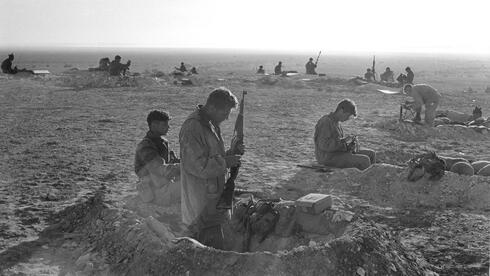
Shortly before 9 p.m., listeners to Kol Israel’s popular program “Cantorial Pieces by Request” heard an unexpected interruption. The announcer urged the public to remain near their radios and await an important message. Word spread quickly, and Israelis — accustomed to following official instructions during periods of tension — gathered around their sets.
3 View gallery
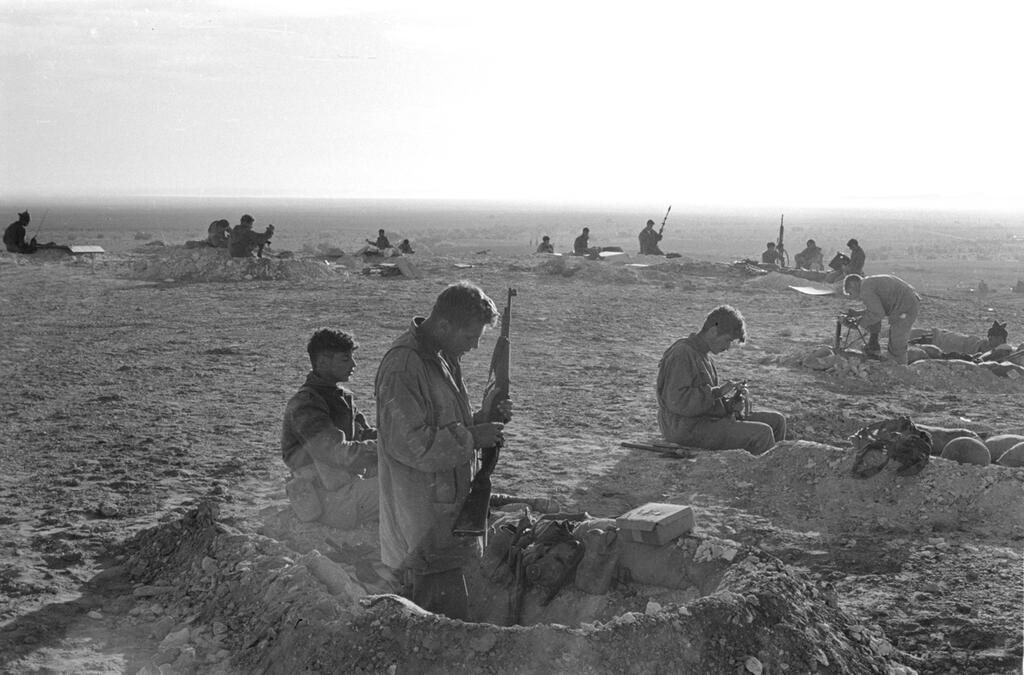
(Photo: Avraham Vered, courtesy of the IDF Archive at the Defense Ministry and Bamachaneh)
At 9 p.m., Kol Israel’s main broadcast opened with a dramatic announcement: a general call-up of reserve units. Reservists whose units were named were instructed to report to their bases the following day. The message concluded with three military code words: “Artist Troupe,” “Important Expression” and “Waterfowl.” It was broadcast in nine languages, including Hebrew, Arabic, Yiddish and Romanian.
No explanation was given.
To most listeners, the implication was unmistakable. Reserve call-ups were associated with imminent danger. Many assumed Israel was under attack or about to enter war. Some speculated that Syrian forces were mobilizing. A few briefly considered whether the announcement was an April Fools’ prank — a notion quickly dismissed.
In the absence of clarification, rumors spread rapidly. Civilians checked emergency supplies. Reservists inspected weapons and ammunition kept from previous conflicts. Anxiety deepened with every passing minute.
Inside the Knesset, lawmakers were in the midst of a budget vote when news of the broadcast reached the chamber. Proceedings dissolved into confusion as many members rushed to their cars to listen to the radio. Justice Minister Pinchas Rosen attempted to defuse the tension with a quip, saying the government was accustomed to operating without immediate communication with the prime minister. The remark did little to calm the room.
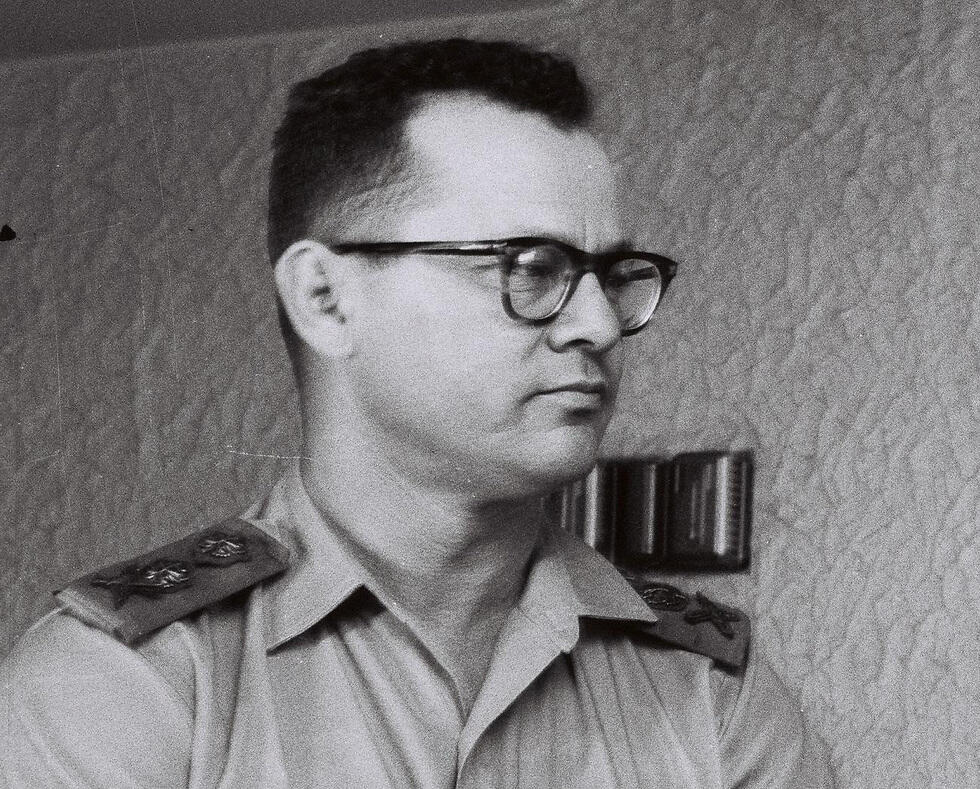
Ben-Gurion’s call was answered by an usher, who assumed the man identifying himself as the prime minister was playing an April Fools’ joke and hung up. Several calls followed, each ending the same way, before the usher finally relented and summoned Laskov.
As confusion mounted at home, the message reverberated abroad. Less than 15 minutes after the broadcast, international radio services began reporting that Israel was mobilizing its reserves. Urgent alerts were sent to foreign correspondents in Israel, many of whom were attending the same event as Laskov.
Neighboring states monitoring Israeli radio reacted swiftly. Syria raised its military readiness and began moving troops toward the border. Syrian radio later announced a general mobilization. Jordanian forces also increased alert levels, citing Israeli broadcasts as the cause.
At 11 p.m., Kol Israel finally issued a clarification: the call-up had been an exercise.
The announcement eased immediate fears, but disbelief lingered. In Israel and abroad, conspiracy theories quickly emerged. Soviet media suggested the mobilization was intended to distract workers while the government quietly increased defense spending by 420 million lira in the state budget.
By morning, the press had given the affair a name: “The Night of the Ducks,” a reference to “Waterfowl,” one of the Hebrew code words repeated in the broadcast. Headlines were scathing. Editorials demanded accountability. Others mocked the panic — and those who had been caught off guard.
Public reaction reflected the turmoil. In street interviews published in newspapers, a Bat Yam mechanic said he rushed home to prepare for war, recalling his service in the Sinai campaign. A Tel Aviv shopkeeper said he poured a drink and went to sleep, confident that if anything serious happened, soldiers would come for him in the night.
Ben-Gurion moved quickly to contain the fallout. A commission of inquiry was established to investigate how a drill had escalated into a national and regional crisis. The panel found that while a reserve exercise had been planned, the broadcast aired without proper verification and without the explicit approval of Ben-Gurion or Laskov, neither of whom knew the exact timing or wording.
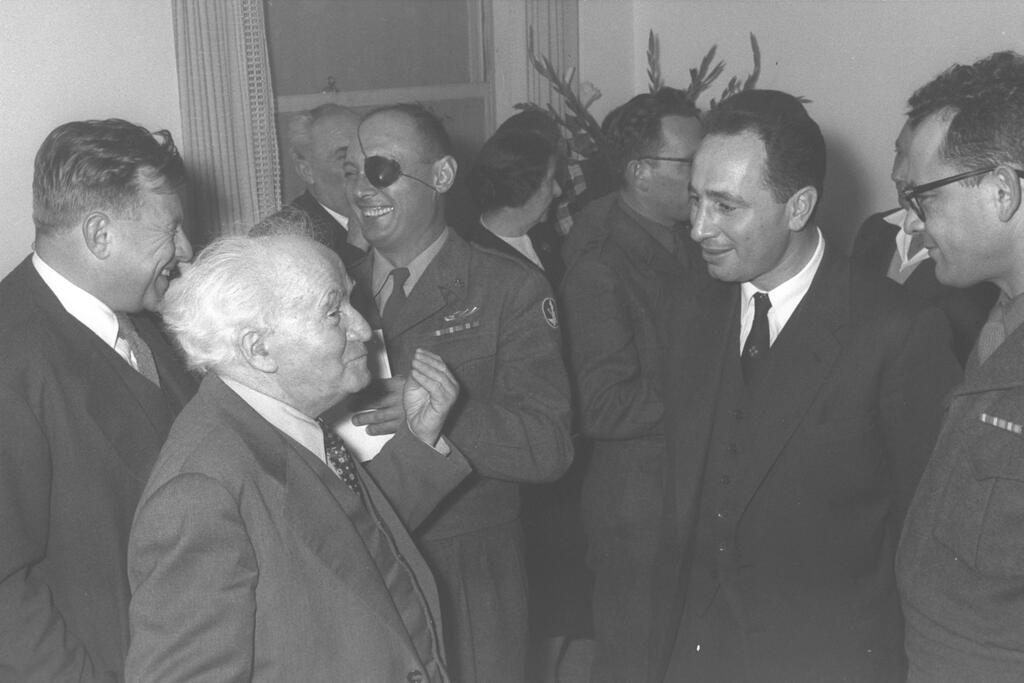
Responsibility was placed on senior officers involved in reserves and intelligence. Maj. Gen. Meir Zorea, head of the reserves, and Maj. Gen. Yehoshafat Harkabi, head of military intelligence, were forced to step down. Laskov was formally absolved.
In his diary, Ben-Gurion summarized the episode tersely: “At night a bombshell exploded — a foolish invitation in nine languages, as an introduction to a short broadcast on the mobilization of three small units.”
Years later, Israeli military historian Yoav Gelber revealed a deeper layer to the story. According to Gelber, who said Laskov told him personally, the call-up was not intended as a readiness drill at all.
At the time, Egyptian reconnaissance aircraft routinely flew night missions over Israel, photographing strategic sites and departing before Israeli fighters could intercept them. Air Force commander Ezer Weizman devised a plan to lure the aircraft into an ambush. A reserve mobilization announcement, he believed, would signal heightened readiness and draw Egyptian planes into Israeli airspace, where Israeli fighters would be waiting.
Instead, the announcement triggered panic at home, alarm abroad and one of the most infamous misfires in the history of the IDF.
The Night of the Ducks echoed for years in Israel’s security culture. Large-scale reserve mobilizations became politically and operationally sensitive. The next full call-up would come 14 years later — on Oct. 6, 1973, the day the Yom Kippur War began.