
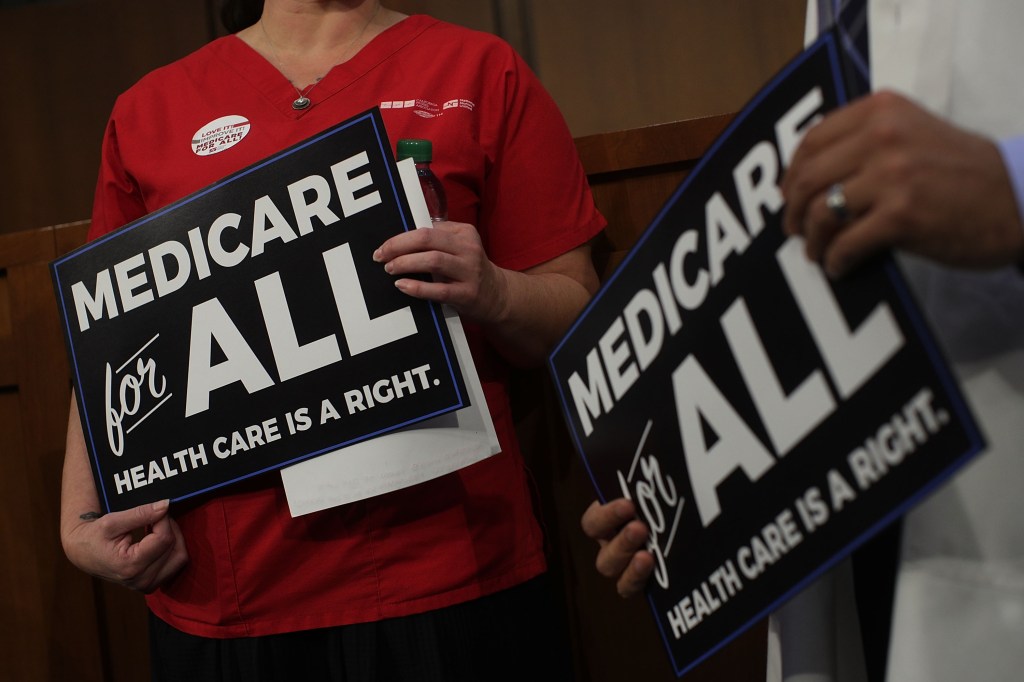
It was 23 years ago when my late husband, Dr. John Shearer, published a Close to Home column in The Press Democrat advocating a single-payer national health care system in the United States — “Medicare for All.” Having been a family practice physician in Petaluma for decades, he cared deeply about his patients and took it personally when private insurers’ refusals to cover treatments led to instances of prolonged suffering and — in at least one case — a completely avoidable death.
As he was mild-mannered and dignified, I didn’t see it coming that he would evolve into a determined activist for health care reform. But when his recommendations for effective, long-established life-saving treatments for his patients were met with denials of coverage, his exasperation — and ire — became acute.
Speaking publicly on countless panels throughout California over several years, he addressed the shame associated with one of the wealthiest nations on earth depriving its population of what is viewed as a common right among most of the world’s advanced industrialized economies.
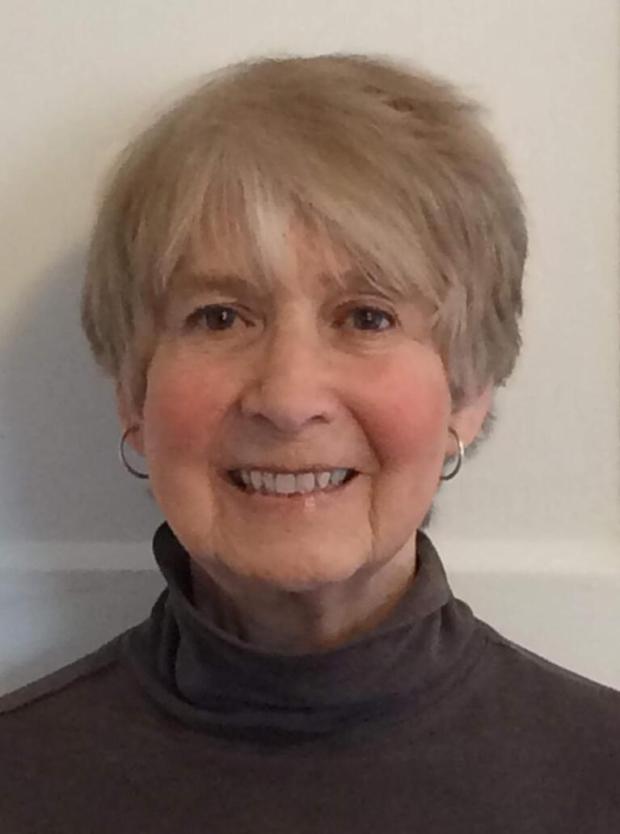 Donna Brasset-Shearer
Noting high rates of infant mortality, dire shortages of doctors and nurses, dangerous delays in getting emergency care at hospitals that were tilting on the edge of closure, he cited the U.S. health care system’s low ranking by the World Health Organization at the time — 37th in the world at that time.
In his July 23, 2002, commentary in The Press Democrat, John called for a universal health system funded by “a payroll tax and a small progressive income tax. By eliminating insurance premiums, deductibles, co-payments and out-of-pocket expenses, health care would cost less than the current system with its high administrative costs, huge CEO salaries and shareholder profits.”
Already astronomical in 2002, current CEO salaries in the health insurance industry range into the tens of millions of dollars annually. Cumulatively, they add up to multiple billions.
It’s now well known that health insurers accrue profits by strategically denying — or delaying — patient coverage. It doesn’t help that insurers can now use artificial-intelligence software to rapidly reviews and just as rapidly reject applicants’ claims.
In 2009, a whistleblower, Wendell Potter, the former chief of corporate communications for health insurance giant CIGNA, testified before Congress on common tactics for garnering industry profits. Potter has since become a leading spokesman and author on the topic of profits vs. care in the health insurance industry.
In a commentary last year for Stat, Potter wrote: “Every year, my colleagues and I across the industry devoted massive amounts of money — money our customers paid us to cover their medical care — on lobbying, campaign contributions, deceptive PR and even charitable donations to buy goodwill … for the sole purpose of maximizing shareholder return.”
Examples of “deceptive PR” include generating “surveys” to shape positive perceptions of the industry, igniting fear and doubt about the merits of reforms like “Medicare for All” and stigmatizing advanced industrial countries like Canada and Great Britain by deploying Cold War rhetoric equating health care reform projects with the totalitarian evils of “socialized medicine.”
As a case in point, a recent editorial in the Washington Post — owned by Amazon founder Jeff Bezos — equated a “Medicare for All” system to the feared specter of “socialized medicine.” Glaringly, the Post failed to mention Amazon’s recent acquisition of One Medical, a primary care provider bolstered by AI technology and vast venture capital investments.
My husband died in 2009. It’s been almost a quarter-century since John’s commentary appeared in The Press Democrat, and the United States still lacks a health care system on a par with the rest of the world’s top-rated, systems, despite polls showing widespread support for universal care.
If there is a silver lining for the multiple millions in this country who are unable to afford surging premiums — or have no health insurance at all — it may come from the voters across the country who push “Medicare for All” across the finish line to become the official health care provider for the United States.
Donna Brasset-Shearer is a cultural anthropologist with a background in international relations. She lives in Petaluma.
You can email letters to the editor to letters@pressdemocrat.com