
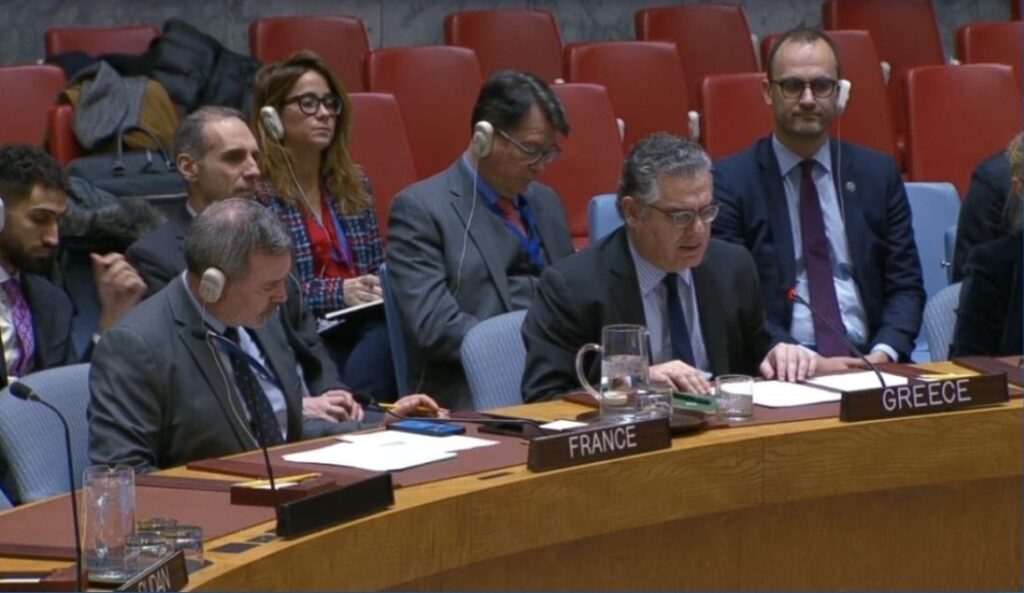
19 January 2026
Thank you, Mr. President,
I would like to thank Deputy Prosecutor Ms. Khan for her briefing on the Report regarding the activities of the Office of the Prosecutor concerning the situation in Darfur, and I also welcome the presence of the Permanent Representative of Sudan at today’s meeting.
We note with regret that the Deputy Prosecutor was not able to brief the Council in person today. We are concerned that this might have a negative impact on the work of the Court.
In this respect, we reiterate our firm commitment to upholding and defending the Rome Statute, and maintaining its integrity against threats and actions aimed at the Court or its officials.
Mr. President,
The humanitarian disaster in Darfur is catastrophic and unprecedented. Following the significant escalation of the conflict, particularly after the takeover of El Fasher, the situation has further deteriorated. As consistently reported by the United Nations, the humanitarian emergency across Sudan continuously deepens, with civilians bearing the brunt of the violence.
Against this grim backdrop, we would like to underline the following points:
First, we underscore the initial assessment of the Report regarding allegations of war crimes and crimes against humanity committed in El Fasher (northern Darfur), since October 2025. These -as we have heard by Deputy Prosecutor Khan- include allegations of systematic and widespread crimes, such as detention, mistreatment and killings of persons of non-Arab origin, as well as attempts to conceal crimes through the establishment of mass graves. We also note that the Office of the Prosecutor gathered evidence in support of the commission of a wide range of crimes under the Rome Statute in Al Geneina (West Darfur), in particular gender-based and crimes against children.
Second, with regard to judicial developments in relation to the referral of the situation in Darfur, a number of ‘firsts’ have been achieved. Specifically, the ICC rendered its first judgment in the Al Rahman case, which is also the first conviction and sentencing regarding a referral, the first in the Darfur situation and the ‘first’ conviction on grounds of gender persecution of males.
Moreover, the judgment was issued after a trial of more than two and a half years and after the examination of over 100 witnesses called or relied upon by the parties. It sends therefore a powerful message, as the Report rightly points out, to the affected communities and to the international community in general on what can be achieved through sustained cooperation between the Security Council and the International Criminal Court.
Moreover, we underscore the commitment of the Office of the Prosecutor regarding past crimes in particular regarding the cases of Al Bashir, Hussein and Harun, that such crimes will not be set aside. The cooperation of States -in particular the cooperation of the Government of Sudan- is critical in bringing before the Court, the suspects in the above cases through the execution of the relevant arrest warrants.
Third, Greece strongly supports the increased engagement between the Office of the Prosecutor and the United Nations fact-finding Mission for the Sudan, as well as the strengthening of contacts with the African Union fact-finding Mission to collect evidence in support of its inquiries. In the exceptionally difficult conditions on the ground, it is essential -as the Report rightly highlights- to establish clear linkages between credible evidence, perpetrators and relevant organizational structures, especially when witnesses expressed fear of reprisals. In this regard, we welcome the initiatives undertaken by the Office to secure information and evidence through the OTP link platform and to engage as broadly as possible with affected communities, grassroots and civil society organizations.
In conclusion, Mr. President, the message from the affected communities, as reflected in the Report, is clear: combating impunity is indispensable for justice, reconciliation and any sustainable peace in Sudan. Accountability is not an obstacle to peace, but a prerequisite for it. The Security Council has a responsibility to uphold the commitments it undertook through Resolution 1593 and to support the Court in fulfilling its mandate.
Thank you.