
Biathlon fans brush up your Italian, but also your German, as some events in the Winter Olympics are to be held in South Tyrol in Italy, an autonomous province bordering Austria and Switzerland.
The valley of Anterselva, with its snow-capped peaks and verdant pastures, is the most northern of the seven venues for the Games, which run in Italy from Friday to Feb. 22.
The province is known in Italian as Alto Adige, but in English as Bolzano-South Tyrol, and about 70 percent of locals speak German, one of three official languages along with Italian and Ladin, a local language spoken in the Dolomites.
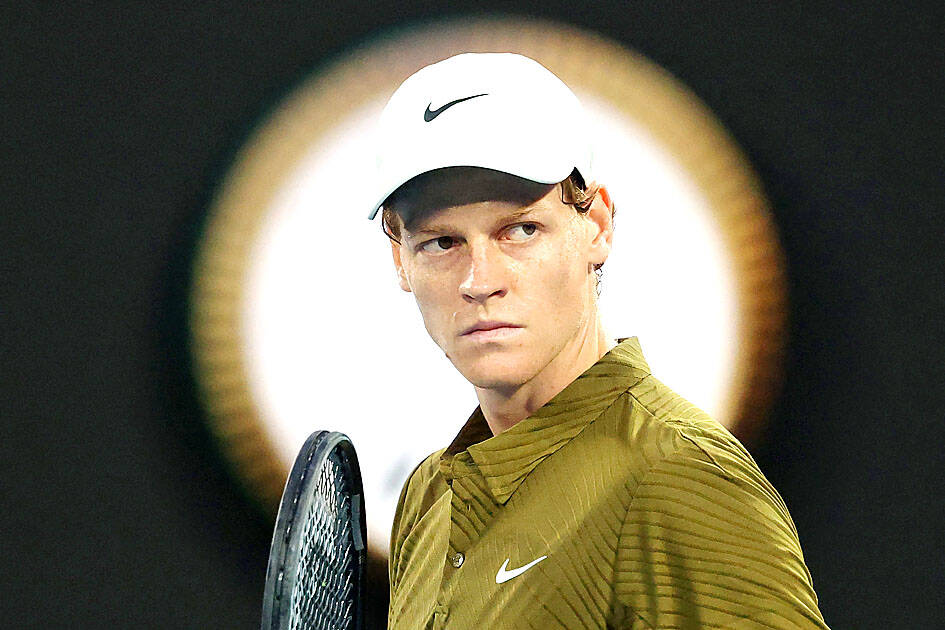
Photo: AFP
The birthplace of tennis great Jannik Sinner, the province enjoys considerable administrative, legislative and fiscal autonomy from Rome, and remains deeply committed to upholding its multiculturalism.
South Tyrol Governor Arno Kompatscher said that place names were bilingual out of “respect for people’s sensitivities” in an area with a turbulent history.
In light of that, the province pushed for — and won — “an exemption from the International Olympic Committee … because their nomenclature only included one name,” Kompatscher said.
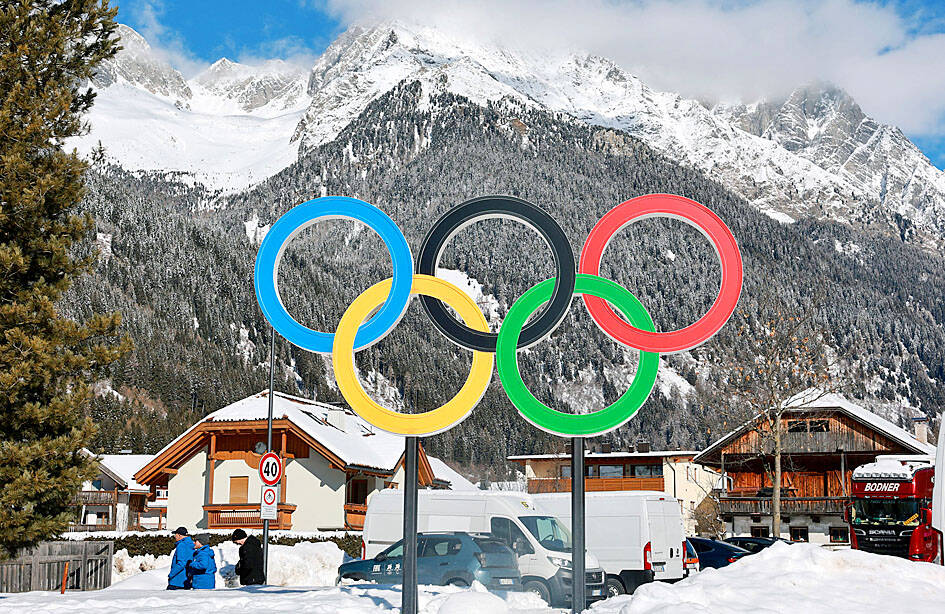
Photo: Reuters
As well as the official languages of English and French, and the host language Italian, the Olympic Games is adding German to some of the material published for this month’s events.
It is the first time organizers have dealt with a host venue that has bilingual place names.
The region once belonged to the Austro-Hungarian Empire, but was ceded to Italy as part of a First World War settlement.
A policy of brutal assimilation followed, implemented from the 1920s onward by the fascist regime, which encouraged immigration from other Italian regions to South Tyrol and attempted to impose the use of Italian.
The struggle of German-speaking activists for reunification with Austria culminated in bombings targeting Italian infrastructure in the 1950s and 1960s.
Bolzano and neighboring province Trento were granted the status of autonomous areas in 1972, and in South Tyrol multiculturalism is protected by law.
The Milan-Cortina organizing committee confirmed that “on signs and maps, the towns and villages of South Tyrol have been indicated with their official bilingual names” in Italian and German.
“Materials intended primarily for local communities” have also been produced in two languages, including a guide for volunteers, it said.
South Tyrol’s designation as autonomous ushered in “remarkable economic and cultural development” as well as “a form of self-governance found in few other Italian provinces,” tourism historian Hans Heiss said.
Posters reading “Welcome to Tyrol” in German have been put up at some bus stops by the South Tyrolean Shooting Federation, in collaboration with the South Tyrolean Patriotic League.
“The goal is to draw attention to a historical reality that many are unaware of,” Christoph Schmid, the federation’s provincial head, told the local press.
On the posters, a QR code links to a page that recounts the history of the region and deplores the “persistent injustice” of the province having been annexed to Italy, without asking the locals their opinion.
South Tyrol’s folklore will also be celebrated during the Games.
For the biathlon events in Anterselva, expected to attract many German-speaking tourists, there would “always be people in traditional Austrian costumes,” Kompatscher said.
In Bolzano’s central square on Tuesday evening last week, dozens of musicians in traditional black jackets, round hats for the men and long skirts for the women, welcomed the arrival of the Olympic flame.
“We want to be a little Europe within Europe, taking up the European slogan of unity in diversity,” Kompatscher said.
It “perfectly matches the Olympic spirit,” he added.