
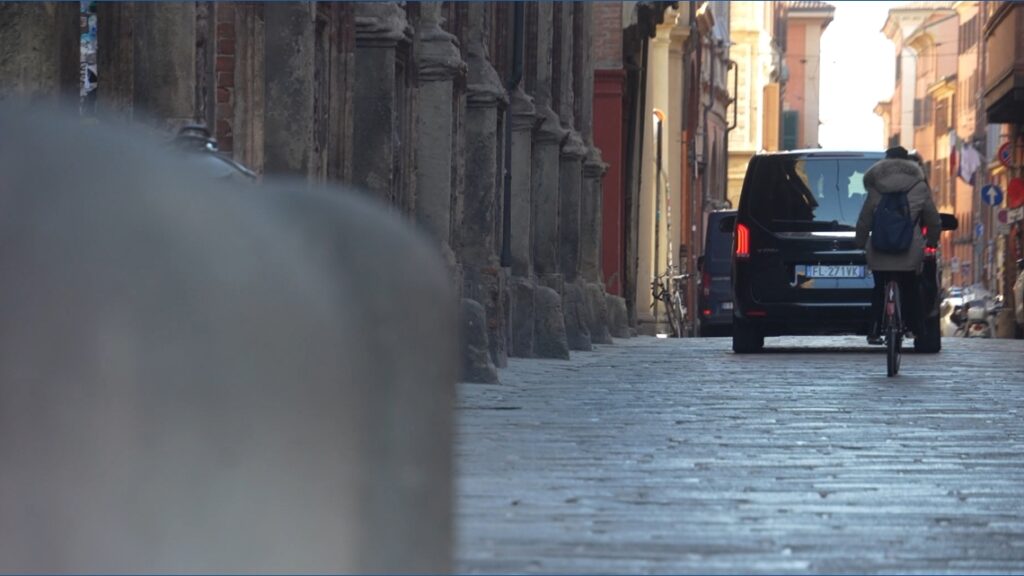
Just south of Olympic host city Milan, the busy streets of Bologna sit atop one of the oldest roads in the world that still leads to Rome.
As spectators travel across Italy for the 2026 Winter Olympics, many are passing through places where history is not just preserved, but is still in daily use.
Just south of the Olympic host city, Milan, the busy streets of Bologna sit atop one of the world’s oldest roads that still leads to Rome. Built by the Romans more than 2,000 years ago, the Via Emilia remains a major route through northern Italy.
“It’s not just history, it’s our identity,” Bologna Mayor Matteo Lepore said.
The Via Emilia was constructed in 187 B.C. as part of the Roman road network that connected cities across the empire. It was designed to move armies, goods and people efficiently, and its route has endured for centuries.
Today, modern asphalt covers much of the ancient roadway. Cars and trucks still follow the same path Romans once traveled, making the Via Emilia one of the oldest continuously used roads in the world.
“The Via Emilia is under the level of the city,” Lepore said. “You have different levels of the city, and if you go underground, you can see the original road of the Via Emilia, and it’s beautiful.”
Beneath Bologna’s streets, sections of the original stone road remain preserved. Visitors can also see pieces of it inside the city’s history museum, along with remains of Roman bridges that once carried the road across rivers and valleys.
The road continues to shape life in Bologna, a city known for its universities, commerce and dense traffic.
“When you arrive in Bologna, you become Bolognese,” Lepore said, noting how the city’s past and present are deeply connected.
As athletes and visitors move between Olympic venues, many unknowingly travel along the same route used by Romans more than two millennia ago. City leaders say the Via Emilia is a reminder that Italy’s history is not separate from everyday life, but built directly beneath it.
Even now, the newer layers above the ancient stones remain a vital transportation corridor through Italy, keeping history — and traffic — moving forward.