
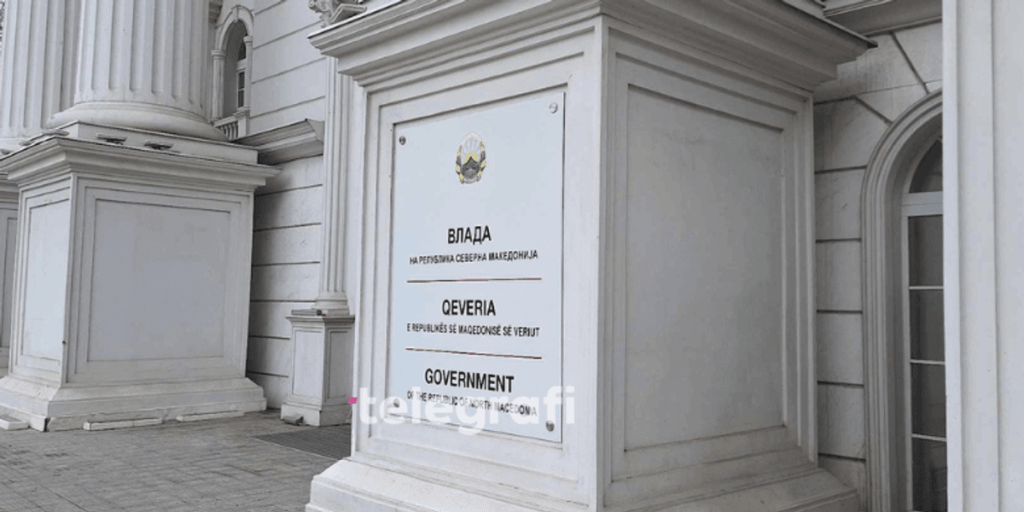
Government Spokesperson, Marija Miteva, stated that the government, at today’s session, approved the Government’s work program for 2026, which represents a strategic, comprehensive and reformative document of over 400 pages, which clearly defines the priorities, dynamics and vision for the development of the state in the coming period.
The program, she explained, is structured according to areas that include the competencies of the legislative, but also the executive branch, and represents our clear map for the reforms that are underway and that will directly impact the quality of life of citizens, the functionality of institutions, but also the European perspective of the state.
“This Program is a clear plan with vision, deadlines and responsibilities. It reflects the political will of this Government for reforms, stability, but also a European future and represents our strong foundation for a year in which the Government will deliver results”, emphasized Miteva.
The government program, as she explained, envisages new modern legal and systemic solutions in healthcare and education, while priorities include digital transformation, reforms in the judiciary and public administration, as well as programs aimed at directly improving living standards in the areas of the environment, healthcare, security, education and social protection.
“Regarding the legislative part, or what we mean by the competence of the Assembly, the focus is placed where the state has the greatest responsibility, health and education. New, contemporary and systemic laws have been envisaged that regulate higher and secondary education, scientific research activity, but also pedagogical service, as well as the advancement of the status and professional development of the teaching staff. These solutions are oriented towards the quality, accessibility and sustainability of the education system, as the foundation of long-term development”, emphasized Miteva.
In parallel, she stressed, the Government is also strongly pushing digital transformation, including through the adoption of the new Law on Electronic Invoices, which makes the digitalization of tax procedures a key pillar of tax reform. This will ensure greater efficiency, greater transparency, but also less administrative burden for citizens and companies.
Justice reform, she underlined, remains our top priority.
“Amendments to the Electoral Code are foreseen under the competence of the Ministry of Justice, with the full incorporation of recommendations from international missions, as a clear signal of commitment to democratic standards, fair elections, but also the rule of law,” Miteva added.
Regarding the reform in public administration, he emphasized that systemic laws have been envisaged for the senior management service, the advancement of quality in the public sector and, for the first time, the establishment of a unique salary system in the public sector.
“It is about solving a long-standing problem, where salaries are regulated in a fragmented, often uncoordinated manner and in violation of constitutional principles. The new solution brings justice, transparency and most importantly, compliance with the Reform Agenda, more precisely with step 18,” said Miteva.
In the second part of the Program, the one that refers to the acts and materials that we as the Government decide on, it informs that a series of programs have been envisaged that aim to directly improve the standard of living, in the fields of the environment, health, security, education and social protection.
“For 2026, an Operational Plan for active employment measures has been planned, coordinated with the real needs of the labor market, with the aim of increasing the inclusion of unemployed people and more efficient integration of vulnerable categories. In the economic and promotional context, a new chapter is being opened through the national branding of tourism, the economy and the state, under a clear, identifiable and contemporary image. This is a powerful opportunity for Macedonia to strategically position itself before the European public as an attractive tourist destination and a sustainable, open economy, with serious investment potential,” said the government spokeswoman.
In healthcare, she added, the Ministry of Health initiates the preparation of the Strategy for Young Doctors 2026–2030, something that has a clear goal: the retention, motivation and professional development of medical staff.
“We are aware that in a time of shortages and departures of health workers, this strategy will establish systemic support, mentoring, but also continuous education, which in the long term will mean a stronger and more sustainable health system,” Miteva declared.
It is also very important to note that for the first time, a Center for Digital Skills in Public Administration will be established, a key instrument for the digital transformation of the state. The programs will be dedicated to all structures, from management, decision-makers and cyber experts, but also to the entire administrative staff, because digitalization is not a project, but for us it represents a long-term process.