
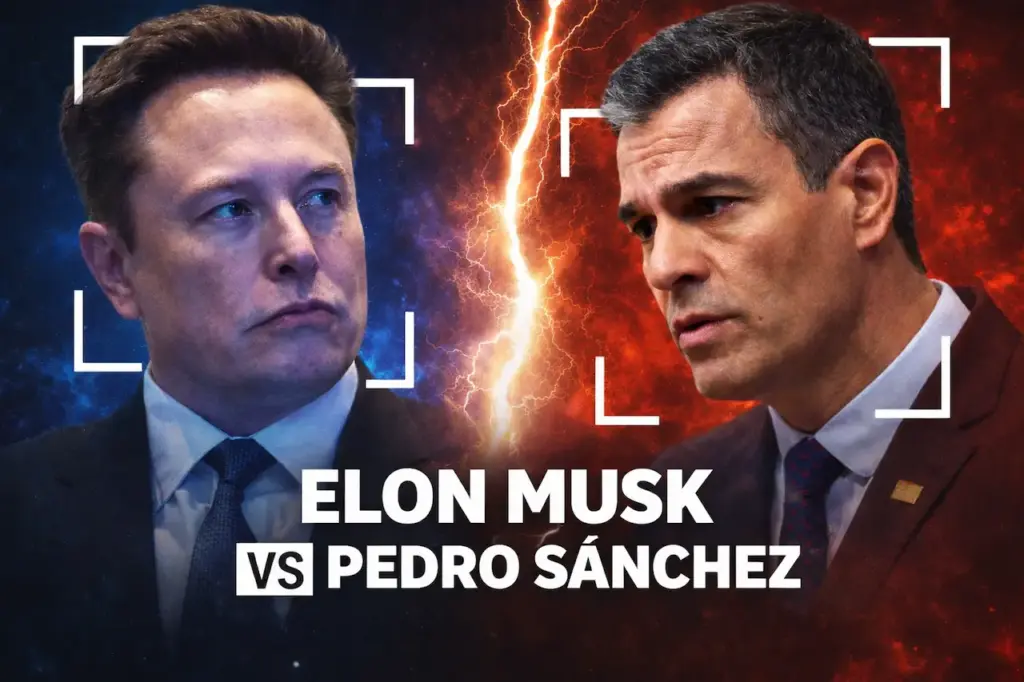

The confrontation between Elon Musk and Spain’s Prime Minister Pedro Sánchez has escalated into a full-scale diplomatic and digital war.
On Tuesday (3), Musk used his platform to insult Sánchez, calling him a “traitor to the Spanish people” in retaliation for proposed laws that would ban social media for minors under 16 and hold executives personally liable for the spread of hate and illegal content.
ANALYSIS
RELATED
RECOMMENDED
Editor’s Note: Contextual Analysis.
Impact: Musk’s ‘tyrant’ label for Sánchez is a classic case of projection. The real threat to freedom isn’t a government protecting children; it’s an unaccountable billionaire who believes his server farm is above the laws of nations.
Musk’s ‘tyrant’ label for Sánchez is a classic case of projection. The real threat to freedom isn’t a government protecting children; it’s an unaccountable billionaire who believes his server farm is above the laws of nations.
Musk’s rhetoric mirrors a growing trend of digital oligarchy challenging the legislative autonomy of sovereign nations. By branding democratic regulation as “tyranny,” the owner of X seeks to preserve an unregulated environment where his algorithms can amplify content without legal consequence.
However, Musk’s “crusade” for free speech is clouded by his historical associations with figures like Jeffrey Epstein.
As documents from the Epstein case continue to resurface, the billionaire’s aggressive stance against laws protecting children from digital abuse appears deeply hypocritical. While Spain aims to sanitize the internet, and France investigates X’s headquarters in Paris for foreign interference, Musk’s outbursts are increasingly viewed as a defensive maneuver by a man whose corporate and personal legacy is under intense scrutiny.
The clash is no longer about a website; it is about whether a billionaire can dictate the laws of a nation from his keyboard