
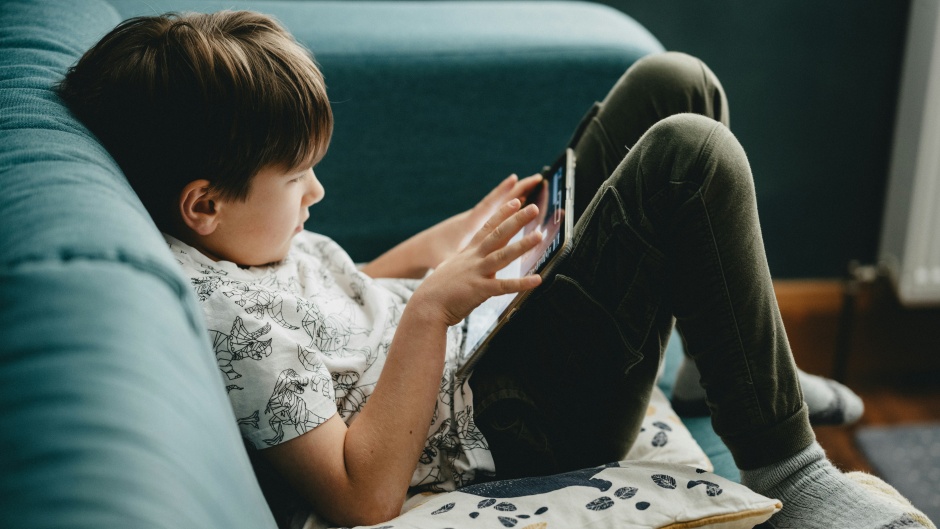
The use of social media by children and adolescents is an ongoing concern for European institutions, governments across Europe and society in general.
Last July, the European Commission unveiled guidelines for online platforms and social media on how to protect minors online, as well as a prototype age verification app, under the EU’s Digital Services Act (DSA).
Those guidelines cover a wide range of child safeguarding issues, including addictive design, harmful and inappropriate content, unwanted contact from strangers and cyberbullying.
All Evangelical Focus news and opinion, on your WhatsApp.
The Commission stated that it expected all its members to implement those measures.
France is the first European country to introduce measures regarding the access of minors to social media.
The French National Assembly recently passed a bill banning social media use by under-15s, with a large majority of 130 votes in favour and 21 against.
The bill now has to go to the Senate before becoming law.
Former prime minister Gabriel Attal, who leads Macron’s party in the National Assembly, explained that “social media platforms will then have until 31 December to deactivate existing accounts that do not comply with the age limit”.
He also hoped “the Senate would pass the bill by mid-February so that the ban could come into force on 1 September”.
For French President Emmanuel Macron, the measure is “a major step forward”, and “what scientists recommend, and what the French people overwhelmingly demand”.
“Our children’s brains are not for sale, neither to American platforms nor to Chinese networks. Their dreams should not be dictated by algorithms. We do not want an anxious generation, but a generation that believes in France, the Republic and its values”, he added on X.
He pointed out that “to ensure that this ban comes into effect at the start of the next school year, I have asked the government to fast-track the procedure”.
“France continues to lead the way today by becoming the first country in Europe to take this step. On 1 September, our children and teenagers will finally be protected. I will make sure of it”, concluded Macron.
Interdire les réseaux sociaux aux moins de 15 ans : c’est ce que préconisent les scientifiques, c’est ce que demandent massivement les Français.
Après un travail fructueux avec le Gouvernement, l’Assemblée nationale vient de dire oui.
C’est une étape majeure.…
— Emmanuel Macron (@EmmanuelMacron) January 26, 2026
Spain will also ban social media for under 16s, as Spanish President Pedro Sánchez announced at the World Government Summit in Dubai.
Online platforms will also be required to implement effective age verification systems,“not just check boxes, but real barriers that work”, said Sánchez.
“Social media has become a lawless place where crimes are tolerated, misinformation is valued over truth and half of users suffer hate attacks”, he added.
Spain’s ban is part of a wider package of measures, that will include a proposal to hold social media executives legally accountable for illegal and hate content on their platforms, as well as to criminalise algorithmic manipulation.
The Spanish president also urged the Public Prosecutor’s Office to investigate crimes committed by Grok (X’s Artificial Intelligence), Meta, and TikTok. “We will defend our digital sovereignty against any foreign interference”, he warned.
“Our children are exposed to a space they were never meant to navigate alone, a space of addiction, abuse, pornography, manipulation and violence. We will no longer accept that. We will protect them from the digital Wild West”, concluded Sánchez.
Spain and France join other EU countries, such as Denmark, Greece and Italy, in working to implement stronger controls and bans on social media platforms with the aim of protecting children.
The European Commission’s prototype age verification app is currently being tested in these five countries.
In Germany, both adults and adolescents “perceive clear negative effects of social media use on children and young people: 77 percent of adults and 61 percent of young people believe that social media has a negative impact on mental health”, explains the ifo report.
The survey also shows that 85% of adults and 47% of young people believe that it should only be legal to create a social media account from the age of 16.
Outside Europe, last December Australia became the world’s first country to ban social media for children under 16.
While acknowledging the many benefits of internet use, experts also warn of the problems it brings, especially regarding social media.
“The adolescent brain is not equipped to handle as much information as they receive on a daily basis. Many spend hours looking at and coveting an ‘ideal self’ that doesn’t really exist and end up feeling anxiety, disappointment and depression”, said Dámaris García Medina, a Spanish Chridtian psychologist, who regularly works with children and adolescents, in an interview with Evangelical Focus.
Francisco Villar, Christian researcher and author of the book Sin pantallas, pienso y siento mejor (Without screens, I think and feel better, 2024), warn that digital consumption “leads to less tolerance to frustration and less empathy, which makes life difficult for children in an age in which they need to exercise basic social skills”.
The author’s position is radical: no smartphones for those under the age of 18.
In Europe, Christians have launched projects to reinforce training and the proper use of social media in several countries.
Christian ‘influencers’ meet regularly in countries such as Germany and France to share their experiences and seek healthy use of technological tools.
Published in: Evangelical Focus – europe
– France and Spain move to ban social media for children under 16