
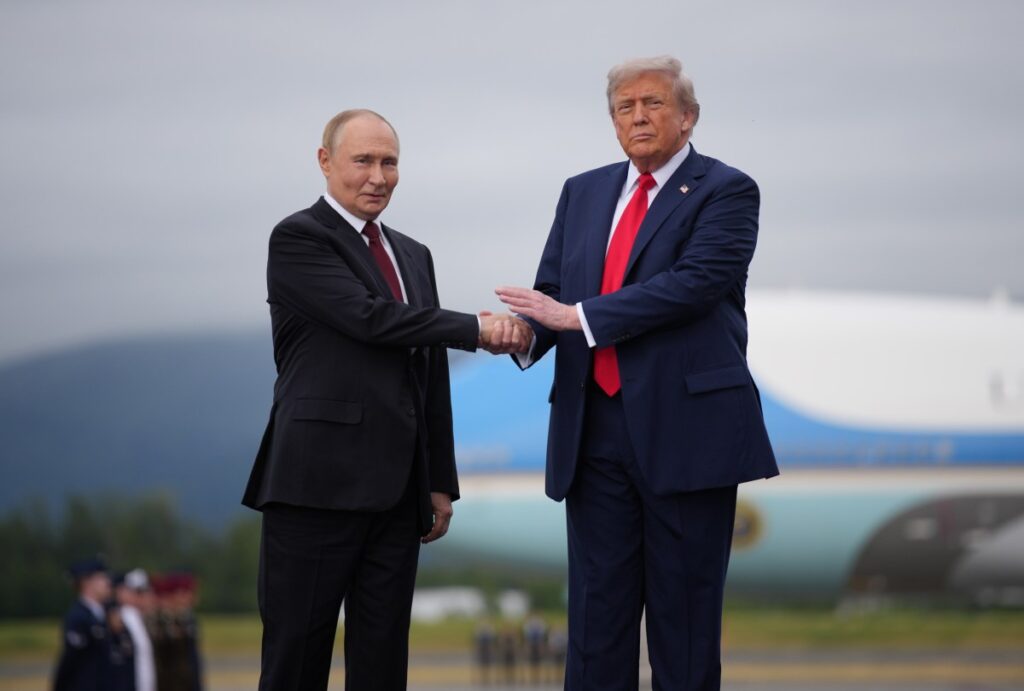
With Donald Trump declining to respond to an invitation by Vladimir Putin, the last treaty constraining the buildup of nuclear weapons by the United States and Russia expired Thursday.
There are now no caps on the world’s two largest atomic arsenals, for the first time in more than 50 years.
Putin offered last September to unofficially extend the 16-year-long New Strategic Arms Reduction Treaty, commonly known as New START, for another year. But Trump did not respond to that proposition.
“If it expires, it expires…we’ll just do a better agreement,” Trump said of the treaty.
But now that it has, it leaves the two powers without limits on their nuclear weapons.
“It’s all about a political handshake, which I thought would be an easy diplomatic victory for Trump, because he talks about being the peace negotiator,” said Rose Gottemoeller a former NATO deputy secretary-general and the chief U.S. negotiator on the treaty back in 2010.
“It’s turning into a diplomatic win for Vladimir Putin,” she told Newsweek.
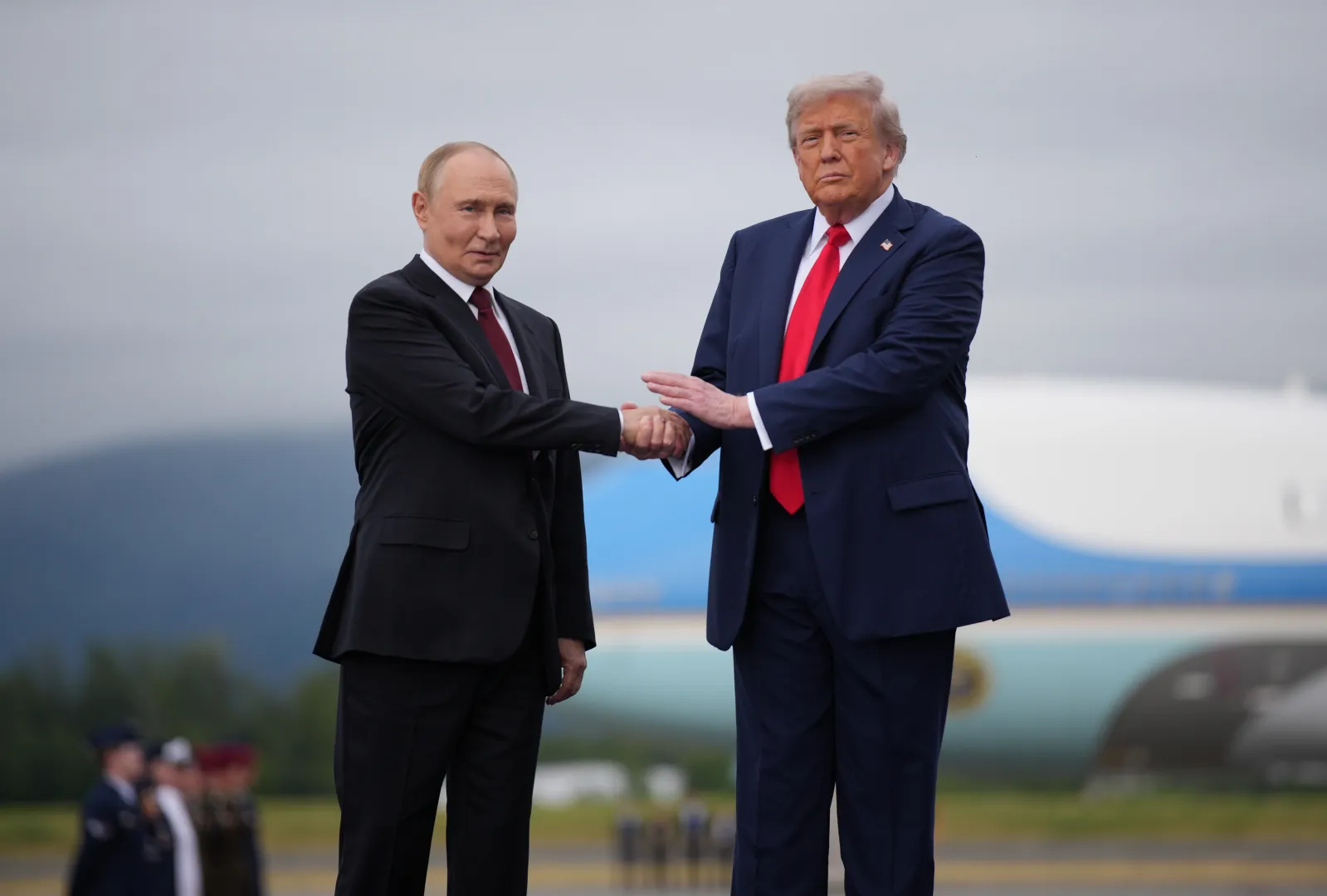
Russia has taken the moral high ground by offering first to abide by the treaty’s limits as long as the U.S. also signed up.This should have been a no-brainer for the president, says Gottemoeller.
“But now it’ll be the United States that’s the bad guy. This runs against the president’s stated interests in nuclear control.”
Deal’s End Marks Dangerous Moment
“It should still alarm everyone,” former Russian leader Dmitry Medvedev warned this week.
Medvedev, considered Putin’s social media rottweiler against the West, is no stranger to issuing his own Armageddon threats but said the treaty’s lapse speeds up the Doomsday clock, a point also confirmed by its organizer, the Science and Security Board of the Bulletin of the Atomic Scientists.
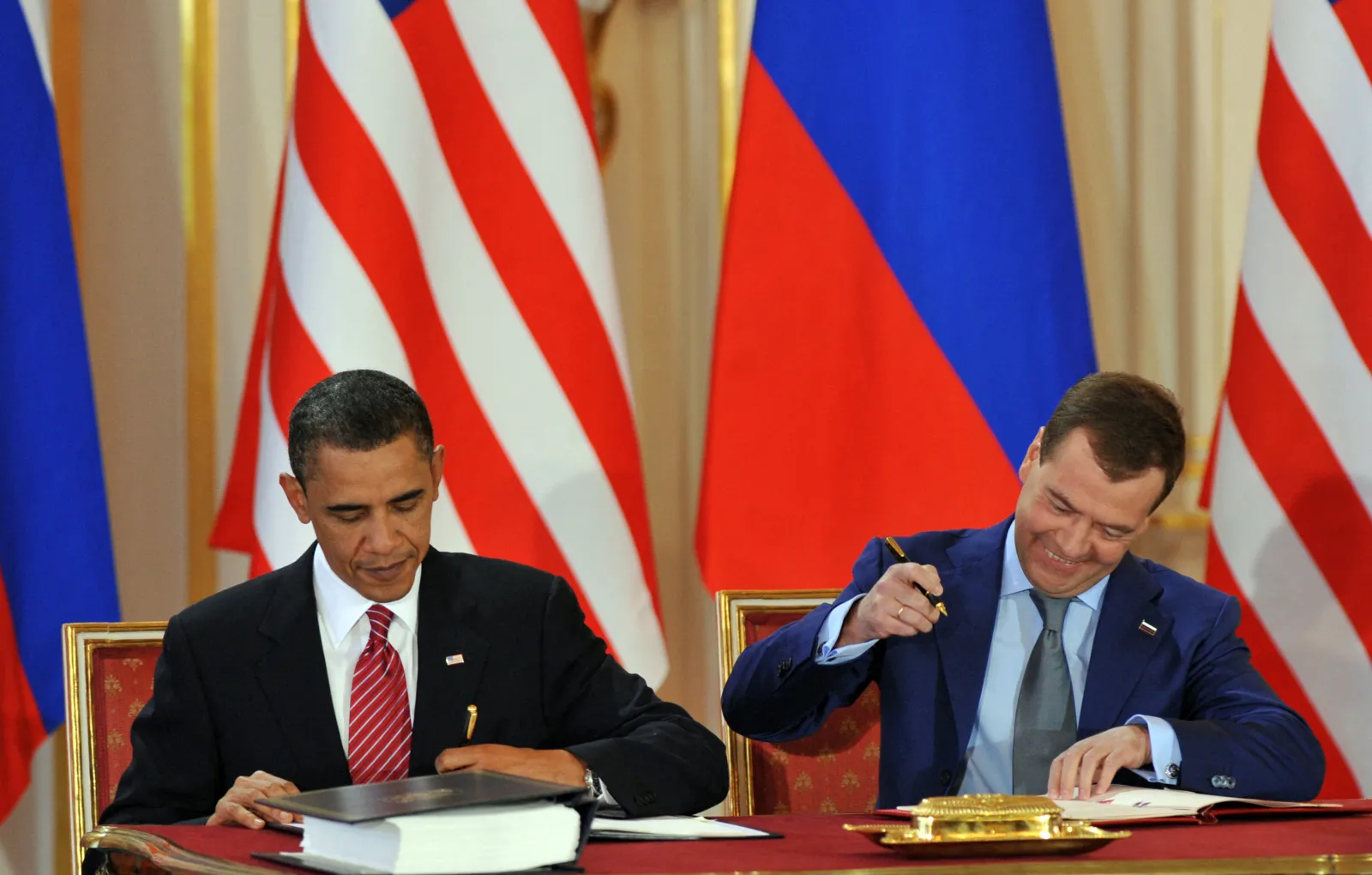
Medvedev signed the treaty in 2010 with then-U.S. President Barack Obama. It was a period of more optimistic ties between America and Russia, when there were attempts at a reset.
Obama earlier this week also warned of “another arms race” as he criticized Congress for not having kick-started New START after Putin dropped out in 2023, in response to Washington’s support for Ukraine.
Since then, Russia and the U.S. have not exchanged New START data, nor notified each other about movements of their strategic nuclear forces.
But Putin offered in September to continue observing the restrictions of New START for another year—albeit not extending the treaty itself, which is not possible under its terms—without objecting to U.S. support for Ukraine.
All it needed was for the Trump administration to respond, which it did not.
A White House official told Newsweek that the U.S. president: “will decide the path forward on nuclear arms control, which he will clarify on his own timeline.”
But Gottemoeller said that Putin and Trump could have simply declared they would stick to the New START limits until one side declared its intention to leave the deal, or went beyond the agreed numbers and the other side spotted it through its monitoring, for example through satellites.
No negotiation was needed as both sides only had to flip the implementation switch back on, she said. That would have bought time for Russia and the U.S. to start a wider discussion on what to do about the proliferation of drones and missiles at all ranges, and integrated air and missile defenses to counter them.
It would have also bought the U.S. time to decide what to do about China’s growing nuclear weapon buildup, without needing to worry about new Russian deployments. It would have allowed the U.S. triad modernization program of nuclear deterrence to proceed without new requirements.
“That’s another reason why it would be good to extend the limits for one year,” she said.
China’s Nuclear Threat
A White House official told Newsweek that Trump had spoken “repeatedly of addressing the threat nuclear weapons pose to the world and indicated that he would like to keep limits on nuclear weapons and involve China in arms control talks.”
Beijing’s warheads now number 600, growing by around 100 per year.
“The Chinese have a long way to go to catch up to the United States in warhead numbers,” said Gottemoeller, now a research fellow at the Hoover Institution. “But nevertheless, everyone is very concerned about the rapid Chinese nuclear modernization.”
New START had provided a level of transparency and predictability between Russia and the U.S. in an otherwise unpredictable relationship, and also set a global example of cooperation. “We’re going to be without that now,” said Matt Korda of the Nuclear Information Project at the Federation of American Scientists.
He said if the U.S. wanted China to be involved in arms control, it had to provide an incentive for China to participate.
“China doesn’t need to participate in arms control because from their perspective, time is on their side.”
On Wednesday, Beijing said exactly this, arguing it was “neither fair nor reasonable” to ask the country to sign up to restrictions when “China’s nuclear strength is by no means at the same level with that of the U.S.”
Korda said Beijing would want something in return for a nuclear deal, like the scaling back of U.S. missile defenses, as well as addressing space-based weapons and Trump’s Golden Dome project.
“It’s really hard to imagine that the U.S. would be interested in scaling back the more outrageous elements of Golden Dome to bring China to the table but that’s probably what’s going to be required,” said Korda.
“Ideally, you want to get a treaty that involves as many nuclear-armed countries as possible, certainly to Russia and China,” Korda said, “but it’s going to be quite challenging to do it unless you’re really willing to make some serious concessions, and I’m not sure that this administration is interested in that.”
Voters Want Nuclear Restrictions
Americans want curbs on nuclear weapons. A YouGov poll last month found 91 percent of Americans said the U.S. should negotiate a new agreement with Russia either to maintain current limits on nuclear weapons or further reduce both countries’ arsenals. Also, 85 percent of Trump voters believed the president should agree to Russia’s proposal to continue abiding by the limits imposed by the New START treaty.
After the treaty expires on Thursday, each side could in theory increase its missile numbers and deploy more strategic warheads, although there are technical and logistical challenges and experts do not expect this to happen immediately.
Russia’s nuclear modernization program has faced challenges and is behind schedule and over budget, which Korda believes gives Putin an incentive to continue with arms control. “I don’t think it’s in Russia’s interest to want to do a serious nuclear arms race with the United States,” he said.
Gottemoeller said that after February 5, “we won’t fall off a cliff—there is no immediate upsurge in the deployed nuclear warhead numbers that will occur.”
Medvedev said the expiry of New START did not mean an immediate catastrophe, but did say there should be concern, a warning that carries weight given his vociferous nuclear weapons threats.
Korda said: “It’s all well and good for Medvedev and Moscow to say: ‘We care about arms control. Here’s a proposal.’ But they also had a hand in degrading New START in pretty significant ways.”