
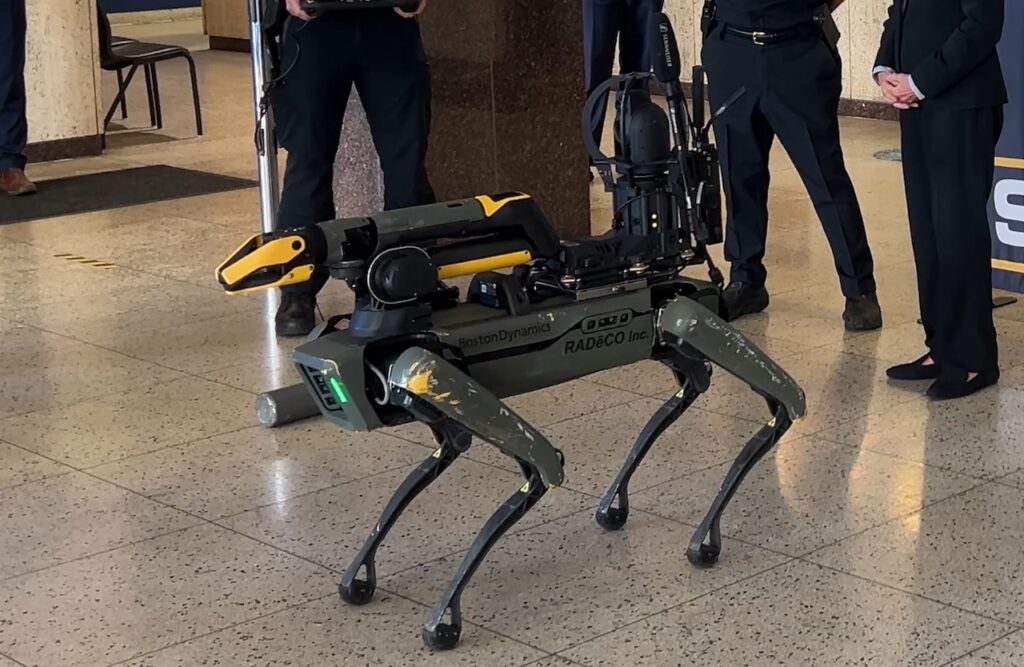
GREENFIELD — In 2019, the Massachusetts State Police became the first law enforcement department to start using robotic dogs. Equipped with sensors and thermal cameras by the Boston Dynamics team, “Roscoe” has been credited with taking three bullets in a 2024 standoff on Cape Cod.
Some say that the use of modern technology has assisted in advancing departments’ capabilities when it comes to solving crimes and ensuring safety for local communities. Other departments in the Pioneer Valley, though, are hesitant to fully embrace modern technology as a strategy. As technology continues to advance, each department weighs out the advantages and disadvantages for its own community.
Todd Dodge, the chief of police with the Greenfield department, said that his community is apprehensive, but he also sees the benefits of using modern technology.
The city currently has two automated license plate-readers that scan plates all day, send the information to the town, and then rewrite themselves every 30 days, Dodge said.
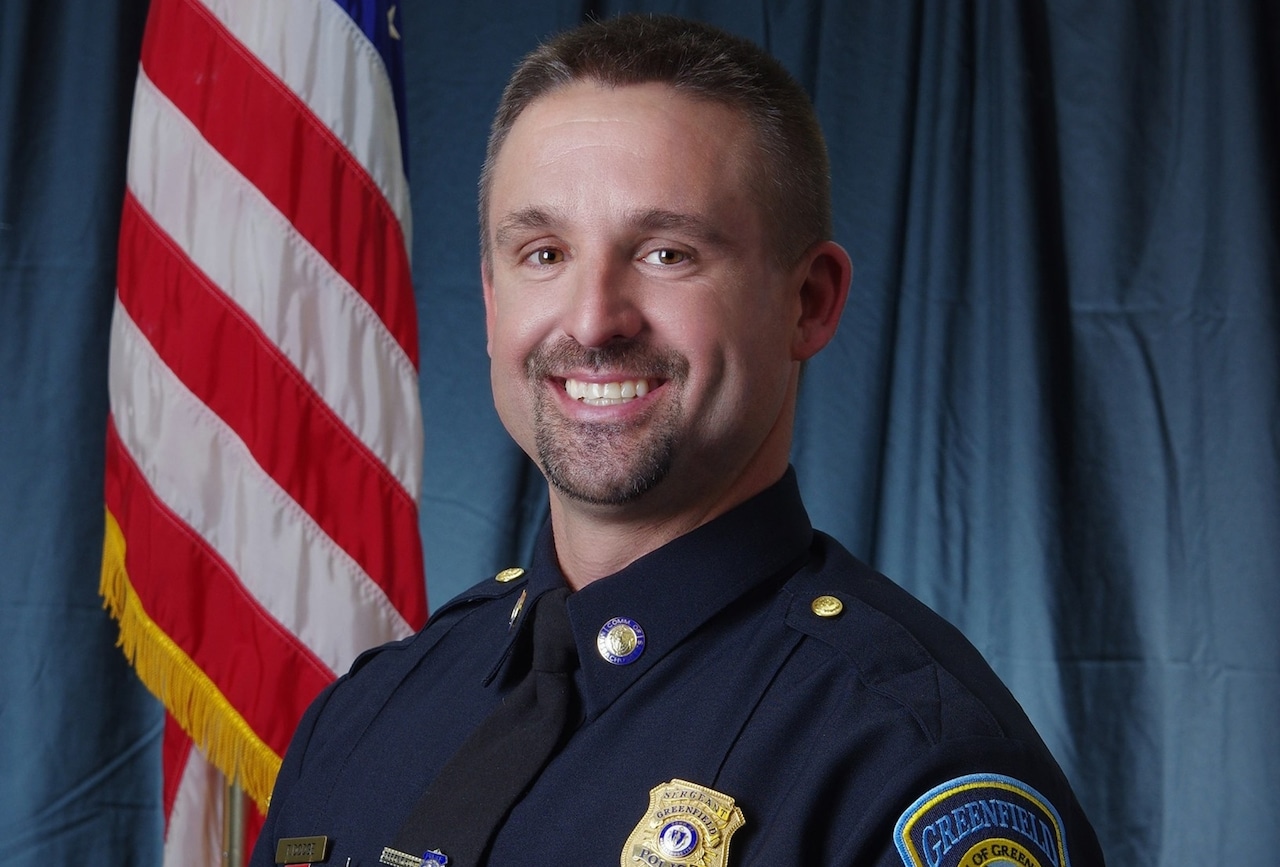 Police Chief Todd Dodge leads the Greenfield Police Department. (Provided photo)City of Greenfield
He said that his department uses the license plate-reader technology to search for cases where there are warrants out for arrests, missing persons or stolen vehicles. The technology assisted in solving a homicide in Greenfield, and even helped track down a suspect in the case of $150,000 stolen from the Greenfield Savings “Money Tree” ATM, as the truck involved was identified at Boston Logan Airport.
Dodge said the department still has a “high success rate of solving crimes the traditional way,” but technology has made the timeline faster.
He said the City Council has its concerns, though, as national reports circulate about plate-reading companies selling data to the U.S. Department of Homeland Security. The issues raised look at how the Fourth Amendment is being held up regarding access to personal data. In response, Flock — the maker of the devices — denies sharing personal information with federal agencies.
Dodge said that he has heard public concerns about data being used to find out those seeking abortions or gender reassignment surgeries.
Other technology that the Greenfield department is using includes interior drones to ensure a building is free of people before sending in a special response team, outside drones to assist in cases involving missing people and pets, as well as heat gauges. The department also is using body cameras for officers, which Dodge said has saved money and time in tracking down interviews.
He said there is a continued concern with residents regarding cameras being used at stoplights. In actuality, those are sensors that have been placed above the lights. He assured residents that there is no locally known facial recognition technology being used by the Greenfield Police Department.
Dodge said he recognizes how the use of modern technology gives off a “George Orwellian” surveillance feel, but that for the city of Greenfield, it’s not the reality.
“We don’t have the money for that,” said Dodge.
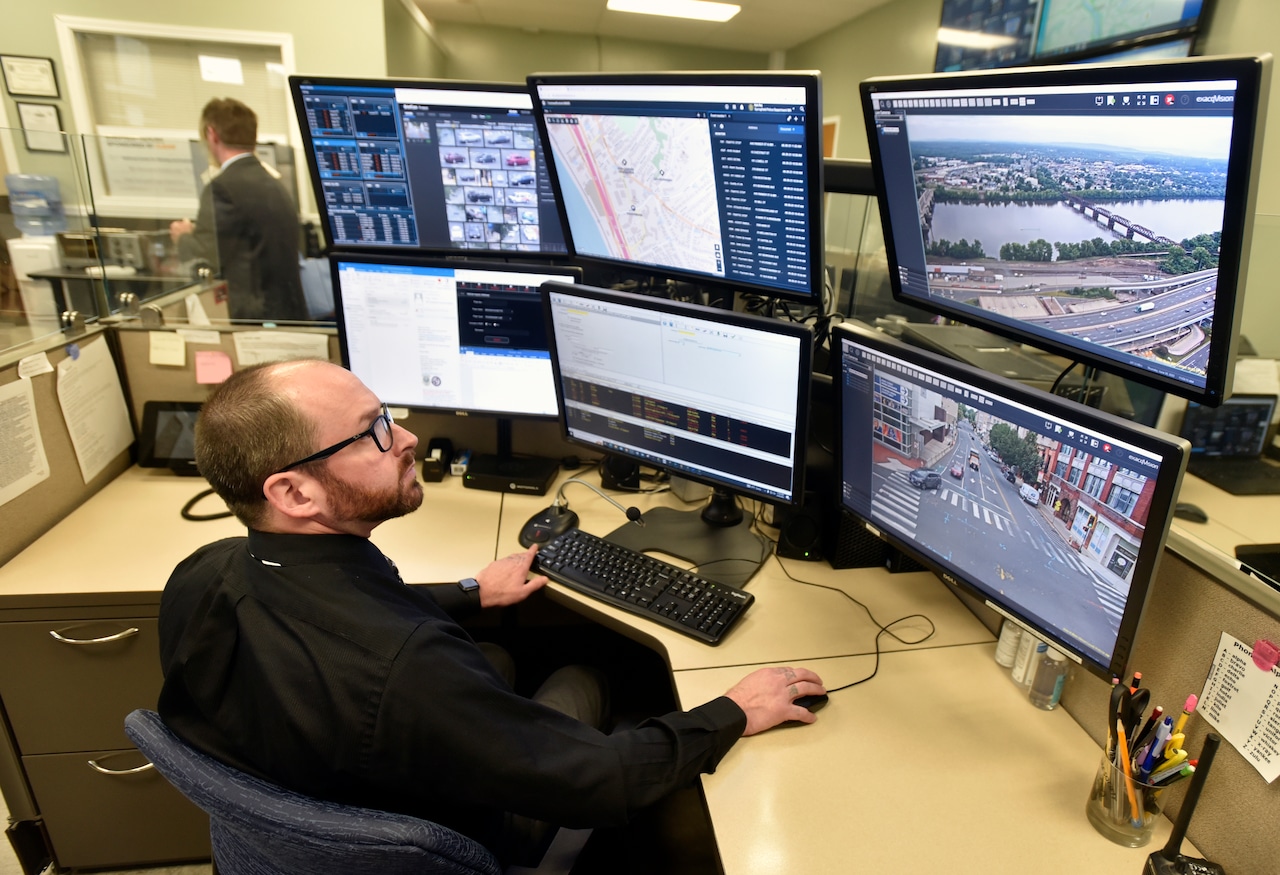 Crime analyst Kyle Roy works at the Springfield Police Department’s Real Time Analysis Center in 2023. (Don Treeger / The Republican, File)
In Springfield
In Springfield, modern technology is being used strategically, according to Ryan Walsh, the spokesperson for the Springfield Police Department.
Walsh said in the last two years, the department has acquired two drones that require certified operators who are trained for tactical missing persons cases, crash reconstruction and meteorology.
He said the entire department has been wearing body cameras as of June 2021 and said that, while it was a “tough sell” in the beginning, now the department and the community are both in favor of it.
“It’s been highly beneficial in transparency,” said Walsh.
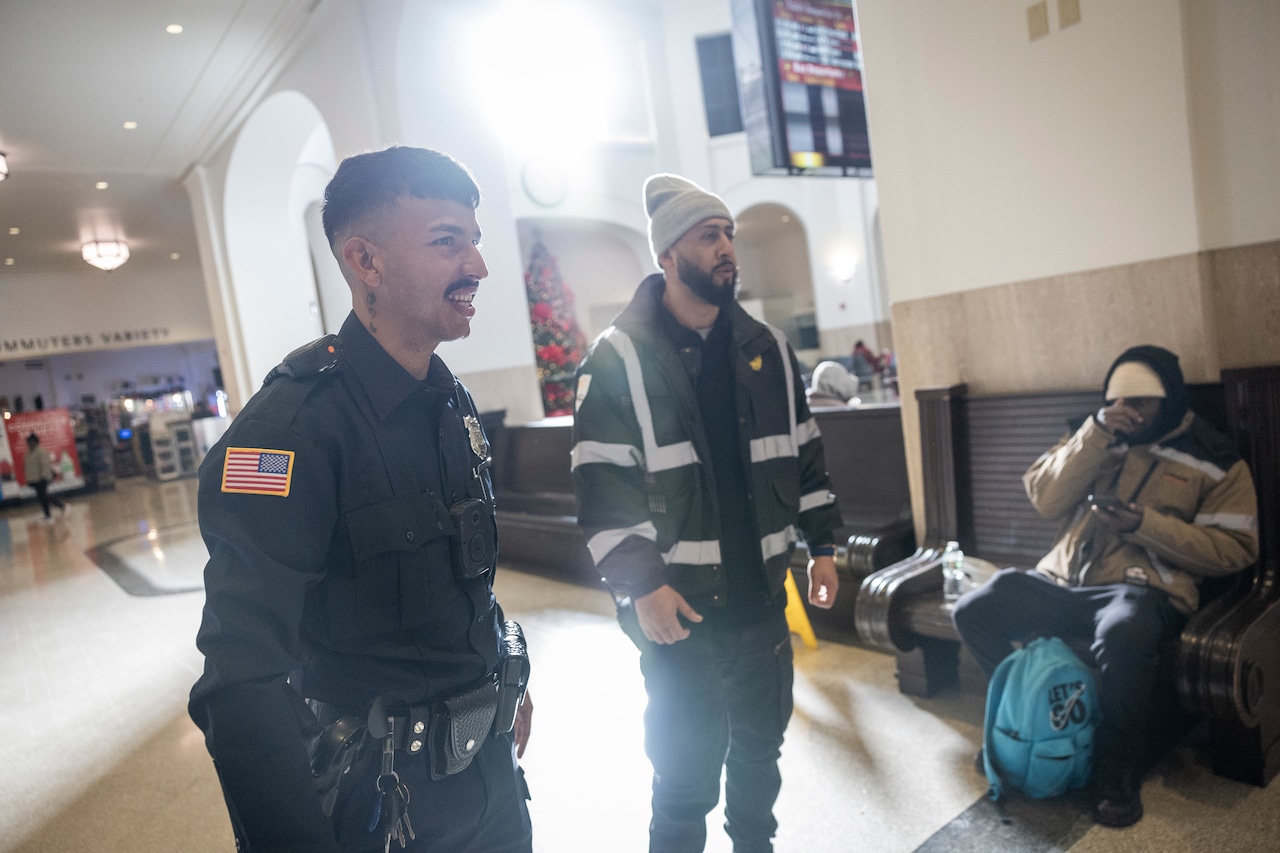 Springfield Police Officer Carlos Rodriguez-Lugo patrols Union Station in Springfield on Dec. 5. (Douglas Hook / The Republican, File)Douglas Hook
In 2018, the department launched a Real Time Analysis Center, where Walsh said the department is tied into a few hundred city cameras, Union Station, and some businesses with exterior cameras that opted to join the program.
He said that in a separate protocol, the department also can access inside Springfield schools, where the school can choose to go live in the case of a serious threat, like the 2024 shooting at the High School of Science and Technology.
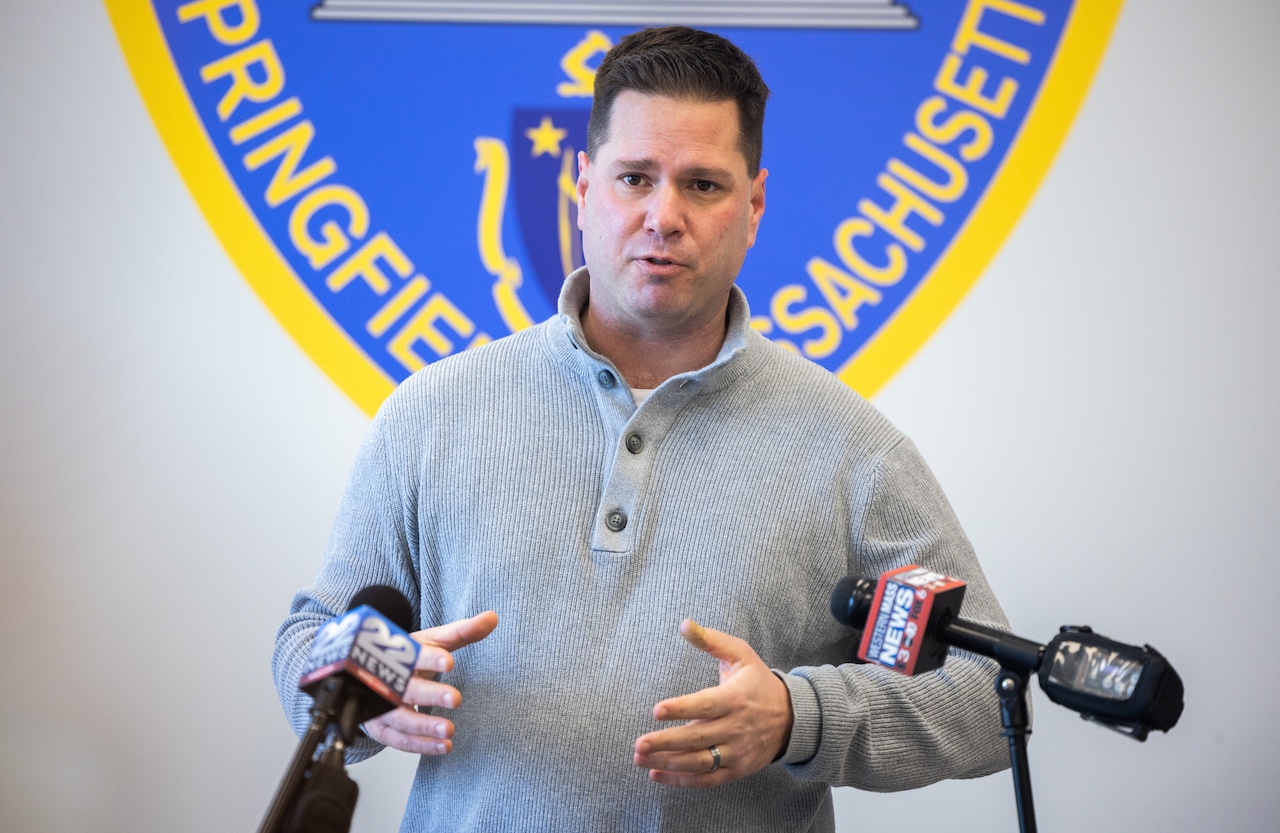 Ryan Walsh, spokesperson for the Springfield Police Department, talks about a donation made by members of Chicopee Moose Lodge 1849 to obtain a ballistic vest for the department’s newest K9, K9 Flexx. (Hoang ‘Leon’ Nguyen / The Republican, File)
“The main purpose in R-TAC is when you get a 911 call of something going on, they’re able to get to a camera basically instantaneously and advise officers over the radios of what they see based on what the 911 call is saying, to provide safety for the officers who are arriving and the civilians that are in that area, as well,” said Walsh.
Walsh said that for the city of Springfield, technology is not being used for data purposes, but rather for the “real-time function” it can provide officers responding to calls. He said that the city does not use any facial recognition software.
The department does not automatically tie into personal doorbell cameras, Walsh said. If residents want to grant permission for the department to view any footage, they would need to fill out a form that would give access to detectives if an incident arose where their footage could be helpful.
The department also uses ShotSpotter, an audio-based cloud technology that uses sensors to pick up gunfire in real-time and alerts local departments.
Walsh said one study done by the department showed that in 70% of the cases where gunfire or ballistic evidence was found, the department did not receive a 911 call.