
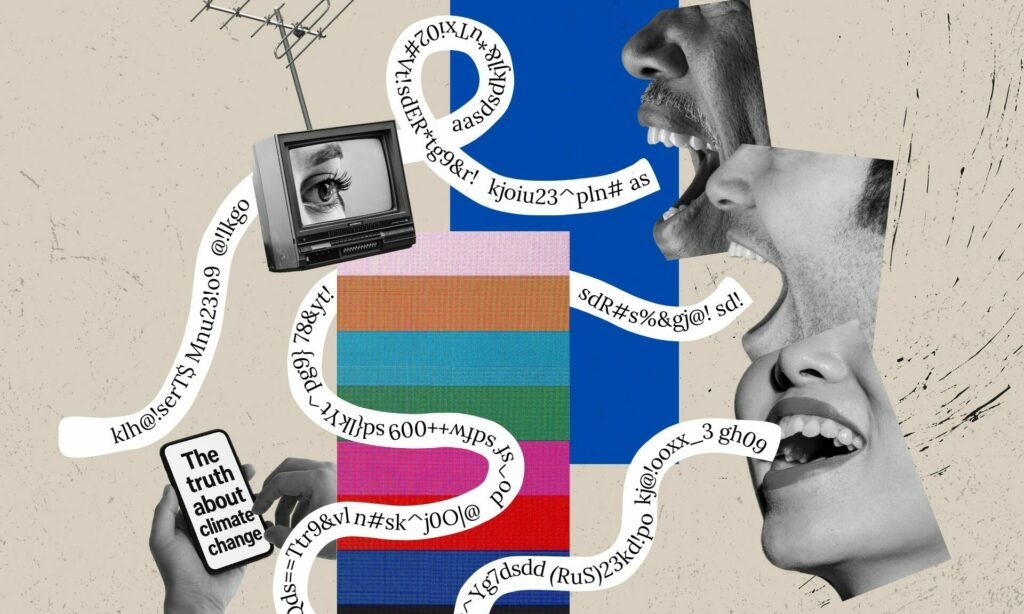
Disinformation often refers to false or misleading information that is deliberately created and disseminated to deceive and cause harm. There is no single universally accepted definition of disinformation, given the many contexts in which it can arise, from elections and public health to armed conflict and environmental issues.
According to the United Nations, disinformation can be spread by state and non-state actors and can affect human rights, undermine public policies, amplify social tensions and interfere with responses to crises. Rapid technological change has transformed how people access and share information, creating both opportunities for raising awareness and participation and new vulnerabilities in the information environment.
Misinformation vs Disinformation
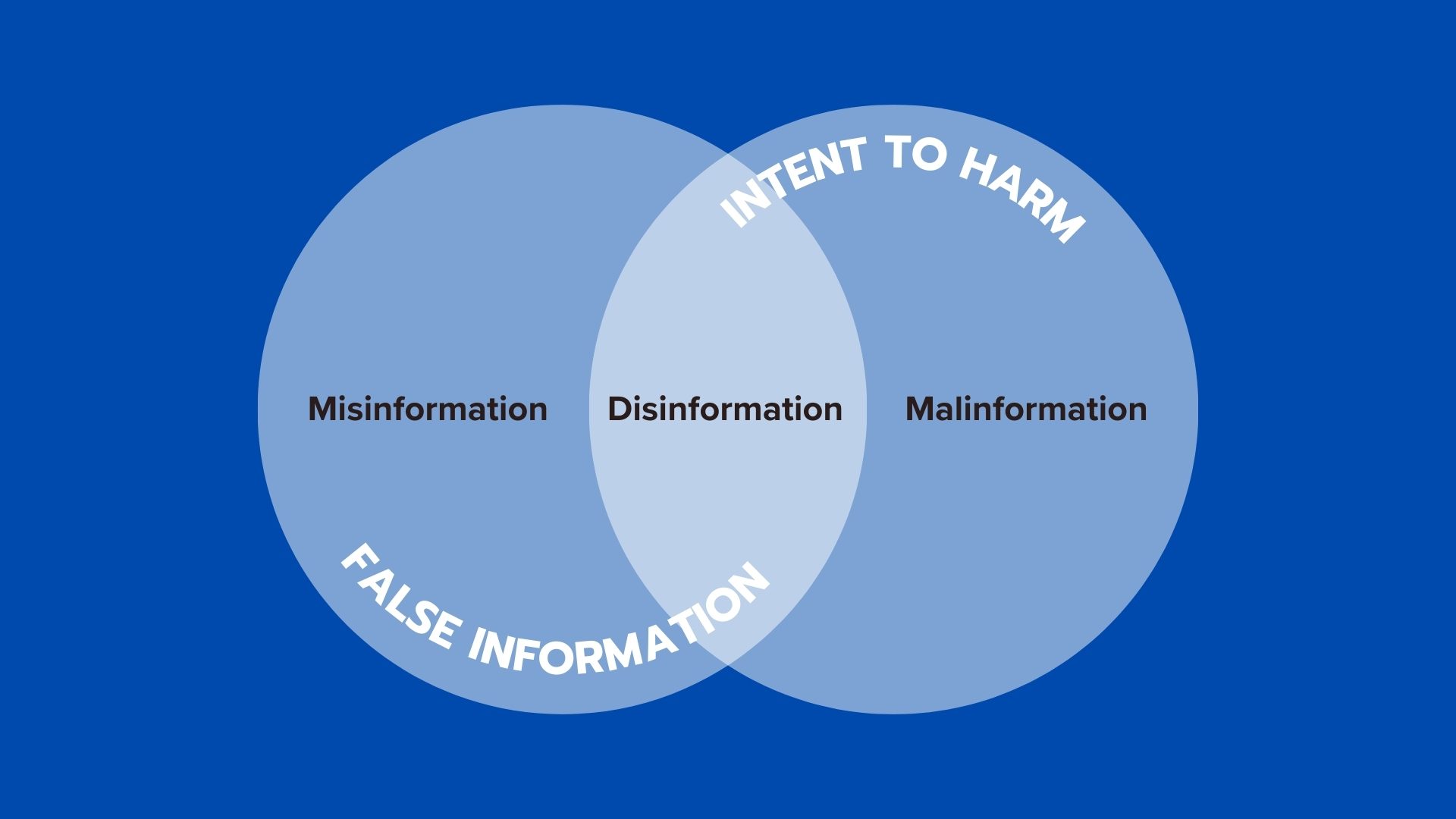
It is important to distinguish between misinformation and disinformation which can commonly be confused. Misinformation involves inaccurate information shared without malicious intent to mislead. Misinformation can arise from misinterpretations of data or outdates knowledge. Despite the absence of malicious intent to deceive, misinformation can still contribute to confusion and skepticism about issues like climate science for example, making it harder for people to access accurate information.
Disinformation on the other hand, is distinguished by the fabrication and spread of deliberately false information to deceive and spread harm. It can be spread by individuals or organizations who have interests in denying or downplaying certain truths. This can be seen, for example in the case of climate change, where extensive research has shown that fossil fuel companies have historically and continue to fund campaigns intended to create doubt on climate science and the impacts of climate to protect profits.
Why Tackling Disinformation Matters
In the environmental context, disinformation undermines public understanding of complex scientific issues, weakens trust in institutions, and delays collective action. Disinformation is also increasingly shaping public debates and influencing environmental policy decisions, often undermining efforts to address urgent global challenges driven by the triple planetary crisis of climate change, nature loss and pollution. These dynamics have direct implications not only for environmental governance, but also for the enjoyment of human rights, including access to information, participation in public affairs and accountability for environmental harm.
Disinformation as a growing global risk
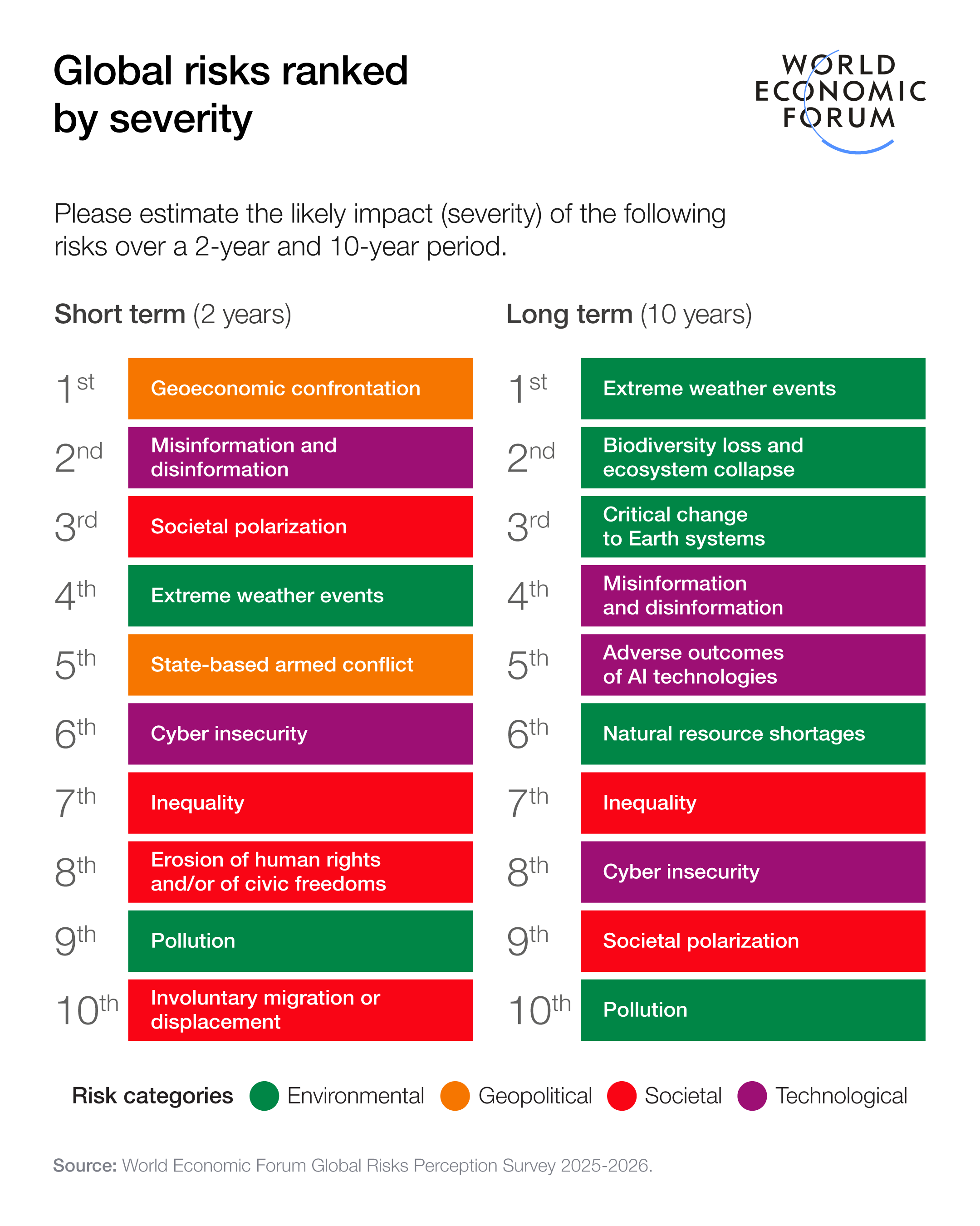
Disinformation is increasingly recognized as a major global risk with far-reaching societal, political, and environmental consequences. The World Economic Forum Global Risks Report 2026 identifies misinformation and disinformation among the most significant risks worldwide, both currently, in the short and long term.
According to the report, disinformation contributes to growing societal polarization, weakens trust in institutions and expertise, and undermines collective responses to global challenges. In an increasingly complex and digitalized information environment, false and misleading narratives can spread rapidly across borders, amplified by online platforms, emerging technologies and coordinated campaigns
The Global Risks Report also highlights the interaction between disinformation and other global risks, including geopolitical tensions, democratic backsliding and environmental degradation. In this context, disinformation is not only a standalone threat, but a risk multiplier that exacerbates existing vulnerabilities and complicates policy responses.
Disinformation in Environmental Policymaking
Disinformation in environmental policymaking encompasses deliberately false or misleading narratives related to triple planetary crisis. Such narratives often deny or downplay scientific consensus, exaggerate uncertainty, or misrepresent the impacts of environmental policies.
Environmental issues are particularly vulnerable to disinformation for several reasons. They are often technically complex, rely on long-term scientific projections, and involve trade-offs that affect economic interests, development pathways and social outcomes. These characteristics can make it difficult for non-specialist audiences to assess claims and increase the space for misleading or manipulative information to gain traction, even when robust scientific evidence is widely available.
Disinformation increasingly shapes debates and decision-making related to all dimensions of the triple planetary crisis, including:
- Climate change – through narratives that deny or question established scientific consensus, exaggerate scientific uncertainty, or misrepresent mitigation and adaptation measures as ineffective, harmful or unjustified.
- Nature and biodiversity – where disinformation may downplay ecosystem degradation, question the value of conservation efforts, or portray biodiversity protection as incompatible with development.
- Pollution – including misleading information about environmental and health impacts, regulatory standards, or the effectiveness of pollution control measures.
Disinformation in Climate Context
One of the most widespread and well-documented forms of disinformation in environmental policymaking is in the context of climate change. It refers to the deliberate spread of false or misleading information intended to deceive audiences about climate change and to delay or obstruct climate action for political, economic or ideological reasons.
Disinformation in such a context does not rely on a single narrative, but rather on a range of evolving messages and strategies that adapt to scientific advances and policy developments. Common narratives and tactics include climate denial, climate delay, greenwashing, climate conspiracy narratives.
Disinformation in Biodiversity Context
Disinformation in the area of biodiversity also exist in various forms. Though often “not as spectacular as that concerning climate“, misinformation and disinformation in the context of biodiversity concerns the scale of false information about nature, including protected and invasive species, and the phenomenon of deliberately distorting true content by presenting it in a false context, often used by unreliable media to undermine trust in science and public institutions. Disinformation in biodiversity context and policymaking can come in a variety of ways.
Disinformation in Toxics Context
Conflicts of interest in scientific studies and attempts to silence scientists are ways of manipulating the information on hazardous substances and waste in the public domain and resulting policy decisions. Another pervasive and nefarious practice is the fabrication and dissemination of disinformation.
As highlighted by the UN Special Rapporteur on toxics and human rights in his report to the Council, disinformation campaigns are ubiquitous in the toxics context; they reflect tactics of industry aimed at spreading doubt and confusion in society. In the toxics context, examples of disinformation tactics abound, including on the part of the fossil fuel industry and agroindustry, for example: (a) “ghost-writing” studies to support an industry position is a tactic aimed at obfuscating the connections between authors and the industry in question; (b) manipulation of the findings of research studies in patent applications; (c) deliberate misinterpretation or cherry-picking of data; (d) hiding or suppressing information; and (e) posing as a defender of health or truth.
A brief by Corporate Europe and the Center for International Environmental Law, The Pollution Playbook: How industry blocks regulation of toxic chemicals (2026) highlights that despite increasing evidence of hazardous chemicals in the environment and in human bodies, there are many regulatory gaps. While there are many reasons for this, a major contributor to this regulatory gap is the deceptive tactics that long history of corporate interests and their allies use to keep producing and selling their toxic products and avoid regulation of harmful products.
Impact on Environmental Governance
Disinformation in environmental policymaking can significantly undermine effective governance at local, national and international levels. By distorting how environmental risks and solutions are understood, disinformation weakens the foundations of evidence-based decision-making and complicates efforts to respond to the triple planetary crisis.
Ways in which disinformation can undermine environmental governance include:
- Weakening science-based decision-making and evidence-informed policy processes.
- Delaying or diluting environmental and climate policies.
- Distorting public debate and reducing public support for action.
- Eroding trust in scientific institutions, public authorities and international cooperation.
Reflecting these concerns, the Intergovernmental Panel on Climate Change highlighted in its report on adaptation (2022) notes that “[r]hetoric and misinformation on climate change and the deliberate undermining of science have contributed to misperceptions of the scientific consensus, uncertainty, disregarded risk and urgency, and dissent.” The following report on mitigation (2022) describes how “opposition from status quo interests” and “the propagation of scientifically misleading information” are “barriers” to climate action and have “negative implications for climate policy.”
“While there is expert scientific consensus on anthropogenic climate change, rhetoric, misinformation and politicisation of science have contributed to misperceptions, polarisation on the severity of impacts and risks to society, indecision and delayed action. In North America, this impedes adaptation efforts and inflates climate risks.”
Disinformation and Impacts on Human Rights
Disinformation in environmental policymaking also poses growing risks to the enjoyment and realization of human rights. It can undermine the right to seek, receive and impart information, limit meaningful public participation in environmental decision-making, and obstruct access to justice for environmental harm. In some contexts, misleading narratives are also used to discredit or target journalists, scientists and environmental human rights defenders, contributing to intimidation, harassment and shrinking civic space.
Recognizing these risks, the Human Rights Council in its resolution 55/10, affirms that disinformation can negatively affect the enjoyment and realization of all human rights, and that States play a central role in countering disinformation. As such, the resolution calls upon States to ensure that their responses to the spread of disinformation comply with international human rights law and that their efforts to counter disinformation promote, protect and respect individuals’ freedom of expression and freedom to seek, receive and impart information, as well as other human rights.
Various Special Procedures mandate holders have also highlighted the risks disinformation pose to the fulfillment and enjoyment of human rights:
- The UN Special Rapporteur on the promotion and protection of the right to freedom of opinion and expression, Irene Khan, in her annual report (A//HRC/47/25) to the Human Rights Council, examined the threats posed by disinformation to human rights, democratic institutions and development processes. While acknowledging the complexities and challenges posed by disinformation in the digital age, the Special Rapporteur finds that the responses by States and companies have been problematic, inadequate and detrimental to human rights, recommending recalibration of their responses to disinformation, enhancing the role of free, independent and diverse media, investing in media and digital literacy, empowering individuals and rebuilding public trust.
- The UN Special Rapporteur on toxics and human rights, Marcos Orellana, in his annual report (A/HRC/48/61) to the Human Rights Council, highlighted the human right to science with regard to the risks and harms associated with the life cycle of hazardous substances and wastes. He examined the dynamics and interconnections between scientific progress, the diffusion of scientific information and the science-policy interface.
- The UN Special Rapporteur on human rights and climate change, Elisa Morgera, in her report to the Human Rights Council (A/HRC/59/42), has highlighted that extensive research has documented the fossil fuel sector’s evolving strategies to keep the public uninformed about the severity of climate change and about the role of fossil fuels in causing it (“the playbook”). This has undermined the protection of all human rights that are negatively impacted by climate change for over six decades. She underscored that the “defossilization of our economies” requires stronger measures including addressing misinformation and greenwashing by the fossil fuel industry through its criminalization.
- The Advisory Committee was requested by the Human Rights Council to conduct a study and to prepare a report on the impact of disinformation on the enjoyment and realization of human rights, and to present it to the Human Rights Council at its sixty-first session (HRC61). The report aims to identify, among others, how human rights are impacted the most by disinformation, including on matters on the environment and climate, how forms of disinformation are considered particularly problematic for human rights, and how some measures to counter disinformation negatively impact human rights’ enjoyment.
Initiatives and Actions to Address Disinformation in Environmental Policymaking
A growing number of international initiatives and organizations are seeking to strengthen information integrity and counter disinformation, particularly in the context of environmental policymaking and governance. These efforts recognize that addressing disinformation requires more than correcting false claims, and instead calls for systemic approaches that promote transparency, protect scientific integrity, support independent media, and strengthen public access to reliable, evidence-based information.
Together, these initiatives reflect growing international recognition that effective responses to the triple planetary crisis depend not only on sound environmental policies, but also on healthy information environments that enable informed public debate and evidence-based decision-making.
1. Global Initiative for Information Integrity on Climate Change
The Global Initiative for Information Integrity on Climate Change is a multilateral partnership launched in 2024 by the Government of Brazil, the United Nations, and the UNESCO to advance cooperation on tackling climate disinformation and strengthening the integrity of information ecosystems. The Initiative was announced at the G20 Leaders’ Summit in Rio de Janeiro as part of broader efforts to promote reliable, evidence-based communication on climate issues, and to counter misleading narratives that delay or derail climate action.
The Initiative brings together countries, international organizations, civil society, and other stakeholders around a shared commitment to protect the quality and reliability of information related to climate change. Its core objectives are to investigate, expose and dismantle disinformation, support research that deepens understanding of information threats, and promote accurate, accessible climate information at national and global levels.
A key element of the Initiative is the Global Fund for Information Integrity on Climate Change, which finances research, strategic communications and investigative journalism projects that enhance public understanding of climate science and counter misleading or malicious content.
Open calls for proposals have invited non-profit entities from around the world to contribute evidence, insights and tools that address climate disinformation, with a particular emphasis on supporting stakeholders in the Global South.
The Initiative has also played a central role in shaping international political commitments. Its activities contributed to the Declaration on Information Integrity on Climate Change.
2. Declaration on Information Integrity on Climate Change
The Declaration on Information Integrity on Climate Change represents a significant step in global efforts to safeguard the quality, transparency and reliability of information related to climate issues. Launched on 12 November 2025 at COP30 in Belém, Brazil, the Declaration was developed under the Global Initiative for Information Integrity on Climate Change.
The Declaration recognizes that access to accurate, reliable and evidence-based information is indispensable for effective climate action, public awareness, accountability and trust in policy responses. It underscores that threats to information integrity (including disinformation, misinformation, denialism and targeted attacks on journalists, scientists and environmental defenders) weaken public debate and can delay or undermine responses to the climate crisis.
The Declaration was initially endorsed by a coalition of States including Brazil, Canada, Chile, Denmark, Finland, France, Germany, Spain, Sweden, and Uruguay. Since COP30, additional countries have joined, and as of 20 January 2026, the European Union have formally endorsed the Declaration, signaling broad political support for the principles it advances and reinforcing commitments to evidence-based policymaking and factual public discourse on climate issues
3. Verified for Climate
Verified for Climate is a joint initiative of the United Nations and Purpose, a social impact agency, designed to promote solutions-focused, science-based information on climate change and counter misleading narratives that can delay, distort or derail climate action. The initiative recognizes that overcoming such disinformation requires more than fact-checking alone: it calls for proactive storytelling, strategic engagement and credible messengers who can build trust across diverse audiences.
The initiative targets three interrelated dynamics of climate disinformation: denialism, doomism and delay. It does so by amplifying accurate climate information and showcasing real-world solutions and through a three-pillar approach:
- Trusted messenger and community engagement: Verified for Climate collaborates with local and global voices, including scientists, community leaders, youth advocates and influencers, to engage audiences at the grassroots. By equipping trusted messengers with accurate content and communication tools, the initiative seeks to build local understanding and resilience to misleading narratives.
- Global creative campaigns: The initiative produces large-scale awareness campaigns that reach diverse target audiences across media platforms. These campaigns aim to make visible positive climate action, demystify complex scientific findings, and counter polarizing or misleading content with accessible, compelling messages grounded in evidence.
- Expert convenings and strategic insights: Verified for Climate brings together climate communicators, researchers, policy experts and practitioners to share insights, identify emerging disinformation trends and co-create effective communication strategies. These convenings foster collaboration across sectors and support the development of messaging that can strengthen public understanding and encourage global cooperation.
The initiative complements other efforts to combat disinformation in environmental policymaking by emphasizing positive narratives and solutions, not just rebuttals of false claims. This reflects a broader recognition shared by climate scientists, communication scholars, and public policy experts, that effective climate communication must both correct inaccuracies and inspire constructive public discourse on climate solutions.
4. Forum on Information and Democracy (FID)
The Forum on Information and Democracy is an international organization that works with states and civil society to uphold democratic principles in the information space. Its work focuses on strengthening governance frameworks that protect access to reliable information, freedom of expression, and accountability in digital environments.
FID operates through two complementary pillars:
- Supporting democratic governments: FID facilitates international coordination and guide the development of policy solutions through the International Partnership on Information and Democracy, which is endorsed by 56 states.
- Mobilizing global expertise: As a civil society-led entity, the Forum brings together researchers, activists and organizations from all regions to co-produce actionable recommendations. They identify systemic challenges, develop frameworks for accountability, and advocate for both regulation and self-regulation of digital actors.
5. Climate Action Against Disinformation (CAAD)
Climate Action Against Disinformation is a global coalition of over 90 leading climate and anti-disinformation organizations demanding robust, coordinated and proactive strategies to deal with the scale oof the threat of climate misinformation and disinformation. The coalition brings together climate science communicators, researchers, civil society groups and anti-disinformation experts to address the scale and impacts of climate misinformation and disinformation on public understanding, policy and democratic processes.
CAAD leads efforts in policy development, communication strategies, and research to hold Big Tech responsible for their part in facilitating the circulation of climate misinformation on their platforms. They actively collaborate with decision-makers at both national and international levels to foster political awareness of the issues of mis/disinformation and to reinforce accountability measures.
-
Policy development: The coalition supports the formulation of robust, coordinated strategies to counter climate disinformation, advocating for public policy responses that strengthen accountability, transparency and trust in information ecosystems.
-
Communication strategies: CAAD develops and shares best practices for effective climate communication, helping practitioners, media and advocates promote accurate, accessible and evidence-based narratives that can counter misleading content.
-
Research and accountability: The coalition conducts research into how climate misinformation and disinformation spread online, and works to hold technology platforms accountable for their role in facilitating or amplifying harmful content. Through engagement with governments, international bodies and digital platforms, CAAD seeks to reinforce political awareness of the issue and influence regulatory and self-regulatory frameworks
6. UN Global Principles for Information Integrity
The UN Global Principles for Information Integrity articulate a shared vision for information ecosystems that promote trust, transparency, freedom of expression and public empowerment. The Principles highlight the responsibilities of governments, technology companies, media, civil society and international organizations in addressing disinformation while respecting human rights.
While not legally binding, the Principles serve as an important normative framework guiding policy discussions, voluntary commitments and international cooperation on information integrity
The five principles are:
- Societal Trust and Resilience: Trust refers to the confidence people have in the reliability and accuracy of the information they access, and resilience to the ability of societies to handle disruption or manipulation of the information ecosystem.
- Healthy Incentives: Advertisers and tech companies can adopt business models that simultaneously uphold human rights and strengthen information integrity and make good business sense.
- Public Empowerment: Shifts in tech company policies and increased media literacy can empower users with greater control over their online experience and the use of their own data.
- Independent, Free, and Pluralistic Media: Information integrity is only achievable with an independent, free and pluralistic media. Robust and urgent responses are needed to support public interest journalism around the world.
- Transparency and Research: Greater transparency and data access is vital to improve understanding of information environments worldwide and provide evidence-based solutions to promote information integrity.
7. UN Secretary General Report on Countering Disinformation for the Promotion and Protection of Human Rights and Fundamental Freedoms
In 2021, the UN General Assembly expressed concern about the about the growing scale and impact of disinformation, recognizing its potential to undermine human rights, democratic processes and public trust. In response, the United Nations has stepped up efforts to promote international cooperation to counter disinformation in line with international human rights law.
In response to a request by the UN General Assembly, the UN Secretary-General has issued the report Countering disinformation for the promotion and protection of human rights and fundamental freedoms, which draws on contributions from Member States, UN entities and other stakeholders. The report outlines the relevant international legal framework and reviews measures taken by States and technology companies to address disinformation, while emphasizing that responses must not undermine fundamental freedoms.
“Countering disinformation requires lasting investment in building societal resilience and media and information literacy.”
The report underscores that disinformation can interfere with a wide range of rights, including freedom of expression, access to information and participation in public affairs, concerns that are directly relevant in the context of environmental and climate decision-making.
Key proposals made in the report
- Protect, respect, and promote freedom of expression, ensuring access to information and promoting media pluralism;
- Avoid regulating based on vague definitions, imposing disproportionate sanctions and never criminalize legitimate content;
- Refrain from Internet shutdowns/blocking of websites and outlets;
- Ensure public officials share accurate information and hold accountable authorities who spread false information;
- Involve civil society in the design of policies and other efforts aimed at countering disinformation.
Tech enterprises should:
- Avoid causing or contributing to adverse human rights impacts through their activities and address adverse impacts;
- Disclose policies and practices relevant to countering disinformation;
- Review their business models to make sure they are in line with human rights principles;
- Ensure greater transparency and provide access to relevant data and information;
- Ensure that their content moderation practices are consistent and sufficiently resourced in all locations where they operate and in all relevant languages
Role of International Geneva
International Geneva plays a central role in shaping global responses to disinformation in environmental policymaking through norm-setting, research, coordination and multi-stakeholder dialogue. As a hub for multilateral diplomacy, international organizations, civil society, academia and scientific institutions, Geneva provides a unique space where environmental, human rights and digital governance agendas intersect. Several Geneva-based international organizations contribute directly to global efforts to address disinformation by advancing norms, safeguarding human rights, supporting evidence-based communication, and strengthening societal resilience.
Aarhus Convention
The Aarhus Convention on access to information, public participation and access to justice in environmental matters and its Protocol on PRTRs, hosted by UNECE, empower people with the rights to access information, participate in decision-making in environmental matters and to seek justice. Effective access to reliable information, coupled with efforts to combat disinformation and greenwashing, is an important pillar of such governance.
Center for International Environmental Law
CIEL is a non-profit organization dedicated to advocacy in the global public interest, including through legal counsel, policy research, analysis, education, training and capacity building. As highlighted in their submission to the call for inputs for the upcoming Advisory Committee report on the “Impact of disinformation on the enjoyment and realization of human rights”, CIEL puts a spotlight on several disinformation-related issues in connection with environmental degradation, chemical and plastic pollution, and climate change.
Intergovernmental Panel on Climate Change (IPCC)
The IPCC highlighted in its report on adaptation (2022) notes that “[r]hetoric and misinformation on climate change and the deliberate undermining of science have contributed to misperceptions of the scientific consensus, uncertainty, disregarded risk and urgency, and dissent.” The following report on mitigation (2022) describes how “opposition from status quo interests” and “the propagation of scientifically misleading information” are “barriers” to climate action and have “negative implications for climate policy.”
Office of the High Commissioner for Human Rights (OHCHR)
The OHCHR addresses disinformation through a human rights lens, emphasizing that responses must be consistent with international human rights law. OHCHR supports normative work through the Human Rights Council, including articles, reports, and workshops examining how disinformation affects rights such as access to information, public participation, and freedom of expression. It has also highlighted the risks disinformation poses to journalists, scientists and environmental human rights defenders, as well as the need to ensure that counter-measures do not unduly restrict civic space.
Special Procedures of the Human Rights Council
The special procedures of the Human Rights Council are independent human rights experts with mandates to report and advise on human rights from a thematic or country-specific perspective. Various special procedures have tackled disinformation, including in the field of environment and climate change. → Consult the section on Impacts on Human Rights.
UN Development Programme (UNDP) Geneva Office
UNDP specifically addresses climate mis/disinformation through a multi-pronged approach that combines digital innovation, capacity-building and partnerships. Its work focuses on strengthening information integrity while supporting transparency and accountability in climate action. As part of its digital strategy, UNDP supports tools such as iVerify and eMonitor+, which combine AI with human fact-checking to identify and counter false or misleading narratives, including those related to climate change. These platforms help address information that undermines scientific consensus and public trust.
UNDP also invests in media literacy and fact-checking capacity, supporting journalists, media students and young civic actors to better understand and respond to climate misinformation. Through initiatives under its Information Integrity work, UNDP collaborates with governments, civil society and the private sector to promote reliable, evidence-based information on issues affecting climate action, particularly in contexts vulnerable to disinformation campaigns.
UN Educational, Scientific and Cultural Organization (UNESCO) Liaison Office
UNESCO plays a leading role in promoting information integrity, media freedom, and media and information literacy. Through its work on information integrity and its leadership of the Global Initiative for Information Integrity on Climate Change, UNESCO supports research, policy development and international cooperation to counter disinformation while protecting freedom of expression. Its long-standing work on media and information literacy also aims to build public capacity to critically assess information, including on complex environmental and climate issues.
World Health Organization (WHO)
Disinformation in public health is a distinct type of information risk which, unlike misinformation, is created with malicious intent to sow discord, disharmony and mistrust in targets such as government agencies, scientific experts, public health agencies, private sector and law enforcement, among others. WHO has taken active steps in tackling disinformation, particularly in the online space.
On the other hand, WHO also leads the work on infodemics, which take place when there is too much information including false or misleading information in digital and physical environments, particularly during a disease outbreak. WHO advocates for universal access to credible health information, and building resilience to misinformation for people worldwide. At the same time, more efforts are needed to better understand the scale of the infodemic, and impact of strategies used to manage it, in order to develop new toolkits for countries.
World Meteorological Organization (WMO)
The WMO helps its members to monitor the Earth’s climate on a global scale so that reliable information is available to support evidence-based decision-making on how to best adapt to a changing climate and manage risks associated with climate variability and extremes. The WMO, as the leading authority on weather, climate, and water, is contributing its expertise to the Global Initiative for Information Integrity on Climate Change by promoting the dissemination of scientifically rigorous information and countering false narratives about climate change. WMO is working closely with global partners to develop tools and strategies to enhance public understanding of climate science, strengthen early warning systems, and empower communities to make informed decisions.
Swiss and Geneva-based Initiatives
Switzerland, as host State of many of the previously mentioned organizations, supports dialogue on digital governance and information integrity. Academic institutions contribute research on the persistence and dynamics of disinformation in the environmental space, while civil society and media organizations based in Geneva engage in advocacy, analysis and awareness-raising.
International Panel on the Information Environment (IPIE)
The International Panel on the Information Environment is an independent and global science organization providing scientific knowledge about the health of the world’s information environment. Based in Basel, Switzerland, the IPIE offers policy makers, industry, and civil society actionable scientific assessments about threats to the information environment, including AI bias, algorithmic manipulation, and disinformation.
In 2025, IPIE published “Information Integrity about Climate Science: A Systematic Review”. The human response to the climate crisis is being obstructed and delayed by the production and circulation of misleading information about the nature of climate change and the available solutions.
The findings of this study indicate that powerful actors—including corporations, governments, and political parties—intentionally spread inaccurate or misleading narratives about anthropogenic climate change. These narratives circulate across digital, broadcast, and interpersonal communication channels. The result is a decline in public trust, diminished policy coordination, and a feedback loop between scientific denialism and political inaction.
Research and Scientific Contributions
Academic and scientific institutions in Geneva contribute important research and analysis on the dynamics, drivers and impacts of disinformation in environmental policymaking, as well as on the broader information ecosystems in which it spreads.
- The University of Geneva conducts interdisciplinary research on climate communication and disinformation, including studies examining why climate disinformation remains persistent despite strong scientific consensus. This work highlights factors such as cognitive biases, economic interests, political polarization and the structure of digital platforms, and helps inform more effective responses to misleading environmental narratives.
- The Geneva Policy Outlook 2025 (GPO 2025) of the Geneva Graduate Institute highlighted that access to information is a crucial enabler of trust, allowing citizens to judge the efficacy of a government’s policies and to form an opinion to elect a democratic government, making verified information a critical currency in democracies. Disinformation in the current age, though not new, has enabled the “increasing weaponization of narratives.” The report argues that “Geneva is uniquely positioned to become the global governance hub on combating disinformation and creating an emerging regime on subversion control.”
Civil Society and Media Actors
Geneva is also home to a range of civil society organizations and media freedom actors that contribute to efforts to counter disinformation through advocacy, analysis and awareness-raising. These organizations engage on issues such as transparency, platform accountability, freedom of expression and the protection of journalists and researchers, all of which are closely linked to information integrity in environmental debates.
- Geneva Press Club provides a forum for press conferences, seminars and networking among journalists, NGOs, international organizations and diplomatic missions. It supports exchanges that strengthen access to fact-based information and fosters engagement between media and policy actors on issues including information integrity
- The Swiss Digital Initiative, based in Geneva, promotes ethical standards and digital trust in technology and digital services. Its work on digital responsibility and transparency supports healthier information ecosystems by encouraging accountability in digital platforms and services that shape how information is produced and consumed.
Tools and Resources to Combat Disinformation
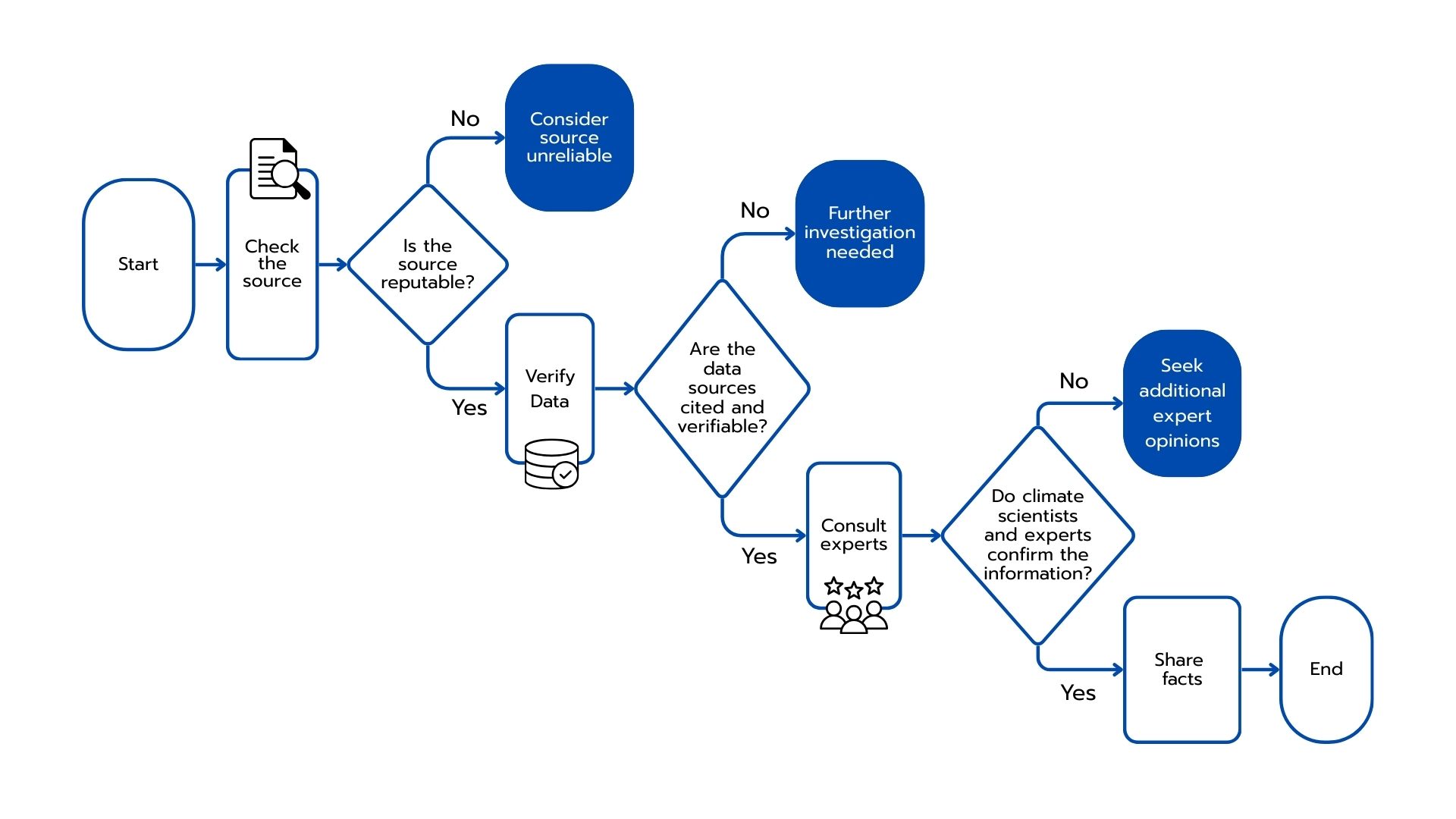
Strengthening information integrity requires action at all levels, from international institutions and governments to media, civil society and individuals. A range of practical tools and resources are available to help identify, prevent and counter environmental and climate disinformation.
Some resources include:
GEN Events
Various events organized and co-organized by the Geneva Environment Network tackled disinformation and the environment.