
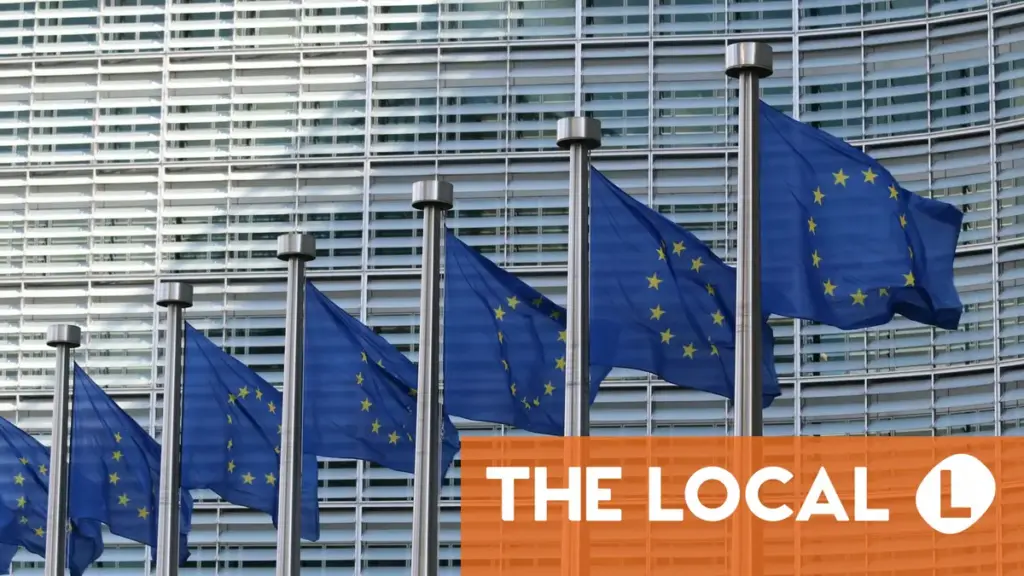
Norway still says “No” to the EU, but support is rising quickly. Older voters and residents of Oslo are leading this change.
For the first time in three years, opposition to Norway joining the European Union has fallen below 50 percent.
A February 2026 poll by Opinion for Altinget and ABC News indicates a shift in public sentiment, influenced by global instability and a marked generational divide.
The survey was conducted from January 26th to January 31st, after a period of major geopolitical tension, including the debate about the US’s reported interest in Greenland.
While Norway voted “No” in two past referendums (1972 and 1994), today’s climate seems to be easing that long-standing skepticism.
“An increase of 5 percentage points in six months is significant, and I think we must take that seriously,” says Trine Lise Sundnes, a member of parliament for the Labour Party and leader of the European Movement.
READ ALSO: Why Norway isn’t a member of the European Union
The latest numbers show a clear leap in support for EU membership compared to the August 2025 survey.
Now, 48 percent would vote “No,” down 7 points since August, while “Yes” has risen 5 points to 38 percent. Many voters are still unsure, with the “don’t know” group up 2 points to 14 percent.
The survey included 1,000 people aged 18 or older.
The demographics
Surprisingly, Norway’s older population is now the most open to joining the EU, while younger people are more skeptical.
The survey found that voters over 40 are the most positive, especially those over 60. In this group, 43 percent would vote “Yes,” almost matching the 46 percent who would vote “No.”
In contrast, people under 30 are the most resistant, with 55 percent voting “No” and only 30 percent in favor. Young men, who previously supported the EU in earlier surveys, are now among the most skeptical.
Where people live also matters: in Oslo, 52 percent would vote to join, while only 32 percent are against it.
Advertisement
Why the shift?
Analysts say that a “messy world” is the main reason for this shift. The report points to the “Trump conflict,” tariff threats, and recent unrest around Greenland as key factors.
“When the world changes, the EU changes. The EU has gained increased security policy importance, and the EU issue also becomes security policy, whether you want it or not. It’s about everything from trade and the defence industry to economic security and preparedness. I think people have realised that,” says Sundnes.
However, the opposition remains unconvinced. Reidar Roll, leader of Youth Against the EU, argues that joining won’t solve global problems: “It’s not like if we become a member of the EU, Putin will withdraw from Ukraine, or Trump will stop being Trump. Every time there is international, geopolitical tension, the answer is always that we have to join the EU. But every time we have survived it. It has gone perfectly well. It has passed.”
Sundnes wants more young people to join the discussion, but Roll says the debate is happening on their terms. He points out that young people now get a lot of information from TikTok and Instagram, which older generations have not experienced and do not fully understand.
Advertisement
Despite the shift, the Labour Party’s current program does not advocate for a new EU debate in this parliamentary term. As mentioned in the Altinget report, the party emphasizes its support for strong political cooperation in Europe.
“In two previous referendums, we have therefore recommended saying yes to Norwegian membership. At the same time, there is room for different views on the EU issue. If a membership issue were to become relevant, it should be the subject of a new national convention,” the party program states.
While support for the EU is increasing, support for the EEA agreement remains stable, according to a poll conducted by the Norwegian Confederation of Employers (NHO) earlier in January. The EEA agreement is Norway’s most crucial international deal as it lets the country tap into the EU’s single market, meaning goods, services, money, and people can move freely across borders, all without Norway actually joining the EU.
READ MORE: Why does Norway want to join the EU’s health union?