
Information about so-called “Russian camps” in Bosnia and Herzegovina surfaced in October 2024.
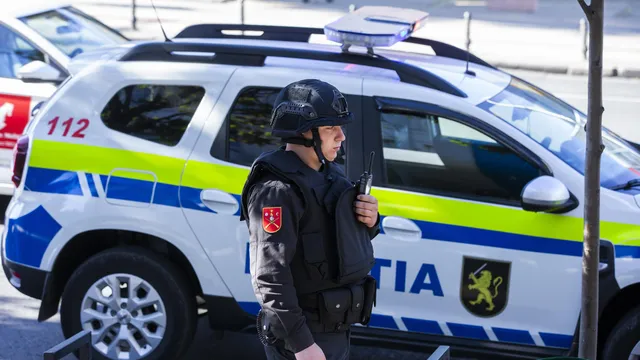
A court in Chisinau has convicted three people for taking part in an organised criminal group that prepared mass violent unrest in Moldova in 2024 and organised training camps in Bosnia and Herzegovina and Serbia, Radio Free Europe reported.
According to the ruling, the training was organised and led by individuals from Russia in cooperation with Moldovan citizens, with the aim of destabilising the country ahead of the 2024 presidential election and the referendum on Moldova’s accession to the European Union.
Information about so-called “Russian camps” in Bosnia and Herzegovina surfaced in October 2024, when Moldovan security services said they had identified more than 100 young people allegedly trained in Russia, Bosnia and Herzegovina and Serbia for the purpose of destabilising Moldova.
On February 6, the Chisinau court sentenced Aliona Gotco and Ludmila Costenco to four years and one month in prison each, while Vladimir Hartsevnikov received a sentence of five years and four months. The ruling is a first-instance decision. The defendants were absent when the verdict was delivered, and the court ordered their detention to serve the sentences. The decision can be appealed.
In its reasoning, the court said the defendants acted as part of a stable criminal structure coordinated from Russia, with clearly defined roles. Their activities included recruiting new members, providing logistical support, procuring equipment and conducting training for violent and destabilising actions.
A key part of the ruling focuses on training carried out outside Moldova, primarily in Bosnia and Herzegovina and Serbia. The court found that the defendants repeatedly stayed in Bosnia and Herzegovina, including in the Glamočani area, where they took part in theoretical and practical exercises.
The training included operating and advanced use of FPV drones, linking them to command centres, aerial reconnaissance within assault groups, and simulations of dropping explosive devices using drones. It also covered tactics for sowing panic and chaos, breaching police cordons, diversionary and subversive activities, and the preparation of incendiary and explosive devices.
The court concluded that these activities were directly linked to plans to organise violent unrest in Moldova. Serbia was cited both as a training location and as a transit country on the route to Bosnia and Herzegovina.
According to the findings, the group’s coordinator was based in Russia and issued instructions from there, while training and practical activities took place in Bosnia and Herzegovina and Serbia. Investigators established that the defendants travelled along the route Moldova–Serbia–Bosnia and Herzegovina, with material evidence confirming their presence in both countries.
Seized items included banknotes from Serbia and Bosnia and Herzegovina, SIM cards, telecommunications equipment and digital records created during their stays at the training camps. Searches also uncovered drone parts, VR goggles, remote controls, batteries, data storage devices and digital materials documenting the training and planned activities, including photos, videos and instructions for operating drones and preparing incendiary and explosive devices. | BGNES