
Figures show that direct investments from Slovenia in Albania are of small value. The experience of significant Slovenian investments in Albania has also not been very successful.
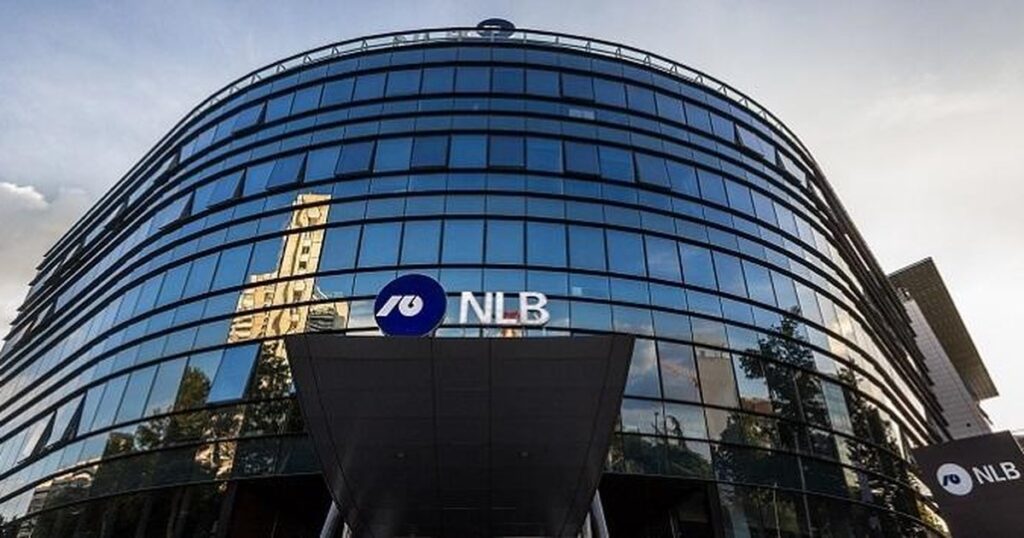
While the largest Slovenian bank, NLB, is openly expressing its ambition to enter the Albanian market, at the moment investments from Slovenia in Albania are modest in value.
Statistics from the Bank of Albania show that direct investments from Slovenia in Albania have modest values. At the end of the third quarter of 2025, the stock of Slovenian investments in Albania was 48 million euros.
In the last 12 months, Slovenian investments in the country have increased by around 4 million euros, or about 9%.
In relative terms, the share of Slovenian investments in total foreign investments in the country is also very small. They accounted for less than 0.3% of the total stock of Foreign Direct Investment at the end of September 2025.
New investment flows are also relatively small. In the first nine months of 2025, new Slovenian investments amounted to 4 million euros, up from just 1 million euros in the same period a year earlier.
Slovenian investments, a few success stories
Previous experiences of Slovenian investors in Albania have not been very successful.
The Slovenian state-owned telecommunications company, Telekom Slovenije, entered the Albanian market in 2007, acquiring the internet service provider, Albaniaonline, and Albanian Fiber Backbone, which in 2009 merged and took the name Primo Communications.
Due to unsatisfactory results, the Slovenians withdrew and sold the company in 2014 to the Albanian company AD Trade. By the end of 2014, Primo reported accumulated losses worth more than 1 billion lek.
The Slovenian retail company Mercator’s investment in Albania also had a short history. The Slovenian company Mercator entered Albania in 2009 and based its project mainly on a hypermarket located in the City Park shopping center and later, on a small number of other supermarkets.
Mercator’s presence in Albania lasted only five years, and in 2014, the Slovenians withdrew, selling the company to the Albanian company Pragma Acquisition. By the end of 2013, Mercator had accumulated losses worth almost 1.9 billion lek.
In 2010, the Slovenian company Triglav announced its entry into Albania, initially purchasing a minority stake of 9.9% of the shares of the insurance company Albsig.
According to the parties’ statements, the agreement envisaged that Triglav would gradually take control of the company, by purchasing at least 51% of the shares. However, despite the agreement being made public, Triglav’s purchase of Albsig’s shares was never officially finalized, for reasons not disclosed by the parties.
One of the few companies indirectly controlled by Slovenian investors that achieved some kind of success in the Albanian market was Studio Moderna Albania, trading under the name Top Shop. It set up a business selling products of brands it owned through television spaces.
However, Studio Moderna also decided to withdraw from Albania in 2024, selling the Albanian company to SMA Holding, a company owned by Kosovo businessman Xhevdet Rexhepi.
In 2024, another important Slovenian company, Perutnina Ptuj, prepared to enter the Albanian market.
Perutnina Ptuj, in partnership with the BALFIN group, founded the company Perutnina Ptuj Albania (controlled 81% by the Slovenian company and 19% by the Albanian one), with the aim of investing in the poultry farming and meat trading industry.
The company had previously reached an agreement to acquire several Albanian companies in the poultry farming, feed cultivation and meat trading sectors.
It even officially submitted for authorization to the Competition Authority the agreement for the acquisition of four related companies, Driza, Fresh Chicken Albania 2019, Industria Forajjere (VEAF) and the business of the Euro Alb 2009 company. However, for reasons that were not made public, the transactions were not finalized.
The company Perutnina Ptuj Albania continues to be active in the business register, but, at least until the end of 2024, it did not report any income from the activity in its financial statements.
Trade with Slovenia, as much as 0.6% of the country’s trade exchanges
INSTAT statistics show that even the volumes of trade exchanges between Albania and Slovenia do not have a very significant weight in the structure of foreign trade.
For 2025, the total volume of trade exchanges was worth 7.94 billion lek, down 8.1% compared to the previous year. Trade with Slovenia accounted for 0.6% of Albania’s total foreign trade volume for 2025.
Albania’s trade balance with Slovenia for 2025 was in deficit, amounting to 3.66 billion lek, however the trade deficit decreased by 6.9% compared to the previous year.
The decline in trade volumes last year affected both imports and exports.
Imports from Slovenia to Albania fell to 5.8 billion lek, 7.7% less compared to a year earlier. While Albanian exports to Slovenia fell to 2.14 billion lek, 8.9% less compared to 2024.
Import data by chapter show that for 2025, the main group of Albania’s imports from Slovenia were pharmaceutical products, with 27% of their total.
Pharmaceuticals is the most important branch of Slovenian industry, making the country one of the most important players in the production of medicines and other medical products in Eastern Europe. The two largest manufacturers, KRKA and Lek, are among the main exporters of the Slovenian economy.
Next come fuels, with 23% of total Slovenian imports, followed by mechanical equipment, with 11%, plastic products, with 8%, and electrical equipment, with 5%.
On the other hand, the structure of Albanian exports to Slovenia is more concentrated and dominated by the statistical chapter that includes cast iron and steel, with 64% of total exports for 2025.
They are followed by products from the group that includes beverages, alcohols and vinegars, with 12% of the total, fuels, with 7% of the total, vegetable or animal oils/fats, with 4% of the total, cocoa products, with 3%, etc.
NLB figures, one of the leading financial groups in the region
NLB is the largest banking and financial group in Slovenia and at the same time one of the most important financial groups in the Western Balkans region.
At the end of 2024, NLB reported total assets of EUR 28 billion, of which almost EUR 17 billion were loans. The group held total deposits of more than EUR 22 billion. For 2024, the NLB group reported a net profit of approximately EUR 515 million.
In addition to Slovenia, NLB is present with its subsidiaries in Serbia, Bosnia and Herzegovina, Montenegro, North Macedonia, Kosovo and Croatia.
In addition to banks, the NLB group also owns financial leasing institutions, financial asset management, payment services, real estate brokerage, etc. in some of the above markets.
In the banking market, NLB group banks generally hold a high share in their respective countries and are systemically important actors in them.
NLB group banks own approximately 33% of the banking market in Slovenia, 10% in Serbia, around 18% in Kosovo, 16% in North Macedonia, 14% in Montenegro and 6% in the Federation of Bosnia and Herzegovina.
Given the size of the group and its positioning in other markets in the region, it is reasonable to think that NLB would be interested in entering the Albanian banking sector, by acquiring a bank that already owns a significant market share./ Monitor