

Security services in the Podgorica area have registered the names of around 100 “strong” moneylenders, including the son of a former DPS official, and the monthly interest on which they lend or used to lend money ranges up to 20 percent.
According to the same information, one of the residents of the capital gave one million euros to a person of interest in security to invest it at usurious interest.
Operational allegations, as well as previous police and prosecutorial proceedings, have registered activities related to usury for years, with mention of a large number of individuals linked to loans with high interest rates, pressure on debtors, and violent incidents.
The following are cited as the long-standing “main carriers” of these activities in the territory of Podgorica: A. Šćepanović, A. Rogošić, N. Lopičić, brothers Stanisic, brothers Šisevic, brothers Šipčić, Lambulići, brothers Jabučanin, brothers Stanisic (V., R. i S.), M. Milošević, D. Mandic, A. Radoman, S. Jokic, M. Banović, D. and A. Lakovic, M. Lakovic, N. Todorović, V. Bulatović, I. Šćepanović, N. Pavicevic, brothers M., G. i M. Pejović, Mr. Pejović, M. Radulović, OF. i A. Pejović, A. Šaković, A. Sunjevic, R. Durišić, V. Bajčeta, M. Vukcevic, brothers G. i K. Boricic, Koljenović, B. Vukadinovic, M. Mihailovic, brothers P. i P. Čogurić, R. Radulović, M. Vučinić, M. Saranovic, D. Perović, N. Misurovic, Z. Perović, Z. Mugoša, E. Muleskovic, brothers Boricic, D. Tomović, S. Amber, M. Roncevic and others.
It is specifically stated that in recent years, according to the same sources, the circle of persons involved in these activities has expanded, so that the following are also mentioned as more intensively present in operational records: Z. Vučeljić, V. Joksimović, M. Merdović, brothers V. i F. Jovović, brothers D. i I. Vojvodic, M. Lašević, D. Čogurić, A. Jovović (Sasha), V. Radulović, B. Tomanovic, S. Pupović, B. Lakovic, P. Popović, J. Šarac, brothers N. i V. Jovanovic, L. Ljumovic, Mr. Vukcevic, M. Vešović, B. Ivanovic, R. Petrusic, P. Kocalo, S. Jovović, S. Jelenić, L. Bokan, S. Orlandic, M. Gojkovic, M. Lakić, A. Deljanin, A. Rondovic, N. Milačić, A. Milačić, D. Pejović, N. Djurkovic, B. Soskic, brothers D. and D. Globarević.
photo: Vijesti
In addition to them, sources say, the Jovović brothers are also collaborating in this criminal business. M. Mihailovic, but also their other associates – P. Kocalo, L. Brakovic, M. Micovic, V. Gluščević, R. Rajkovic, S. Raonic, R. Vukicevic.
One of the sources of “Vijesti” also mentions methods of collecting debts, where, he claims, in addition to “classic” pressure on debtors, cases of intimidation, beatings, as well as setting fires or explosive devices are also mentioned.
In this context, according to the same sources, it is mentioned that M. Radulović previously arrested for usury, but also registered as an organizer of actions aimed at forced debt collection.
He also states that his friend A. Kekovic registered as an organizer and participant in violence against those who have debts, while M. Mojašević, B. Pejović and others were allegedly previously engaged in “intimidation and debt collection”.
The interlocutor also mentions the disappearance of a Podgorica resident, who is believed to have been liquidated in Spain, and who had previously taken measures of intimidation in order to collect interest.
According to the same information, the organizers of loan sharking are most often old acquaintances of the police, with thick files connected to drug smuggling. Recently, however, it has been noted that more and more younger people are entering this criminal business, which is punishable by law…
In earlier years, loan sharking, as explained by sources at “Vijesti”, rarely existed as an isolated “business”, but was almost always linked to organized criminal groups, primarily due to the coercive mechanisms available to those groups.
Who are the Skaljarski, Kavački and Zelenaši organized crime groups? Igor Krstović, who lends and collects money at interest in the capital, as well as where their “main bases” for dirty business are, will be published in one of the next issues of “Vijesti”.
Ražnatović: The state and the greenbacks destroyed me
In my case, the state sided with the usurer and thus destroyed a company that had 35 employees and was the leader in furniture sales in Montenegro. I guess it is more important in such a system that such a usurer succeeds than a successful businessman. Today I can freely say that the state and its criminal institutions – the Ministry of Internal Affairs, the Court and the Prosecutor’s Office – put their stamp on my company.
He states this in a confession for “Vijesti”. Milorad Raznatović, a long-time businessman and owner of the company “Namos Lux”, whom the state did not protect from loan sharks, but, as he claims, took their side.
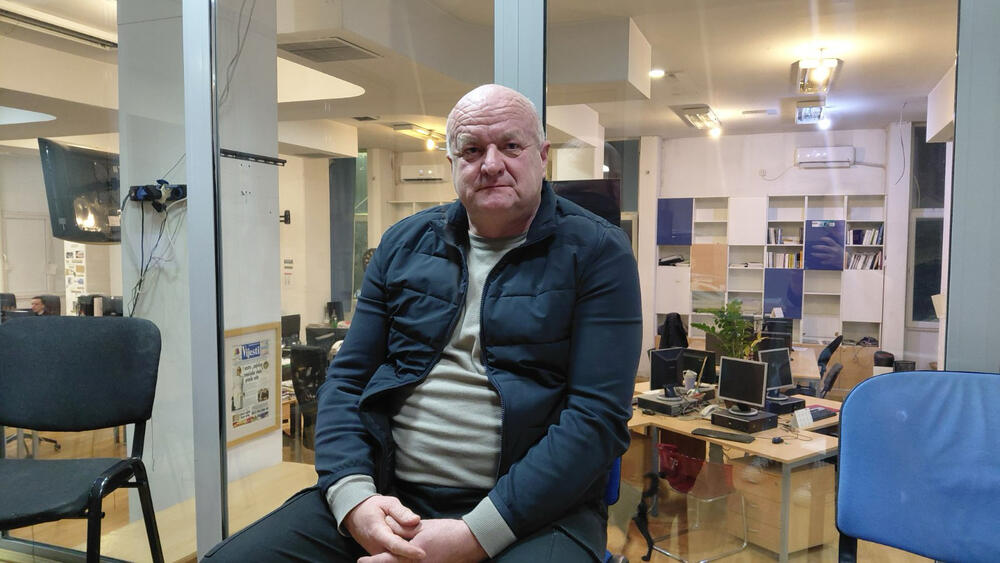
The police called him to report a loan shark: Ražnatovićphoto: Jelena Jovanović
Despite the statement certified by the Basic Court in Podgorica – that the mortgage was secured in another way, the same court gave credence to the Podgorica resident who lent him money and his handwritten receipts, and ruled in his favor. No one, Ražnatović explains, asked him to prove where he got the 1,5 million euros…
The Police Directorate has not responded to “Vijesti’s” questions for more than 10 days about the report that Ražnatović filed against him in May 2018. A. Šćepanović, after the police, as he claims, suggested that he do so.
“After an operation in which he was also searched, the Police Department called me to come and told me that during the search, in a box, they found evidence that he had lent me money with interest and that it would be a good idea for me to file a report. I wrote a report and submitted it in May 2018, and I haven’t heard anything about it since then,” says Ražnatović.
He submitted a copy of that report to “Vijesti”, as well as a copy of the verdict in February 2018 ordering him to return one and a half million euros to Šćepanović, along with the associated interest.
In court, he tried in vain to prove that he had returned the money…
Ražnatović explains that he has been a private entrepreneur since 1998, and that for years they were leaders in furniture sales in Montenegro. Since 2000, he has been operating independently through the company “Namos Lux”, as a distributor of Slovenian furniture for Montenegro and Serbia. That year, he also opened the “SLO-LUX” salon and bought a plot of land in Sveti Stefan.
photo: Vijesti
Six years later, he built a building on that plot of land and sold it to Russian citizens for 1,5 million euros. He states that the entire amount was paid into an account at CKB Bank, of which he was a shareholder.
Until then, he claims, he owned an 8.800 square meter plot of land in the Podgorica settlement of Liješnje, as well as two warehouses – one of 1.400, the other of 750 square meters.
He explains that in the same year, he borrowed two million euros from the bank to build a furniture showroom in Podgorica, then bought a house in Miločer, an apartment in Budva, and a plot of land in Tivat.
He decided to try his hand at construction, and because of, as he says, the exceptional cooperation with the then management of CKB Bank, the bank “supported him to the fullest extent in all its investments.” The problems, he says, began when the OTP Group took over the bank and the top people left key positions.
“The bank loaned me 880.000 euros to buy a house in Miločer and the agreement was to give me another 600.000 euros to build the building, which required me to repay most of my debt to the bank, however, I never received that money and that’s when my financial problems began.”
I came to offer money.
He claims he did not ask for help from a loan shark, but, as he says, one of them walked into his salon and offered him money. Allegedly, he heard that he was in financial trouble.
“Then A. Š. came to my company to offer me financing of up to a million euros, because he had heard about me that I was honest and that he could go into business with me. That’s when I borrowed 450.000 euros from him for the first time, in order to invest in Pržno. At three percent monthly interest, for a period of several months. However, after the first month, he asked me to return the money to him, even though we hadn’t agreed on that because he needed it for his investments,” explains Ražnatović.

photo: Vijesti
He points out that he then realized that the intentions of the people of Podgorica were completely different from those they had originally agreed upon.
“I paid him back 300.000 euros, and he told me that I didn’t have to pay back the 150.000, but that the interest rate was 4,5 percent. After that, I borrowed 300.000, then 200.000 euros from him for a period of two years. I paid him interest, and for the last year he added interest to the interest, until the debt grew to 1,95 million euros,” says Ražnatović.
He explains that he borrowed a total of 950.000 euros from this Podgorica resident and returned 550.000 euros, for which, he states, he has no written evidence.
“He added up all my debts with interest and asked me to sign a new receipt for him, which was for a debt of 1,95 million. That’s when problems arose in both my finances and his, because I withdrew money from the company to pay interest. Then he asked me to sign a mortgage on the building for him, which I refused, but that’s when my bigger problems arose. His brother-in-law, brother and he physically attacked me in the office of the company ‘Kontakt Rent a Car’ and I agreed to sign the mortgage under threats. But that’s not the end,” says Ražnatović.
He points out that they came two days later and asked his wife to sign the mortgage, which he allegedly refused.
“However, I was forced to sign that too, because they threatened me that they could solve the case in a different way with 5.000 euros. When I met all their demands, we moved on to the phase of how to repay the debt. We agreed that I would repay him by giving him a 500-square-meter business space, which is owned by AV who at that moment ‘helps’ me to pay off A. Š. We calculate the space at 1,2 million, which Aco accepts, I give him an apartment in Budva for 150.000 euros, a plot of land on Rijeka Crnojevića for 50.000 euros, then 100.000 euros through an account and 300.000 euros for the purchase of business premises in Njegoševa Street, next to the ‘Leone’ pizzeria. After that, he takes off my mortgage before the court in Podgorica, because there were no notaries at that time, and gives me a written statement that I have settled all my obligations to him,” adds the interlocutor of “Vijesti”.
He recalls that at that time he did not ask for the receipts he signed when he took money from the Podgorica resident back, nor did he remember to demand that Šćepanović destroy them in front of him.
“I trusted state institutions, namely the Court, that his statement that I had discharged him of his debt was quite sufficient and that the Court was protecting me with such a statement. After a year, he denied the statement he had made before the court and filed a lawsuit for 1,95 million euros. When I asked him, ‘Why did you file a lawsuit, Aco?’, he replied that it was a recession and that the real estate was no longer worth as much as I had given it to him,” claims Ražnatović.
photo: Vijesti
He says that he then hired a lawyer who told him that the lawsuit was completely unfounded, and that it would be dismissed at the first hearing.
“However, I knew that the opposing side was using all its connections in the police and the court and that this would be a very difficult case for me. The court case has been going on for several years, I am defending myself without a lawyer, because I saw that there was no point and that he would win the case with the help of the judges and his connections,” he says.
He adds that his witness at the trial said that the business premises that were handed over to Šćepanović were not valued at 1,2 million euros, but at 500.000 euros.
“Because he has borrowed space in his books for that amount.”
“In this way, he put me in a hopeless situation. However, I have written proof that AV owed me 1,2 million euros, and when I presented that evidence, the judge Jelena Vulović “she did not want to consider that evidence, which would show that both A. Š. and AV lied in court… The court case was decided in his favor,” he states…
He told a journalist for “Vijesti” that between 2012 and 2016 he was physically attacked in front of the building where he lives.
“According to the police, I was attacked by people hired by A. Š. Then I was hit in the spine with a bar, but I managed to take the bar away. I went to the emergency room and the police to report the attack, and there are police reports about it. Just a year later, my vehicle was set on fire in front of the building, where there are also police reports, but the perpetrator was never found. Since then, I no longer counted on the help of the police and the prosecutor’s office, and my life and that of my family were in danger. Of course, without the protection of the police and state authorities,” says Ražnatović.
Whoever lends money or other consumable items and thereby contracts a disproportionate material benefit shall be punished by imprisonment for up to three years and a fine, reads the description of the criminal offense of “usury” in the Criminal Code (CC) of Montenegro.
If the usurer “takes advantage of the poor financial situation, difficult circumstances, necessity, frivolity or insufficient ability to reason of the injured party”, he will be punished with imprisonment from three months to three years and a fine.
The Criminal Code stipulates that a loan shark can be punished with imprisonment from six months to five years and a fine if serious consequences have occurred for the injured party or the perpetrator has obtained material gain in an amount exceeding three thousand euros.
They called him to report a loan shark, then kept quiet.
Ražnatović tells “Vijesti” that he hoped the police would do something when a few years later he saw on television that Šćepanović was also arrested in a police operation against loan sharks.
He states that the police called him a few days later, on the orders of the Special Police Department, to come to Inspector B. “to obtain some information.”
“I came and then he asked me if any of the papers they found with A. Š. belonged to me, which I confirmed. He asked me if I was ready to file a criminal complaint against him,” says Ražnatović.
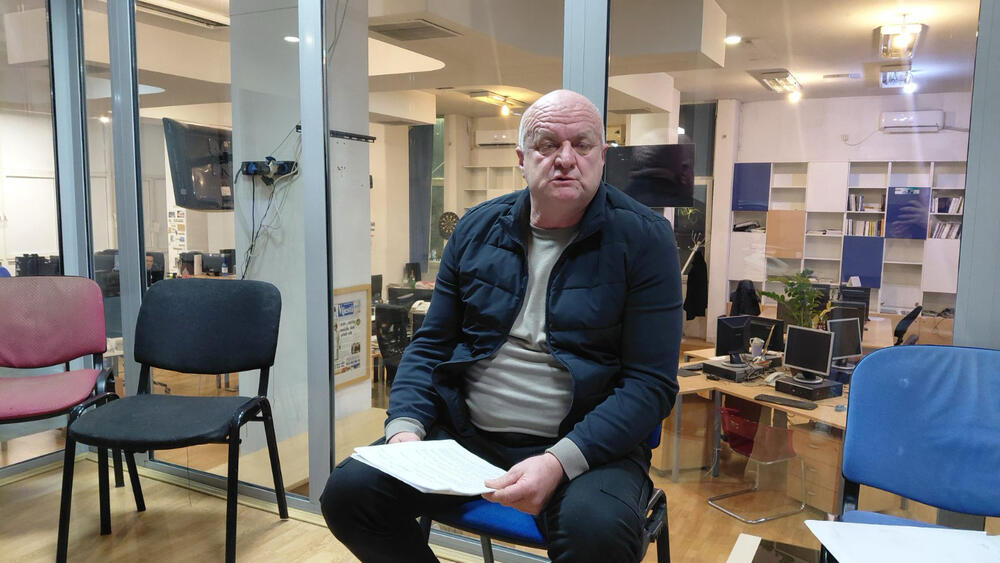
photo: Jelena Jovanović
He points out that he answered the inspector in the affirmative, but also set the condition “that someone humanly review the report and do what the law prescribes.”
He recounts that he was firmly promised that he would “do everything” to ensure that the prosecutor’s office processes the report and arrests Šćepanović.
“That way, with the help of the police, I would stop the process he started, which is the seizure of my property through state authorities, such as the court. When I asked him whether I should file a report directly with the prosecutor’s office, he said that it was not necessary and that they would finish everything, but we came to the conclusion that I was deceived by him or someone else in that chain from the Ministry of Internal Affairs to the Prosecutor’s Office…”
He states that after a few months he asked when he would receive an answer, and that he was told to be patient and that he would receive it soon.
“However, I have not received a response to this day, neither positive nor negative.”
He points out that the year after that, the bank sold the receivables to a Slovenian company and that year he lost the company, which, according to court appraisers and experts, was valued at around six million euros.
“Today, I am no longer interested in A. Š., the usurer and loan shark, but in state institutions – the Ministry of Internal Affairs, the Court and the Prosecutor’s Office, which contributed to the loss of my property due to their failure to respond to my criminal complaint, or rather, due to the silence of the state administration, which in this case sided with the usurer, and not with me and the company,” he points out.
He also explains that everything could have ended differently if they had reacted because he had buyers for the property, and that he has written evidence and correspondence with the bank about this.
“I would have easily reached an agreement with the bank, but there was a burden from the interest rate, so it was not possible to sell the property,” he adds…
The police are silent about what they have been doing for almost eight years
The Police Directorate has not responded to questions about the report that Ražnatović filed almost eight years ago for more than ten days.
On January 27, “Vijesti” asked this institution at what stage the case was formed after the report filed by Milorad Ražnatović against A. Šćepanović in May 2018, and also which organizational unit was responsible for acting on the report.
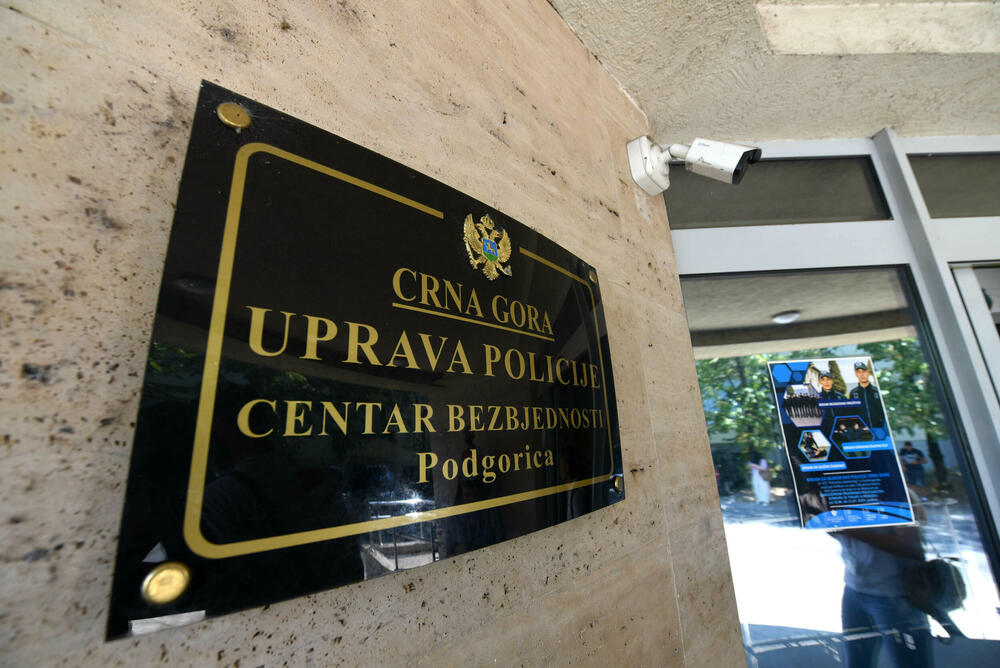
photo: Boris Pejović
They did not answer that, nor did they answer the question of what specific actions were taken based on that report – hearings, evidence collection, financial checks… Was a report submitted to the competent state prosecutor’s office, and if so, when, and what the prosecutor’s decision was.
The questions that remained unanswered were whether the case was still active or archived, and for what reason, and if the case was suspended or dismissed, whether the applicant was notified of this.
The Police Department did not even respond to the emergency call.
In tomorrow’s “News”, read how much a small loan cost a resident from the northern region, but also who the usurers from Pljevlja are and how they are seizing property in Žabljak…

News