
Published on
February 8, 2026
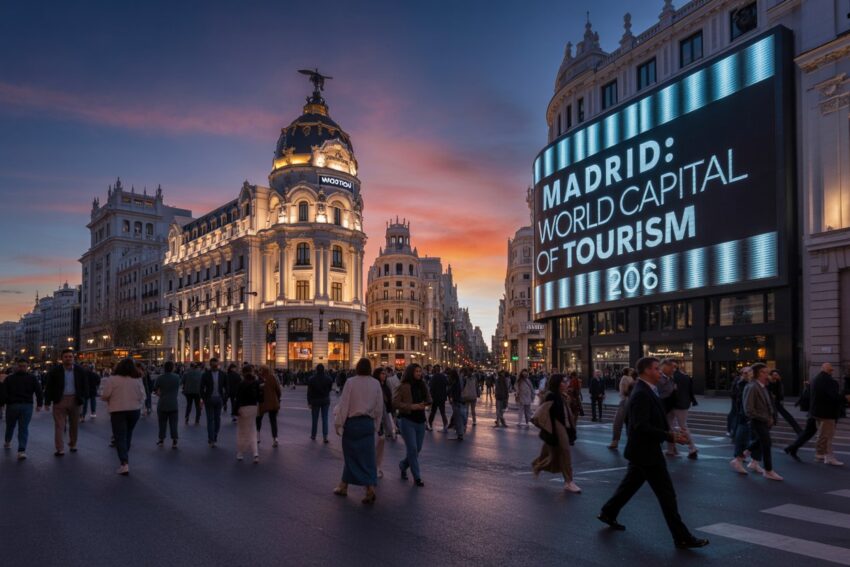
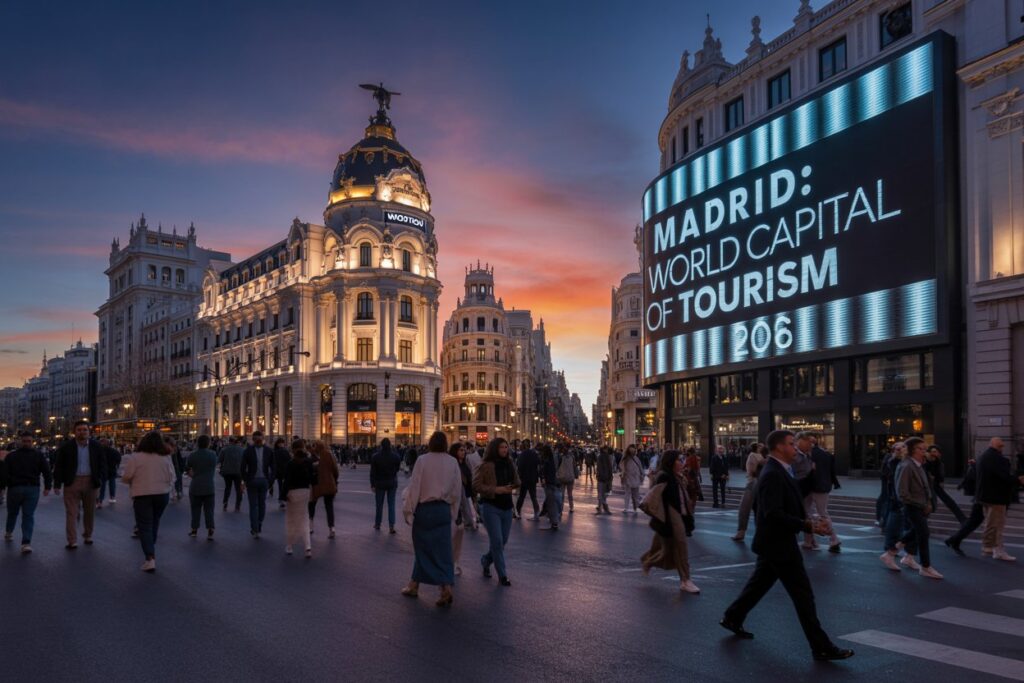
In the grand theater of global travel, the spotlight has officially shifted. While Paris and London have long held the crowns of cultural prestige, 2026 marks the year that Spain—and specifically its vibrant capital, Madrid—has been coronated as the undisputed heart of the world’s tourism industry.
The announcement comes on the heels of a record-breaking 2025, where Spain welcomed an astounding 97 million international visitors. This isn’t just a recovery; it’s a total transformation. Spain has evolved from a seasonal sun-and-sand destination into a sophisticated, year-round “tourism powerhouse” that balances luxury, governance, and sustainability.
The Coronation of Madrid: A Hub of Governance
The most significant development in this shift is the official declaration of Madrid as the “Global Capital of Tourism Governance.” In a historic move, the World Travel & Tourism Council (WTTC)—the most influential non-governmental body in the sector—selected Madrid as its new global headquarters.
Madrid successfully beat out heavyweights like Dubai, Paris, and Geneva in a competitive bid. By housing both the WTTC and the United Nations (UN) Tourism agency (formerly UNWTO), Madrid has become the only city in the world where both the public and private sectors of global tourism sit at the same table. This “clustering” of power means that the future of how we travel—from digital visas to sustainability standards—is now being written in the cafes and boardrooms of Madrid.
Advertisement
Advertisement
By the Numbers: Spain’s Economic Engine
Spain’s ascent is backed by hard, impressive data. The tourism sector now accounts for over 12.6% of the national GDP, generating approximately €134.7 billion ($159 billion) in revenue in 2025 alone.
- 97 Million Visitors: A 3.5% increase over 2024.
- High-Value Spending: Revenue grew by nearly 7% year-on-year, proving that tourists aren’t just coming in higher numbers—they are spending more per person.
- Source Markets: While the UK, France, and Germany remain the top visitors, there has been an “explosive” demand from the United States and Asian markets.
FITUR 2026: The World’s Meeting Point
The momentum was palpable at FITUR 2026, the International Tourism Trade Fair held in Madrid this February. The event brought together over 255,000 attendees and 10,000 companies from 161 countries.
Advertisement
Advertisement
FITUR has evolved from a simple trade show into a “Knowledge Hub.” This year, the focus was on innovation and inclusion. With specialized sections like “FITUR 4all” (accessible tourism) and “FITUR Cruises” (sustainable blue tourism), Spain is demonstrating that a “powerhouse” doesn’t just grow—it matures. The fair alone generated an economic impact of €505 million for the city of Madrid, further cementing its status as an economic juggernaut.
The Strategy: Value Over Volume
Perhaps the most human element of Spain’s success is its shift in philosophy. Spanish officials have made it clear: they are no longer chasing the “100 million” milestone for the sake of a vanity metric. Instead, the focus has shifted to “Quality over Quantity.”
Spain is actively working to:
- Deseasonalize Travel: Encouraging visits during the “shoulder” seasons (spring and autumn) to reduce the strain on local infrastructure.
- Regional Diversification: Moving tourists away from over-saturated hotspots like Barcelona’s Las Ramblas and toward the hidden gems of rural Spain and the “Green North.”
- Sustainable Governance: Implementing strict regulations on short-term rentals (like Airbnb) in cities like Ibiza and Madrid to return housing to residents and keep the “soul” of the neighborhoods alive.
A Luxury Renaissance
Madrid, in particular, is undergoing a “luxury boom.” The city has grown from just six five-star hotels a decade ago to over 40 ultra-premium properties today. With 28 Michelin stars and world-renowned chefs like Dabiz Muñoz leading the charge, Madrid is now competing directly with Paris and London as a destination for the world’s most discerning travelers.
From the “Mbappé Law” (offering tax breaks for new resident investors) to massive urban reforestation projects like the Bosque Metropolitano, Madrid is building a city that isn’t just a place to visit—it’s a place people want to be.
Looking Forward: The Future is Spanish
As we move further into 2026, Spain stands as a model for the rest of the world. It is a country that has faced the challenges of “overtourism” head-on and decided to pivot toward a model of excellence.
Whether you are a policy maker coming to Madrid for a summit at the new WTTC headquarters, or a traveler looking for the “Landscape of Light” in the Retiro Park, one thing is certain: Spain has reclaimed its spot at the top of the world.
