
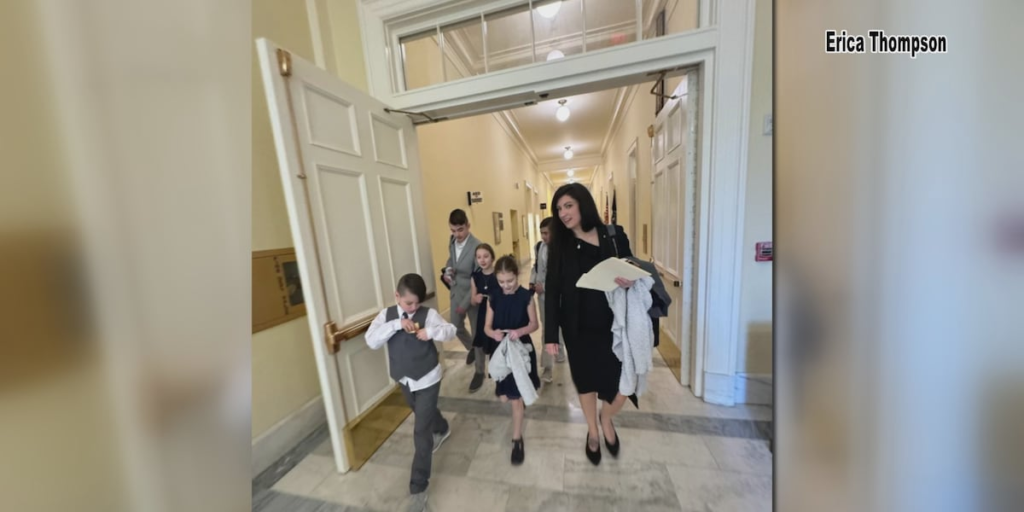
MONTGOMERY, Ala. (WSFA) – Erica Thompson, a military spouse of 22 years and mother of five, traveled to Washington, D.C. in January to advocate for legislation aimed at protecting military families from toxic mold in military housing. It’s an issue, she says, that plagues installations across the country.
Thompson’s push for reform began after she and her family moved into military housing in 2023 and immediately encountered problems.
“We were having really high humidity, and so they said, ‘Really, you need a new AC unit, but we can’t afford one,’” Thompson said. “And so we ended up getting dehumidifiers, just to try and mitigate and do what we could, and we were dumping about six gallons of water a day.”
When mold was finally discovered in the home, the situation escalated rapidly.
“Once they finally did come out, we were in the home and they opened up the walls without any sort of containment, and so there was mold there, and it contaminated the whole rest of the house,” Thompson said.
The contamination triggered serious health issues for Thompson’s family. One of her children began fainting, she experienced tachycardia, other children complained of nausea and headaches, and the family developed unexplained rashes. The family dog suffered seizures, vision loss and mobility issues before the family eventually had to put him down.
Thompson eventually moved her family out of the home. But while connecting with other military families, she discovered the problem was widespread.
“We connected with ‘Change the Air Foundation.’ It’s a non-profit that works for clean, healthy air, and they’ve been working on state policy a lot and some federal legislation, and so I wanted to do something more,” Thompson said.
Thompson brought her children to the nation’s capital to advocate for protective legislation. She worked with U.S. Rep. Jack Bergman, R-Michigan, on an amendment to the most recent National Defense Authorization Act that would establish mold remediation standards and create safer protocols for treatment and removal of mold in buildings on military bases.
Just weeks ago, Thompson and her family introduced the Military Occupancy Living Defense Act, also known as the MOLD Act. The legislation would establish specific parameters for military housing, including mandatory mold testing and disclosure of results to families occupying those homes.
“We were able to share the story, they were able to sit in meetings, meet senators and congressmen and women, and really we just want to change what’s happening in military housing now for the future, for other families,” Thompson said.
The bill has been read twice in the Senate and referred to the Committee on Armed Services.
Not reading this story on the WSFA News App? Get news alerts FASTER and FREE in the Apple App Store and the Google Play Store!
Copyright 2026 WSFA. All rights reserved.