
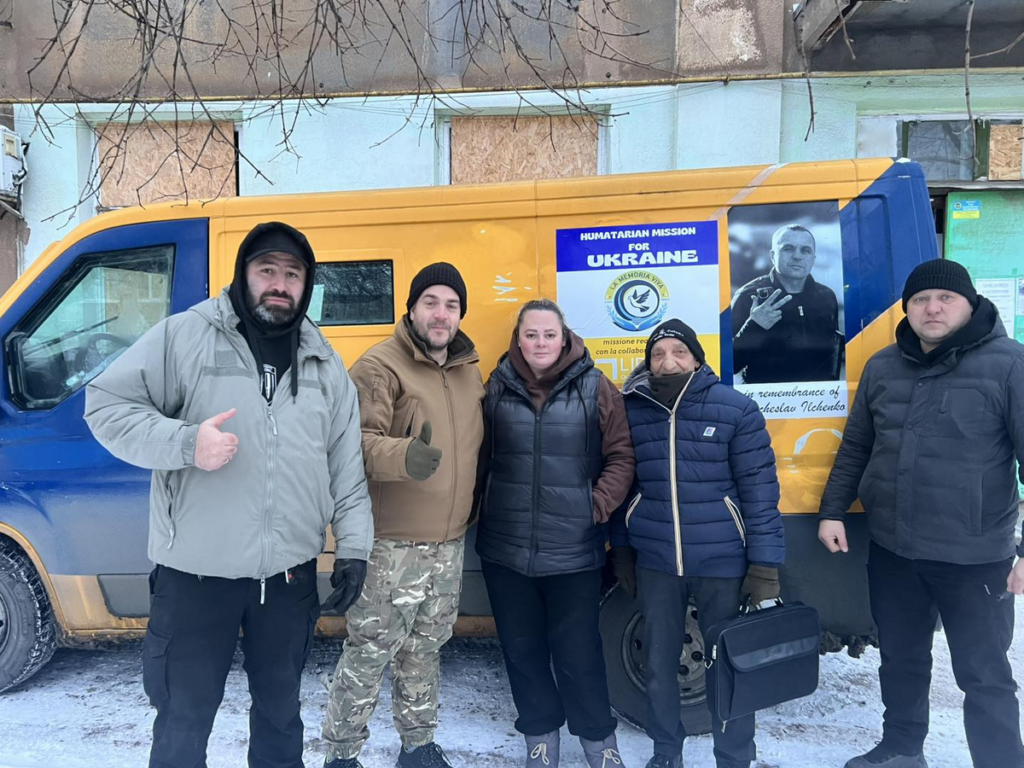
When news broke on Feb. 24, 2022 that Russian forces had launched a full-scale invasion of Ukraine, the images were immediate and chaotic: civilians fleeing Kyiv, then Mariupol, Odesa and other cities, trying to reach safety wherever they could. For Roberto Falletti, who leads the Italian cultural association La Memoria Viva in Castellamonte, near Turin, the war arrived not through television screens but through urgent phone calls.
“We work with culture and young people,” Falletti recalls, “but almost immediately we began receiving desperate requests for help from Italian and Polish friends whose relatives were trying to escape towards the Polish border.”
Follow our coverage of the war on the @Kyivpost_official.
Within 48 hours, the association had shifted from remembrance to action. At 2:07 pm on Feb. 26, 2022, just two days after the invasion began, La Memoria Viva launched an emergency appeal on Facebook and its other social channels, while simultaneously organizing its first humanitarian mission. The group, whose founding purpose is to preserve the memory of war crimes and the Holocaust, did not hesitate. They did not know what they would find on the ground, or even whether they would be able to reach the border. But they loaded a minibus with essential supplies and set off.
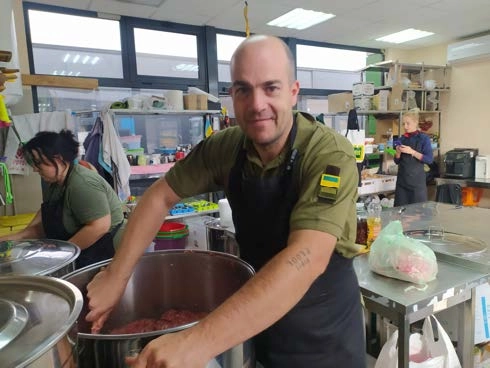 Roberto Falletti (Photo courtesy Roberto Falletti)
Other Topics of Interest
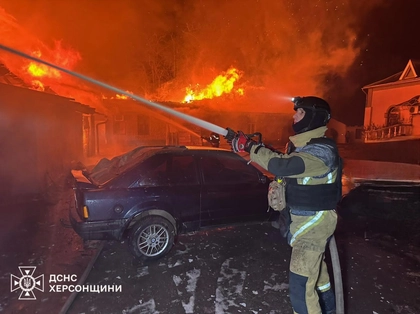
Russia Strikes Multiple Ukrainian Regions Overnight
Residential districts hit in several oblasts, leaving civilians dead and injured.
On Feb. 28 – four days into the war – the convoy left Italy with a simple aim: to reach the humanitarian crisis zones, intercept refugees along the way, and bring women, children and elderly people fleeing the fighting to join relatives in Italy. Acting on advice from the Polish embassy in Rome, the volunteers headed for Jarosław, where an emergency camp for Ukrainian refugees had been set up on Polish territory, before continuing to Przemyśl. There, at the railway station, they encountered scenes of acute distress: refugees sleeping wherever they could, exposed to the cold, often without food, while Polish volunteers and civil society groups struggled to provide even the most basic assistance.
26 children and 4 carers who had fled their orphanage just weeks before it was levelled in the fighting that erased much of the city of Mariupol.
It was at that point that a further decision was taken: to help establish an “Italian Pavilion” in Jarosław and Przemyśl, a coordination hub for refugees hoping to reach Italy, largely to reunite with family members. Meanwhile, aid continued to arrive in Castellamonte from across the province of Turin and from other Italian regions. Thanks to the support of a local company, Plastic Legno, which made its warehouses available, the first articulated trucks were dispatched, transporting supplies to the collection centers in Poland and to Tulcea, in Romania.
At the same time, it began the organization of trips to Italy for Ukrainian children. From July 4 July to Sept. 3, 2022, La Memoria Viva hosted in Castellamonte the “Angels of Mariupol”: 26 children and 4 carers who had fled their orphanage just weeks before it was levelled in the fighting that erased much of the city of Mariupol.
By the end of 2022, the association had carried out 34 missions. Volunteers travelled to Rivne, Ternopil, Mykolaiv, Odesa, Kharkiv, Zaporizhzhia, Dnipro, Kyiv, Vinnytsia and Mukachevo. Each journey followed the same pattern: vans and coaches arrived loaded with humanitarian aid and returned carrying refugees. More than 1,000 people were evacuated and brought to safety, the vast majority women, children and elderly people, as well as people with disabilities.
Over the two years from 2022 to 2023, the association delivered more than 1,000 tons of aid to Ukrainian refugees in Poland, Romania and inside Ukraine itself.
The end of 2023 and the opening weeks of 2024 marked the 41st mission, carried out in two stages. First came a convoy from Italy that crossed half of Europe to deliver food and basic necessities to children from the Mariupol orphanage, and toys, winter clothing, food and medicines to Kharkiv. The second stage followed immediately after the new year: at 3 a.m. on Jan. 1, 2024, a team set off for Poland and on to Lviv, before boarding a night train to Kharkiv with medical supplies, food, goods and toys for orphaned children in the region.
Immersed in a beautiful natural landscape, the teenagers experienced something that had become rare in their lives: ordinary peace. No air-raid sirens, no drones overhead, no explosions in the distance. No fear.
The 45th mission saw the donation of the association’s first two ambulances. One was named after Eugenio Bozzello, the late honorary president of La Memoria Viva. The other, a veterinary ambulance, was dedicated to Riccardo Lagana, a prominent animal welfare campaigner who had also recently died, and was intended to rescue and treat pets that families fleeing their homes refused to abandon.
During the 46th mission, a Ukrainian ambulance riddled with bullets while responding to an emergency was brought back to Italy. With the support of the Ukrainian community in Turin, another ambulance was delivered to Kharkiv, dedicated to Dr. Volodymyr Muliar of the 81st Brigade, who was killed in the Luhansk region while trying to treat wounded comrades. A family doctor, he had volunteered to serve at the front after witnessing the suffering inflicted on civilians in his homeland.
The 49th mission focused on transporting medical equipment collected by the Rotary Club Odessa International for Odesa City Hospital No. 1, donated by Milan’s Galeazzi Hospital. The same vehicle was later driven on to Kharkiv, where it was donated for use in evacuations and civilian transport. An ambulance was also donated to the community of Krasnokutsk, in the Kharkiv region, by the Rotary Club Lunigiana Pontremoli, together with medical equipment and medicines for the local hospital, which serves around 180 patients and was facing acute shortages.
In February 2025, the association accompanied an 18-year-old Ukrainian girl, Veronika, on a visit to Pope Francis. She presented the pontiff with a symbol of resistance and renewal: the Vilna doll – its name meaning “free.” Veronika had survived thanks to medical treatment received in Italy, made possible through a humanitarian channel opened with the support of Cardinal Matteo Zuppi.
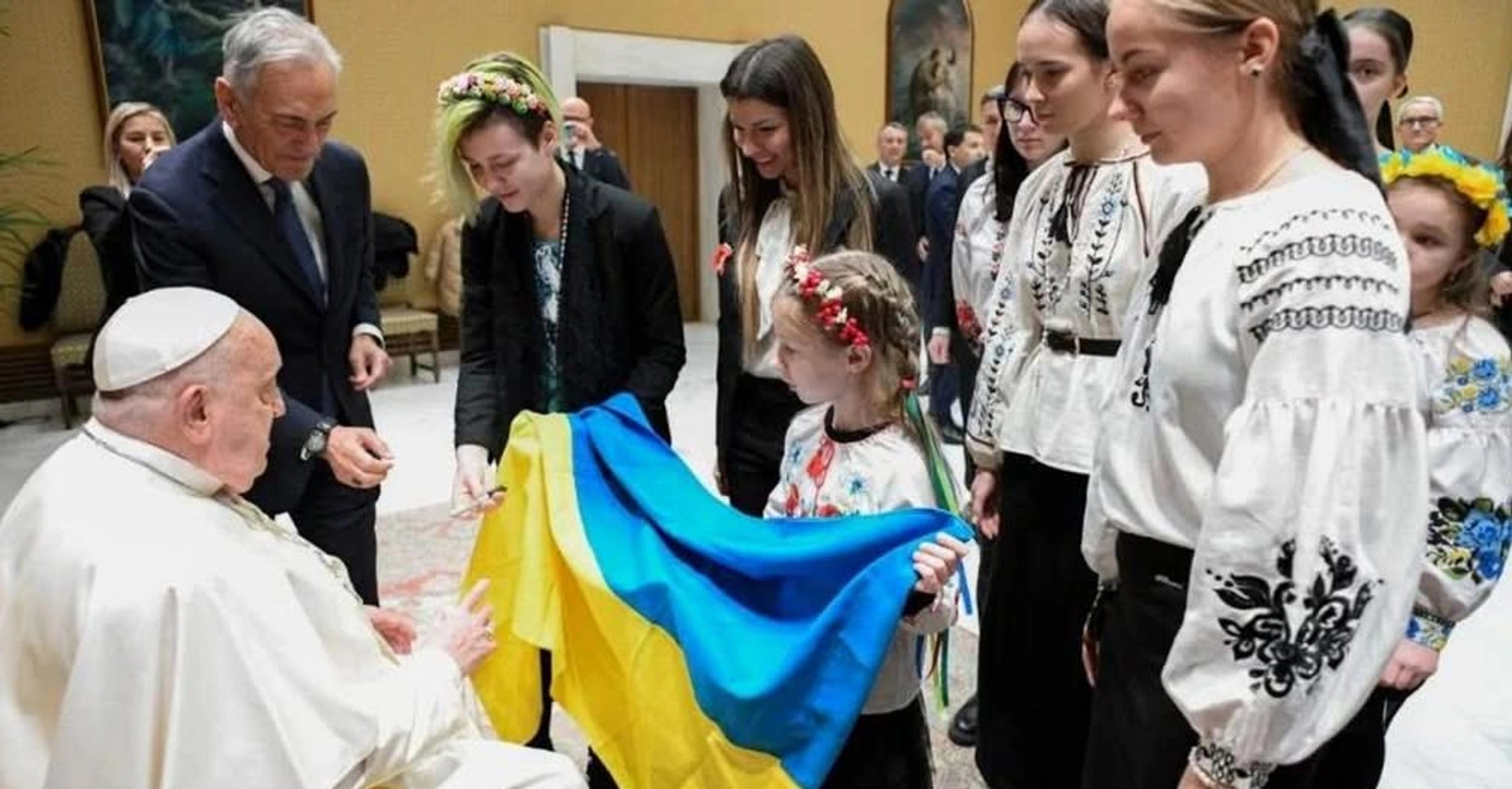 A Ukrainian girl has an audience with Pope Francis (Photo courtesy La Memoria)
Humanitarian aid was not the only form of support provided by La Memoria Viva. The association also hosted 20 young people and four guardians from the hardest-hit areas around Kharkiv in Italy’s Gran Paradiso National Park. The initiative was made possible through the hospitality of the park’s president, Mauro Durbano, and the municipality of Ceresole Reale. For two weeks, immersed in a beautiful natural landscape, the teenagers experienced something that had become rare in their lives: ordinary peace. No air-raid sirens, no drones overhead, no explosions in the distance. No fear. Before returning home, they were also hosted in Versilia, where they swam in the sea and were able to set aside the weight of war.
Before every mission in support of the Ukrainian population, the association has consistently assessed local needs and then raised funds or collected essential supplies in direct response to those requests. Aid has always been delivered in person, directly to its destination. Over time, priorities have changed and methods have adapted, but the emergency has never diminished.
Step by step, more than 50 missions have now been successfully completed. “Yet figures alone fail to capture what matters most,” concludes Roberto Falletti: “the smiles, the gestures of kindness, the embraces and the tears that have marked these encounters.” They are the moments that have stayed with the Italian volunteers as they offered small but vital signs of humanity and solidarity to their Ukrainian counterparts, forced to live for four years under the constant threat of Russian bombardment.
Anyone wishing and able to contribute to saving the lives of civilians and soldiers across Ukraine can contact the association La Memoria Viva via its Facebook page.
