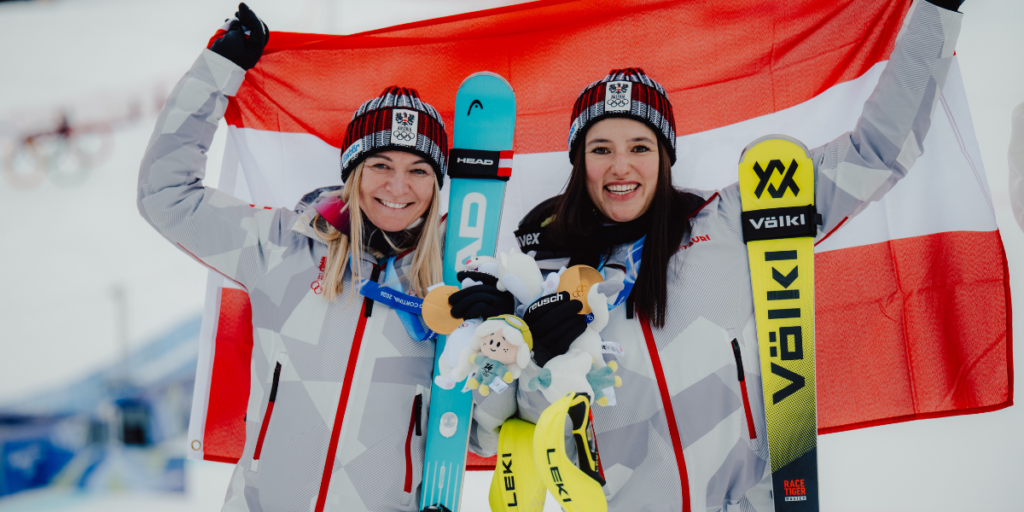
Ariane Rädler, Katharina Huber / Olympic Team Combined Champions / GEPA pictures
Austria Claims First-Ever Women’s Olympic Team Combined Gold as New Format Delivers Immediate Drama
The Olympic debut of the Women’s Team Combined delivered instant theater — and the first major shock of the Milan–Cortina Games — as Austria executed under pressure to defeat Germany and the United States in a race defined by razor-thin margins and a slalom that refused to yield.
On a warm afternoon at the Tofane Alpine Skiing Centre, a salted surface held firm, but a deceptively demanding slalom set by Robert Berger (AUT) punished even the sport’s most accomplished athletes. The result: a volatile leaderboard, a remarkable number of DNFs, and medals decided by hundredths.
🏅 Women’s Olympic Team Combined — Top Five
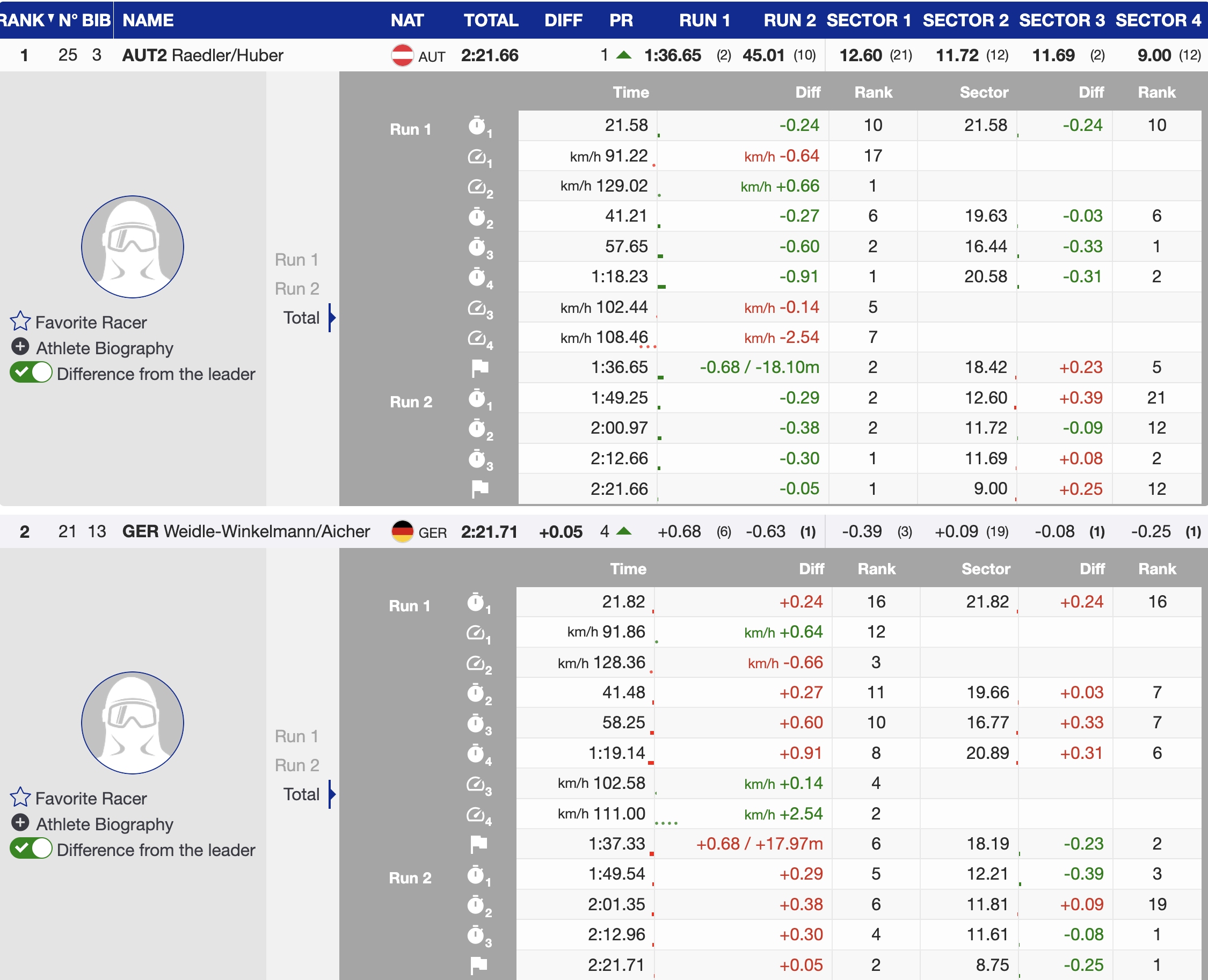
- 🥇 🇦🇹 AUT2 — Ariane Rädler (1995) / Katharina Huber (1995) — 2:21.66
- 🥈 🇩🇪 GER — Kira Weidle-Winkelmann (1996) / Emma Aicher (2003) — +0.05
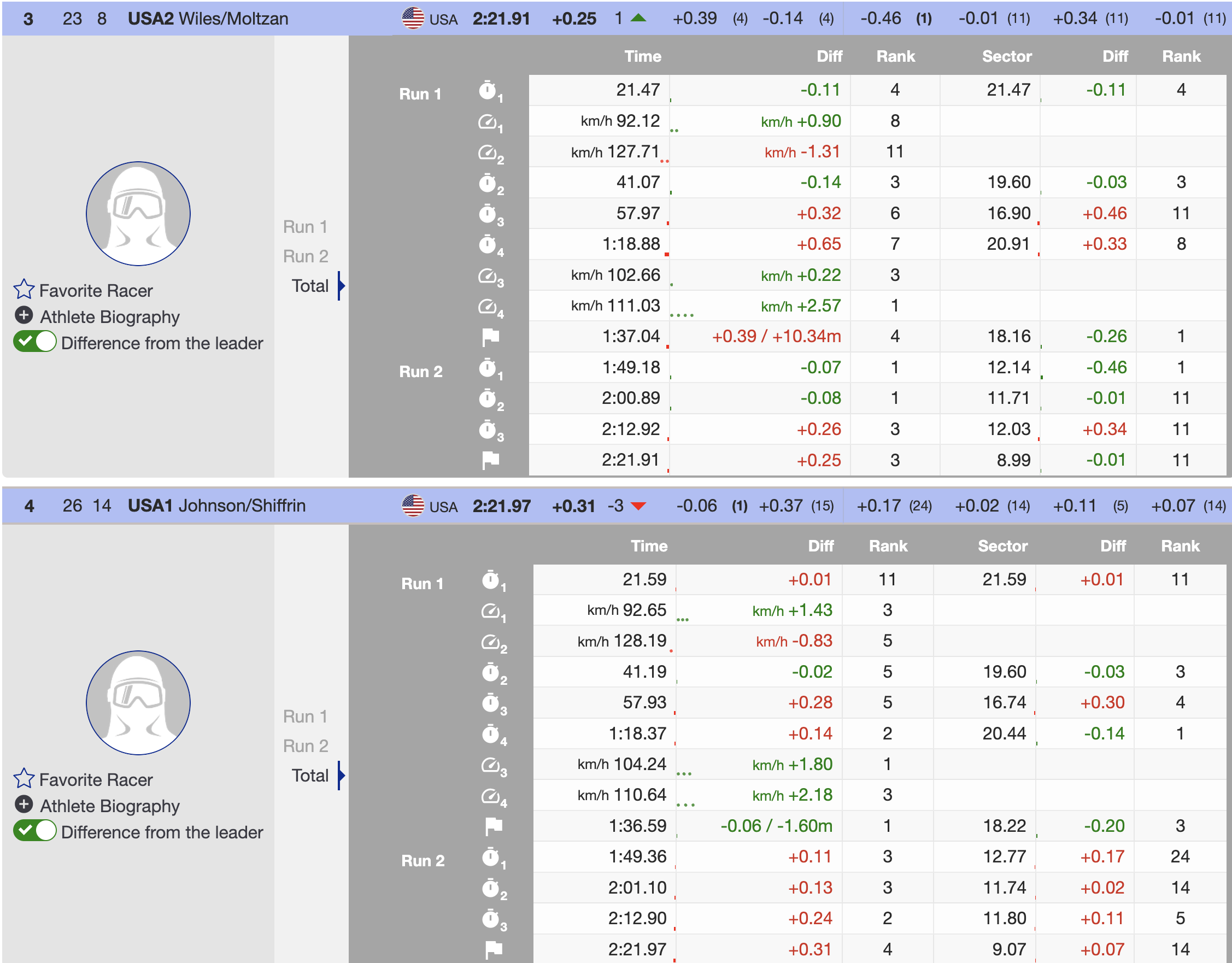
- 🥉 🇺🇸 USA2 — Jacqueline Wiles (1992) / Paula Moltzan (1994) — +0.25
- 4th 🇺🇸 USA1 — Breezy Johnson (1996) / Mikaela Shiffrin (1995) — +0.31
- 5th 🇦🇹 AUT1 — Cornelia Hütter (1992) / Katharina Truppe (1996) — +0.61
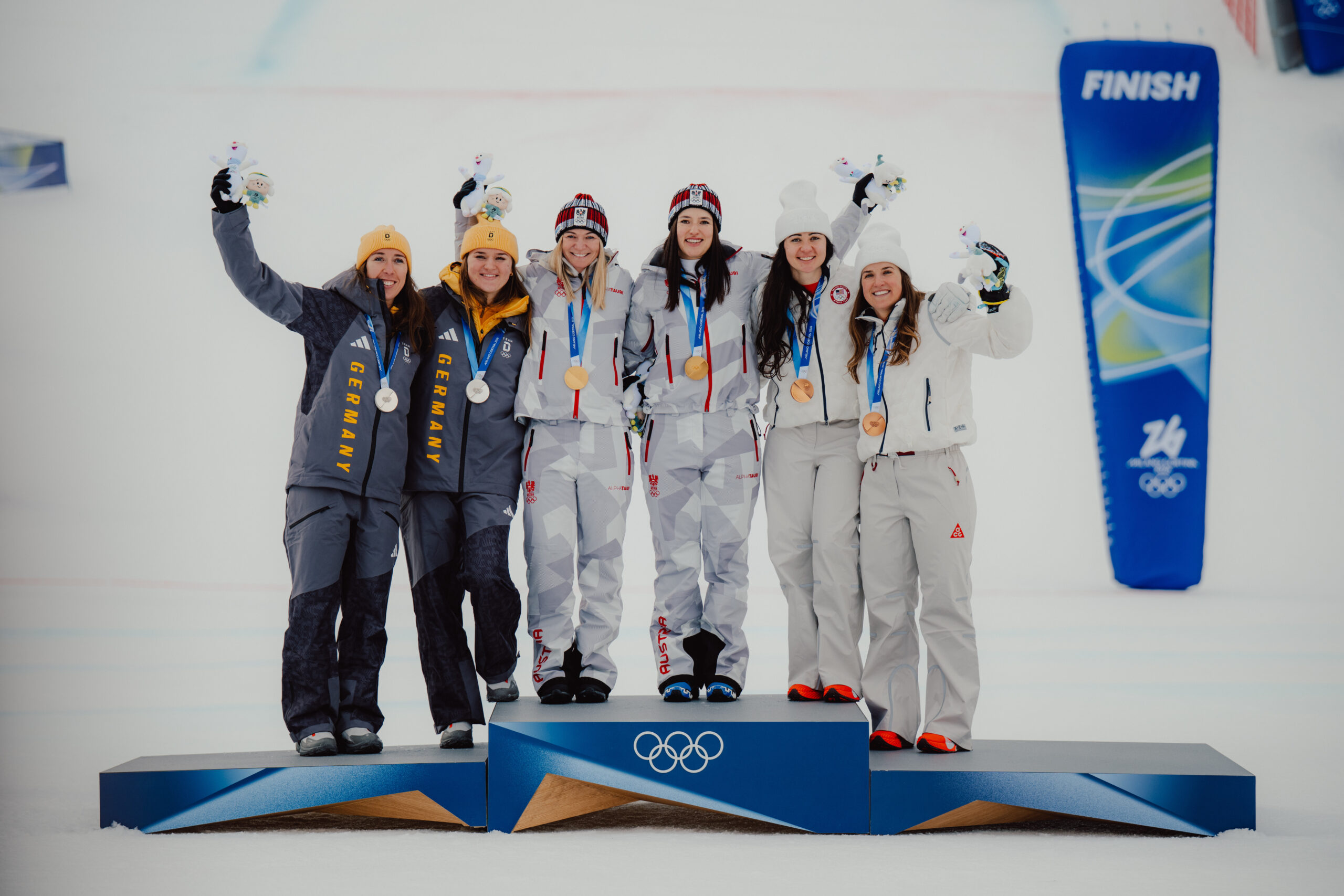 CORTINA D AMPEZZO, ITALY,10.FEB.26 – Kira Weidle-Winkelmann (GER), Emma Aicher (GER), Ariane Raedler (AUT), Katharina Huber (AUT), Jacqueline Wiles (USA) and Paula Moltzan (USA). Photo: GEPA pictures/ Alexander Solc
A Format Built for Pressure — and It Delivered
The Team Combined pairs one downhill skier with one slalom skier from the same nation, with times added together. Slalom runs in reverse order of the downhill, ensuring the fastest teams face the greatest pressure — and know exactly what is required.
On Tuesday, leads changed almost run by run. On a relatively straightforward slope, the DNF rate was exceptional, driven by a tricky middle section that repeatedly ended Olympic ambitions. Course setters are never meant to be the story — but early in this Olympic race, the course demanded attention.
Austria Delivers When It Matters Most
With the course set to reward patience and discipline, Katharina Huber delivered the run Austria needed. Starting second after the downhill, she skied cleanly and decisively, edging Germany by five hundredths of a second and guaranteeing Austria no worse than silver before the final contenders launched.
No one could dislodge them.
Gold followed — and her eruption in the finish area made it clear just how much it meant.
Katharina Huber struggled to put the moment into words after delivering the slalom run that sealed Olympic gold.
“I don’t know what to say — it’s unbelievable,” Huber said. “I was so nervous in the beginning of the day when Ari had her run, and I was also very nervous when I was skiing. I think it will take time to realize it, but for now it’s unbelievable.”
For her downhill teammate Ariane Rädler, watching from the finish was even harder than racing herself.
“I was so nervous — even more nervous than when I skied the downhill,” Rädler said. “It was so cool. Kathi’s run was so good. I’m so happy.”
Germany Breaks Through, Aicher Announces Herself
At just 22 years old, Emma Aicher delivered the fastest slalom run of the race, producing one of the defining performances of the Games so far. Calm where others faltered, she maintained her advantage to the finish, crossing to loud roars and pushing Germany into the lead.
Moments later, Italy’s medal hopes ended, and Germany’s podium was guaranteed. Silver may read as second place, but this was a breakthrough performance — and a statement for the future.
For Kira Weidle-Winkelmann, the result delivered her first Olympic medal — and came with no guarantees.
“This is my first Olympic medal and it feels amazing, especially in a team with Emma,” Weidle-Winkelmann said. “You’re never guaranteed that you finish the downhill, as we saw today. I was quite nervous, but I wanted to give Emma a good run — and she did amazing.”
Emma Aicher, just 22 years old and fastest in the slalom, kept the moment in perspective.
“At the start, like always, I was okay — maybe a bit nervous,” Aicher said. “But Kira did a great job.”
USA2 Steps Up Under Fire
With medals tightening, Paula Moltzan attacked from the top for USA2. She held an advantage through three sectors before giving time back late, but the run was enough.
Together with Jacqueline Wiles, the pair secured bronze, delivering the United States its first medal in the new Olympic format — a reward for depth, resilience, and execution under pressure.
Jacqueline Wiles described the Team Combined as unlike anything she had experienced before.
“That was incredible,” Wiles said. “So many emotions. I knew Paula would be really fast, and honestly it was more intense watching Paula than skiing myself. This is the coolest event, and I’m really proud of my teammates.”
Paula Moltzan credited Wiles for setting the platform and reflected on the meaning of the moment.
“Jackie set us up in a great position and I’m really happy with her performance,” Moltzan said. “I know there’s room for improvement in my run, but it feels like we can take a deep breath. We’ve accomplished a lifelong goal.”
Shiffrin Runs Last — and the Magic Doesn’t Come
The final act belonged to Mikaela Shiffrin.
Starting with just a 0.06-second downhill advantage, she immediately lost time in the opening sector, bled more in sector two, clawed some back in sector three — but on this day, the decisive spark never arrived.
USA1 finished fourth, just off the podium.
It was a rare Olympic disappointment for the greatest slalom skier and the best the sport has known — and one of the few times a course designed to neutralize her actually succeeded.
She will celebrate her teammates’ bronze medal — and feel deeply for her partner, Olympic downhill champion Breezy Johnson, who delivered the fastest downhill of the day.
A Meaningful Return — Even Without a Finish
Earlier, the crowd witnessed something bigger than results.
Petra Vlhová, the reigning Olympic slalom champion, returned to competition for the first time in more than two years following a severe leg injury. She skied out in the second sector — another victim of the course’s defining middle section — but the moment mattered.
Her rivalry with Shiffrin once defined the slalom discipline. Seeing her back on an Olympic start list mattered to the sport — and to the Games.
🇺🇸 United States — Team Results
- 🥉 USA2 — Jacqueline Wiles (1992) / Paula Moltzan (1994) — 3rd
- USA1 — Breezy Johnson (1996) / Mikaela Shiffrin (1995) — 4th
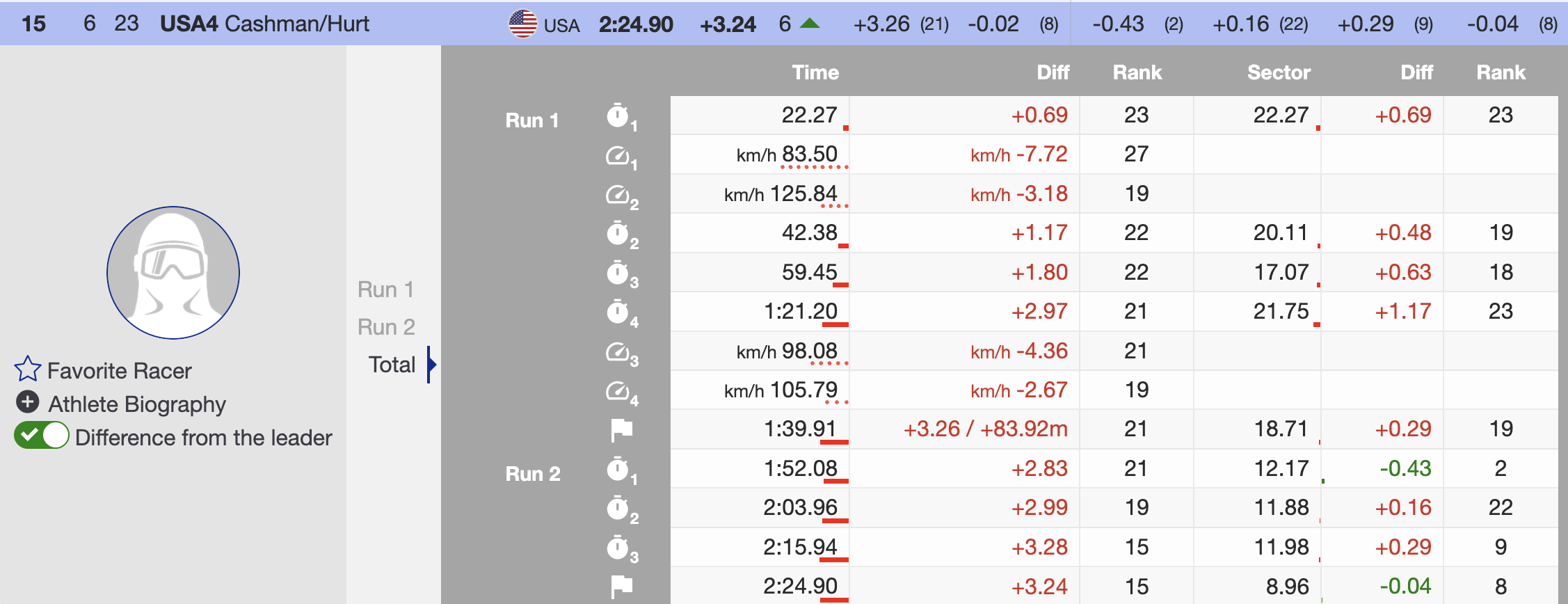
- USA4 — Keely Cashman (1999) / A.J. Hurt (2000) — 15th
- USA3 — Isabella Wright (1997) / Nina O’Brien (1997) — DNF (downhill)
🇨🇦 Canada — Team Results
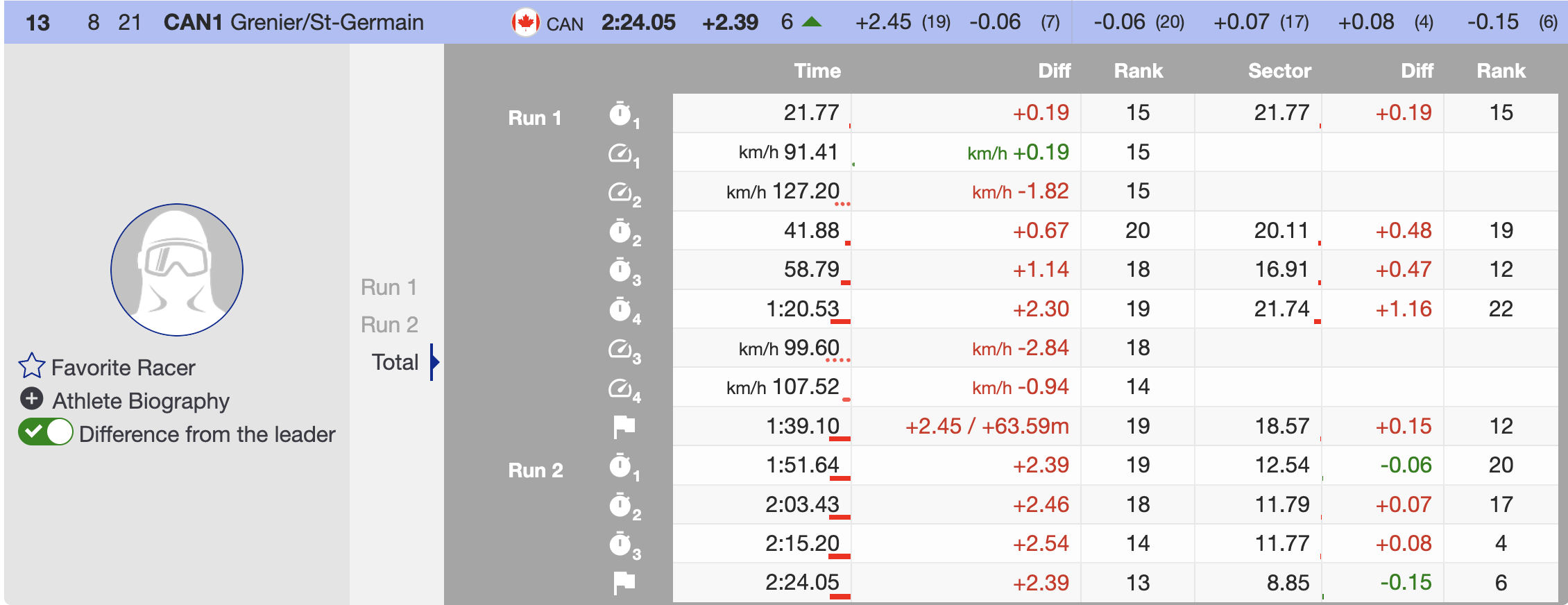
- CAN1 — Valerie Grenier (1996) / Laurence St-Germain (1994) — 13th
- CAN2 — Cassidy Gray (2001) / Ali Nullmeyer (1998) — DSQ
A New Olympic Classic Is Born
The Women’s Team Combined rewarded courage, balance, and trust — and punished hesitation without mercy. It spared no one. It crowned the prepared.
If the goal was to create tension, unpredictability, and unforgettable Olympic moments, this new format delivered immediately.
And it’s only just getting started.

Team Combined Results
Click Images to Enlarge
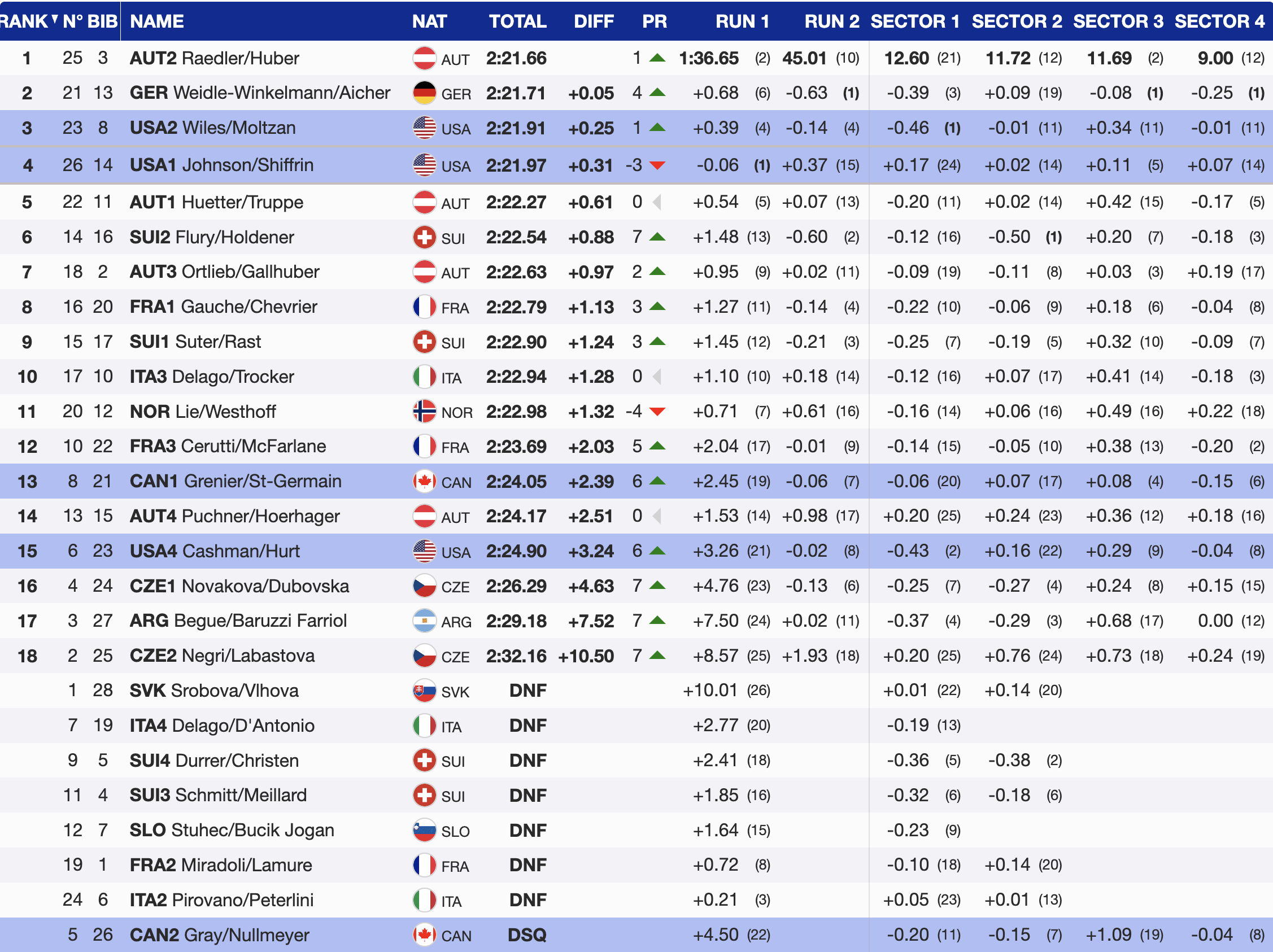
Timing Analysis: Podium Performers and Other North American Teams