
Published on
February 12, 2026
The World’s Longest Submerged Tunnel Will Open in 2029: The Fehmarn Belt Fixed Link
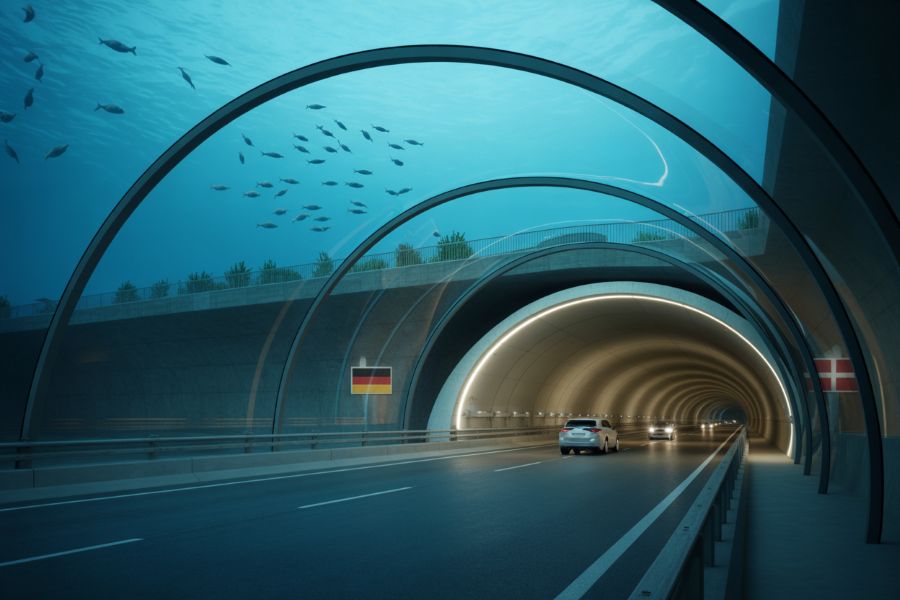
The Fehmarn Belt Fixed Link, boasting the start of a new era in construction and transportation, will be the world’s longest submerged tunnel when it opens in 2029. Its planning has taken over a decade, and it will enhance the transport network from the Danish island of Lolland to Germany’s Fehmarn Island, extending to mainland Europe and Scandinavia’s northern nodes. With the completion of this multi-pass project, providers will enable frictionless transport through the tunnel for people and businesses, while also enhancing services to the environment and closing the veil.
Enhancing the Scope of the European Road Network for the First Time
The Fehmarn Belt Tunnel will be the first of its kind in the European Road Network, and its location in the estuary of the Baltic Sea will allow the completion of the 11-mile corridor with the 18-kilometer tunnel. With the completion of this last necessary link, truck and train traffic in the Scandinavian corridor will be unhindered, with the full closure of the corridor’s feed way and the full closure of the Baltic way. With increased control over traffic flow and mobility, travel will be smooth, and time will be tightly controlled.
The traveler, who now faces a 7-hour journey via the estuary route, will experience a quick 10-minute journey across the Baltic Sea, while ferry transport will enhance utilization of the ferry terminal.
Design and Technology: New Ways to Keep Travel Safe and Easy
The Fehmarn Belt Fixed Link incorporates new technologies designed to enhance safety and efficiency for travel along the tunnel’s length. The construction of the tunnel is being directed by the Danish planning company Femern, which uses construction practices and previous projects, such as the Øresund Tunnel, to ensure the Fehmarn Belt Tunnel is an engineering and architectural masterpiece, as well as a safe, secure, and reliable way to travel.
One of the unique features of the tunnel construction will be the “immersed tube” method, in which large, pre-fabricated and pre-assembled concrete tunnel sections are submerged and placed on the sea floor, allowing the tunnel to be constructed while maintaining a continuous and unobstructed use of the waterway for maritime shipping. A unique and proven engineering and construction method, the waterway being crossed is a busy, and therefore economically important, waterway for the shipping and trading of goods. This method will test and showcase the proven, large-scale civil engineering capabilities of Danish-developed construction technologies.
Advertisement
Advertisement
Safety Standards and Designs
Building a tunnel is complex, but the priority is safety. During construction, safety features will be added, including hard shoulders that permit the passage of emergency vehicles. To ensure the safe exit of passengers and freight operators, emergency exit openings will be installed regularly along the tunnel’s length. These features help ensure compliance with international safety standards for road tunnels. Therefore, the safety of this tunnel will be equivalent to the safety of an above-ground section of highway.
Construction of the tunnel will take place in the Baltic Sea. To eliminate the impacts construction will have on the environment, the focus will be on the protection of sea life in the area. During all phases of building the tunnel, construction will take place to ensure no harm comes to the sea life and ecosystems.
Advertisement
Advertisement
The construction of the tunnel between Denmark and Germany is one of the largest construction projects in the world. The tunnel will make crossing the borders between Denmark and Germany one of the fastest and safest methods.
The Fehmarn Belt Tunnel’s Enormous Economic Impact
The Fehmarn Belt Tunnel will have an enormous economic impact. The tunnel will create faster travel times and easier transport systems, and it’s also expected to create greater commerce and travel between the two countries. Additionally, the tunnel will feature a high-speed rail system, which will create faster travel times for both passengers and freight operators. This will lead to increased economic activity and tourism in the surrounding areas.
The construction of the Fehmarn Belt Tunnel will create thousands of jobs for the local communities and surrounding areas. The tunnel will provide an economic link for Denmark and Germany and provide economic support for the tunnel. The Fehmarn Belt Tunnel also improves the EU’s sustainable transport goals.
Funding and Cost: Large-Scale Investment
The Fehmarn Belt Tunnel costs an estimated £6.4 billion. £1.1 billion is to be contributed by the European Union due to its importance for cross-border transport and regional development. This extends the European Union‘s developing region and border transport networks while its importance continues to grow in the future.
The first economists to study the cost and benefits of the transport system of the region in the future, with the road and travel system of the region, focused on the system as a whole. The efficiency and system, focusing on system travel times, spurred regional improvement in how to travel across the region. The development of the road and rail system as a whole focused on system travel times, further enhancing the region and its improvement.
End of the Line for the Fehmarn Belt Tunnel
When completed in 2029, the Fehmarn Belt Tunnel will be both an engineering marvel and a celebration of international cooperation. It will connect Lolland, Denmark, and Fehmarn Island, Germany, and will create a more efficient and safer way to cross the Baltic Sea. The Fehmarn Belt Tunnel represents a new era of European cross-border connectivity and sustainable travel. The economic, environmental, and social improvements will be felt for generations. This will be one of the largest infrastructure investments in Denmark and will create a lasting legacy.
