
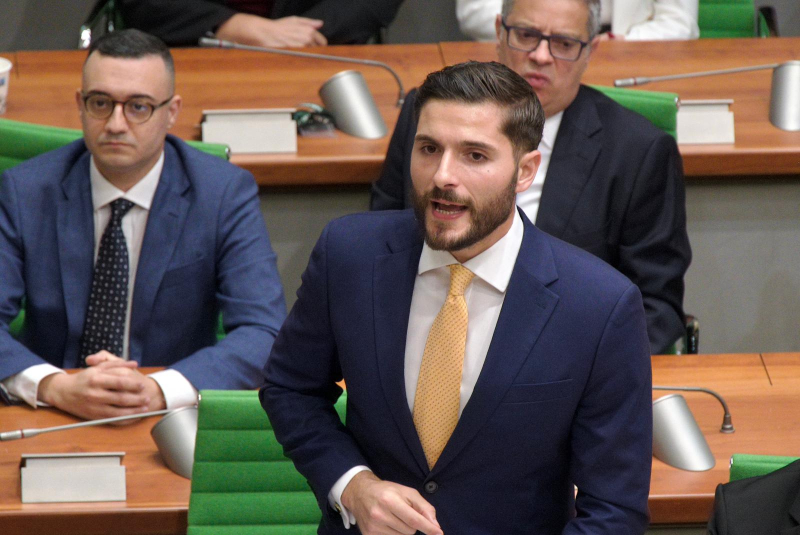
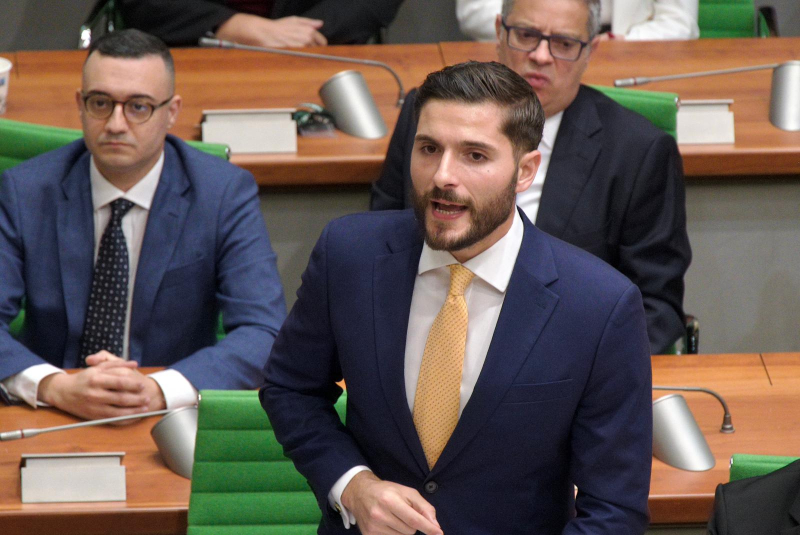
 Photo: Miguela Xuereb
Maltese families are working harder yet falling further behind, PN leader Alex Borg told parliament on Wednesday, as he laid out a five-point plan aimed at recalibrating an economic model he argued has “lost its balance.”
Speaking during the debate on the implementation of Budget 2026 measures, Borg sought to shift the focus from government statistics to lived reality.
“The true measure of a country is not found in graphics, statistics or press releases, but in the quality of life of its people,” he said.
Borg painted a picture of families trapped in a cycle of long commutes, rising costs, and diminishing returns. He described young people who feel “stuck” and elderly citizens uncertain whether their pensions will last the month.
“This is not a matter of perception,” he stressed. “It is the lived reality of those who work diligently, pay their taxes and still feel they are falling behind.”
The central critique was directed at what Borg termed a “model that demands much and gives little in return,” one that consumes family time, increases mental strain, and forces citizens “to live in order to work, rather than work in order to live.” This, he argued, is neither economically nor socially sustainable.
While acknowledging the government holds ultimate responsibility for budget implementation, Borg insisted the opposition has a duty to present concrete alternatives.
He outlined five priorities: an economy that raises the quality of work through skills and value-added sectors rather than excessive hours; genuinely effective cost-of-living support; a housing policy enabling young people to plan with certainty; an education system preparing students for real opportunities; and a healthcare system placing patients at the centre, with particular emphasis on mental health.
Borg called for politics rebuilt on “justice, dignity and the future”—justice so no one is left behind, dignity so work enhances life rather than consumes it, and a future that encourages young people to remain, work, and raise families in Malta.
“Malta can do better,” he concluded, “because the people deserve better.”

