
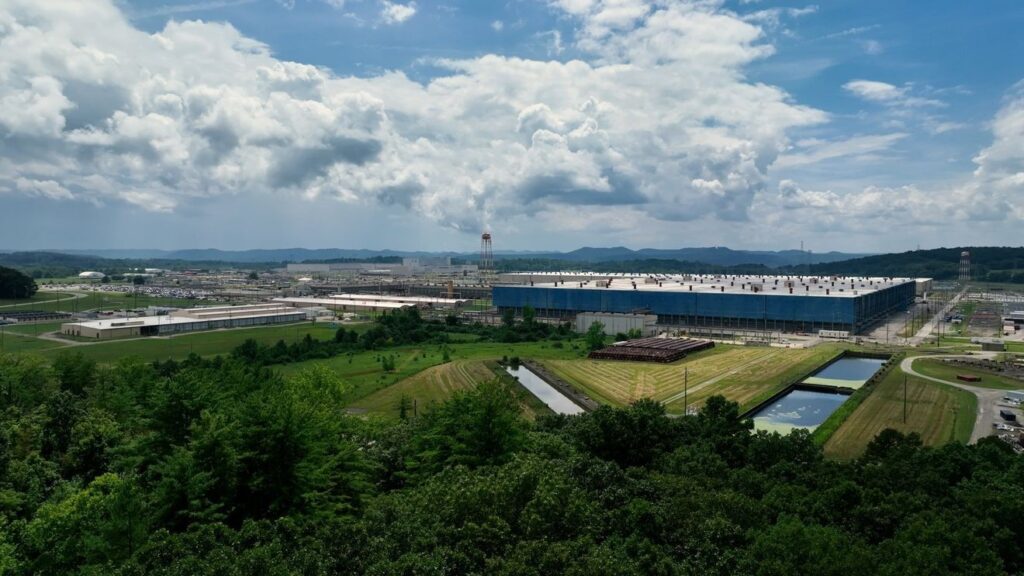
PIKETON, Ohio (WKRC) – The Portsmouth Gaseous Diffusion Plant (PORTS), a massive Cold War-era complex near Piketon, Ohio, once played a critical role in America: enriching uranium for the country’s nuclear bombs.
While PORTS—known as the A-Plant by those who live around it—has been closed for more than two decades, the legacy contamination from the plant has been the focus of a five-year Local 12 “FALLOUT” investigation. Since 2020, our investigation uncovered tens of thousands of pounds of radioactive releases at the plant, heavily contaminated properties surrounding it, and growing cancer and death rates that the epidemiologist who studied them described as “shocking.”
Local 12’s Chief Investigative Reporter Duane Pohlman crossed the country to get an exclusive interview with U.S. Secretary of Energy Chris Wright, who’s leading the charge for America’s “Nuclear Renaissance,” a massive push for America’s new nuclear-powered future. The plan includes a major expansion of uranium enrichment plant and a new nuclear power campus at the same site that’s been the focus of Pohlman’s five-year “Fallout” investigation. (WKRC, file, Provided)
Despite our intense and lengthy investigation, the government has done little to address the issues we’ve uncovered.
The U.S. Department of Energy (DOE), which owns and operates PORTS, insists there is “no health threat” posed by the plant, as old buildings at the PORTS site continue to be dismantled and radioactive debris is being disposed of in an on-site waste disposal facility.
Even as demolition work continues at PORTS, it’s now clear the old property will now play a critical role in America’s future energy needs, as DOE pivots to nuclear power again.
OHIO’S PUSH PORTS AND NEW NUCLEAR FUEL:
Last September, Governor Mike DeWine was joined by top elected leaders and state bureaucrats at Ohio University-Chillicothe to announce a major push to ramp up production of enriched uranium at the PORTS site again.
“It’s essential for national security that the nuclear fuel be made right here in the United States,” Governor DeWine told the crowd gathered under a tent in the rain. “To have it made in Ohio, for us, is certainly just an added bonus.”
The governor and leaders here were pushing for critical funding from the DOE to allow a massive expansion of enriched uranium production at Centrus Energy’s American Centrifuge Plant, which is in a building next to the old PORTS structures now being torn down.
Beginning as a demonstration project in 2023, Centrus has been producing High-Assay Low-Enriched Uranium – or HALEU – which contains a higher percentage of U-235, which is essential for the next-generation nuclear reactors poised to power the country for decades to come.
Right now, America imports enriched uranium from foreign countries, including Russia and China. Governor DeWine joined a chorus of leaders across the country in saying that reliance must end.
“That’s not in the United States’ best national interest,” said Governor DeWine.
At the podium in September, Centrus Energy Corporation CEO Amir Vexler made it clear his American-owned company and the centrifuges at PORTS are critical to the country’s future.
“We have the only proven deployment-ready technology that is American-made and American-owned,” Vexler said.
In January, Centrus announced it was awarded $900 million from the DOE for the massive multi-billion-dollar expansion it’s now planning at the PORTS site.
NUCLEAR POWER CAMPUS AT PORTS:
Producing the new nuclear fuel at PORTS will not be the only facet of its nuclear future.
In January, Oklo Inc.—a California-based advanced nuclear power company—announced an agreement with Meta Platforms, which owns Facebook, Instagram, WhatsApp, Messenger, and Threads, to prepay for powering its data centers in the region.
The Meta money will help fund a nuclear ‘power campus” to be built on 208 acres of the old PORTS site. Oklo is now moving forward with its plan to install more than a dozen of Oklo’s small modular reactors (SMR)—called Aurora powerhouses—to produce 1.2 gigawatts (GW) of power, nearly the same amount produced by the older and much larger nuclear reactors.
SECRETARY WRIGHT’S NUCLEAR RENAISSANCE:
The projects at the old PORTS site are part of a massive national push for nuclear power, something U.S. Secretary of Energy Chris Wright calls America’s “Nuclear Renaissance.” And he makes it clear the U.S. is now in a post-Cold War race, with nuclear power at the center.
“We don’t want the nuclear future owned by the Russians and the Chinese. We want the nuclear future exactly where the nuclear start came from. The United States,” Secretary Wright explained, during a recent tour of the Idaho National Laboratory (INL), where the world’s first nuclear-powered electricity was generated 75 years ago.
INL is now gearing up to test Oklo’s SMR, as well as micro-reactors that fit inside a trailer of a semi-truck.
While Secretary Wright has been criticized for ending subsidies for wind and solar power, he says he’s not opposed if they can “stand on their own two feet” and provide reliable electricity.
“I don’t care what the source of energy is; I just want affordable, reliable, secure energy,” said Wright.
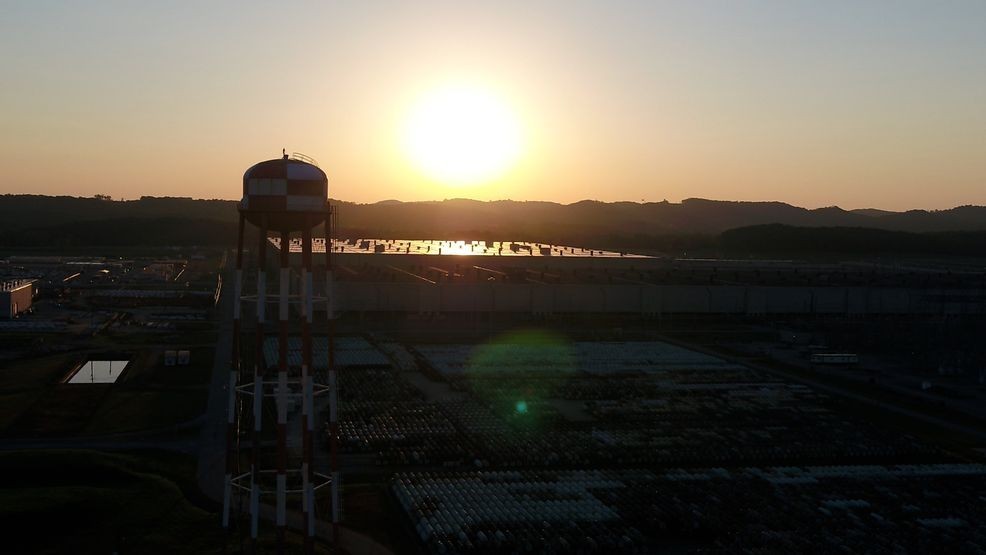
Local 12’s Chief Investigative Reporter Duane Pohlman crossed the country to get an exclusive interview with U.S. Secretary of Energy Chris Wright, who’s leading the charge for America’s “Nuclear Renaissance,” a massive push for America’s new nuclear-powered future. The plan includes a major expansion of uranium enrichment plant and a new nuclear power campus at the same site that’s been the focus of Pohlman’s five-year “Fallout” investigation.{ } { }(WKRC)
But when asked, Secretary Write is just as clear that nuclear power is the provider of reliable power that is capable of meeting America’s future electricity demands, which are expected to surge 78% by 2050.
“Can we get there without nuclear [power]?” said Duane Pohlman.
“Not in the long run,” said Secretary Wright.
COSTLY MISTAKES OF THE PAST:
As he charges forward in his push for nuclear, Secretary Wright concedes mistakes were made in the radioactive rush to build up America’s atomic weapons during the Cold War at facilities like PORTS.
“We were worried about global security, and we went fast. And when we went fast, it meant we cut corners, and we have big cleanup problems to deal with it,” Secretary Wright said.
According to a National Governor’s Association report in 2023, DOE’s legacy costs of cleaning up America’s nuclear weapons complex sites are estimated to be between $652 and $887 billion.
A 2019 report from the Government Accountability Office (GAO) revealed deactivation and demolition at PORTS is expected to cost at least $6.7 billion.
While the cost in those reports is measured in dollars, many others worry about the cost in the health and safety of those who live around those facilities. Secretary Wright insists the next generation nuclear power plants are much safer than the technology of the past.
“How is this new nuclear so different from the problems of the past?” said Duane Pohlman.
“It’s incredible how safe nuclear reactors are,” said Secretary Wright.
These next-generation reactors, if everything goes wrong, will automatically turn themselves off.
RECOGNITION AND COMPENSATION:
While Secretary Wright promises a cleaner and safer nuclear future, people in Pike County continue to fight for recognition and compensation.
Congressman Dave Taylor, (R)-2nd District, who represents Pike County, says he’s fighting for the same thing.
“It’s something we’ve been working on and will continue to work on, and I think it’s inevitable,” said Taylor.
For the people who live in the shadow of PORTS, like Darwin Pettit, whose farm has tested positive for high levels of radioactive contamination, patience has already run out.
“Nobody’s doing a thing about it,” Pettit said.
It’s a reality here as people live and die in the legacy of a radioactive past and now face a new nuclear future.