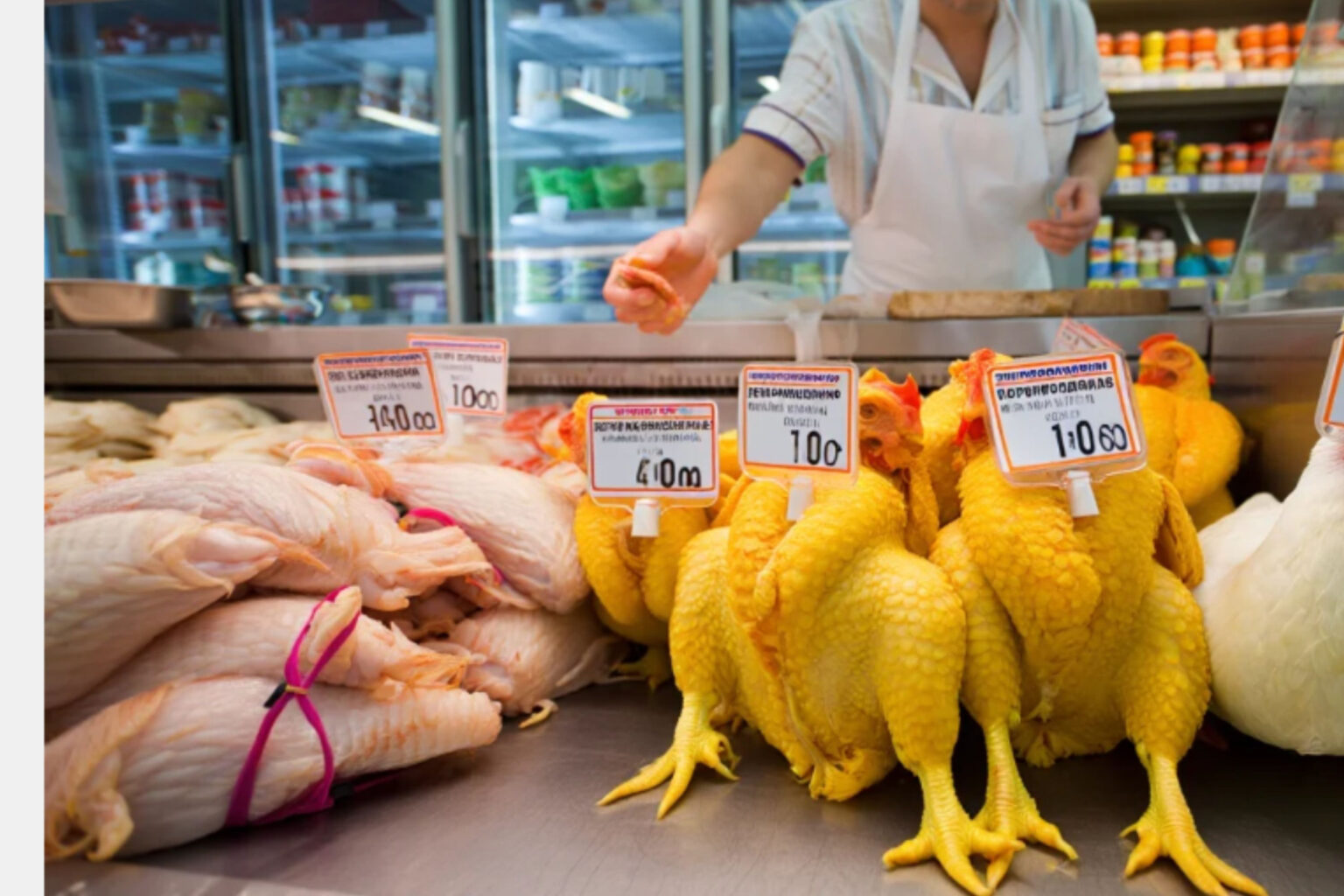
 Russia imported a total of 327,400 tonnes of poultry meat in 2025, up 4.3% from the previous year. If the current trend continues, poultry and pork prices in Russia could fall by 10-15% in 2026. Image created with the help of AI (Reve.art)
Russia’s meat industry has raised concerns over a sharp rise in poultry imports from China, warning that growing volumes are starting to put pressure on broiler meat and pork prices in an already strained domestic market, industry representatives said.
In 2025, Russia imported around 110,000 tonnes of poultry meat from China, with monthly shipments increasing nearly fivefold by December compared with the beginning of the year, according to Yuri Kovalev, general director of the Russian Union of Pork Producers. Kovalev outlined the figures during an industry conference in Moscow.
A significant increase in imports
“If imports continue at this pace, Russia could bring in between 200,000 and 250,000 tonnes of imported lean poultry fillet in 2026,” Kovalev said. “In terms of lean content and live weight, that would be equivalent to roughly half a million tonnes of pork.”
At the start of 2025, Russia imported about 4,000 tonnes of poultry meat from China per month on average. By the end of the year, shipments had accelerated sharply, raising concerns among domestic producers about the impact on prices and margins.
ALSO READ: Major bird flu outbreak puts Russian egg market in peril
Market participants largely attribute the surge in imports to a significant strengthening of the Russian ruble against major currencies. The ruble appreciated by nearly 40% in 2025, making foreign meat supplies more affordable for Russian buyers and improving the competitiveness of Chinese poultry products on the domestic market.
If the current trend continues, poultry and pork prices in Russia could fall by 10-15% in 2026, putting local producers under financial pressure, Kovalev warned. While the situation has not yet reached crisis levels, he described the trend as one that warrants close monitoring by both industry and regulators.
“The dynamics are not catastrophic at this stage, but this is clearly a development that deserves attention,” Kovalev said.
Poultry industry voices caution
Russia imported a total of 327,400 tonnes of poultry meat in 2025, up 4.3% from the previous year, according to estimates from the Russian National Poultry Union. Despite the moderate overall increase, poultry producers are increasingly concerned about the pace of imports from China in particular, said Galina Bobyleva, chairman of the Russian National Poultry Union. She noted that while imports remain manageable for now, the scale and speed of growth have become a sensitive issue for the sector.
Meanwhile, Russia remains a net exporter of poultry products to China. In 2025, Russian poultry producers sold US$445.6 million worth of poultry meat and by-products to Chinese buyers, a 3.6% increase from the previous year, according to data from China’s State Administration of Customs.
ALSO READ: Brazil more than doubles egg exports in 2025
A 2-way trade relationship
Exports to China play a critical role for Russian poultry producers, as shipments largely consist of products such as poultry feet and certain by-products that are highly valued in China but have limited demand on Russia’s domestic market. However, the shift in trade dynamics comes at a challenging time for Russia’s poultry sector. The industry has been showing signs of oversupply, which has already weighed heavily on prices and profitability.
In 2025, Russia ranked as the second-largest poultry exporter to China, behind Brazil, which supplied poultry products worth $795.6 million to the Chinese market.