
The resolution that clashed opposition parties: What happened yesterday in the Kosovo Assembly

Express newspaper
13/02/2026 7:01
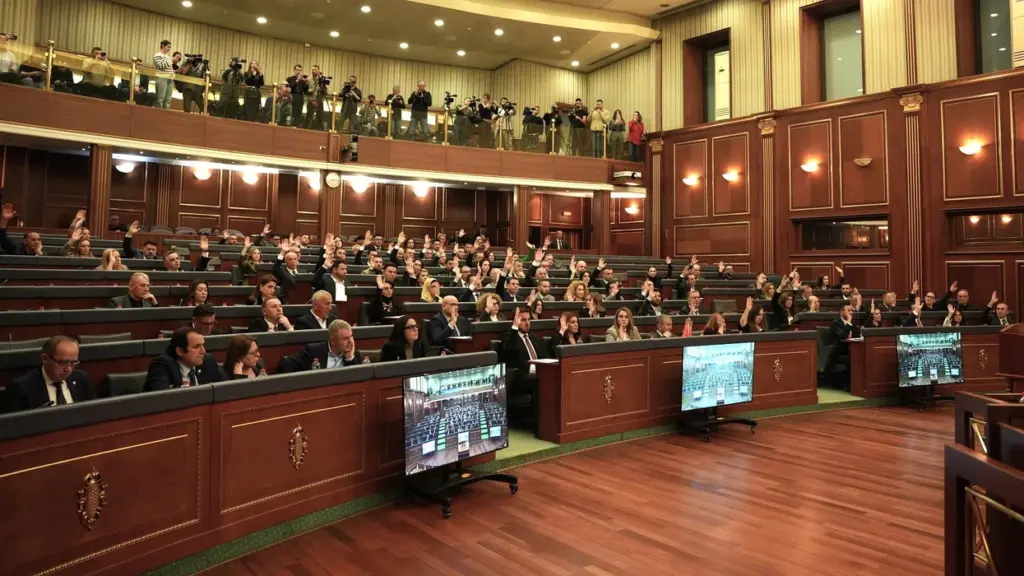
In the first session after the constitution of the 10th legislature, the Assembly of the Republic of Kosovo approved with 90 votes a resolution that requests the Specialist Chambers in The Hague to guarantee a fair trial in accordance with constitutional and international standards for the former leaders of the Kosovo Liberation Army (KLA).
The resolution, presented by Democratic Party of Kosovo (PDK) MP Përparim Gruda, was drafted by independent experts and submitted to the Assembly as a petition with around 300 signatures from professors. The document reaffirms the Assembly’s commitment to respecting the constitutional order on the basis of which the Specialist Chambers and the Specialist Prosecutor’s Office were established.
The text emphasizes that the purpose of establishing these institutions was to address the allegations arising from the 2011 Council of Europe report, while demanding rigorous implementation of the Constitution, transparency, respect for international standards and protection of the rights of the accused, including former KLA leaders being tried in The Hague. The resolution also confirms institutional and financial support for their legal defense.
The Democratic League of Kosovo (LDK) abstained from the vote, after demanding that a point be added to the resolution on the clarification of unsolved murders during and after the war. According to the LDK, local institutions and international partners should intensify efforts to ensure justice for all victims.
However, PDK representatives opposed the change in the text, arguing that the resolution is an expert document and cannot be changed. The amendment was not included in the final text.
MP Fatos Geci from the Vetëvendosje Movement (LVV) was the only one to vote against the resolution, describing it as a document aimed at protecting individuals and not principles.
The Democratic Party of Kosovo praised the adoption of the resolution as an act of state responsibility and institutional unity, emphasizing that protecting a fair legal process and respecting the values of the liberation war are obligations that transcend party affiliations.