
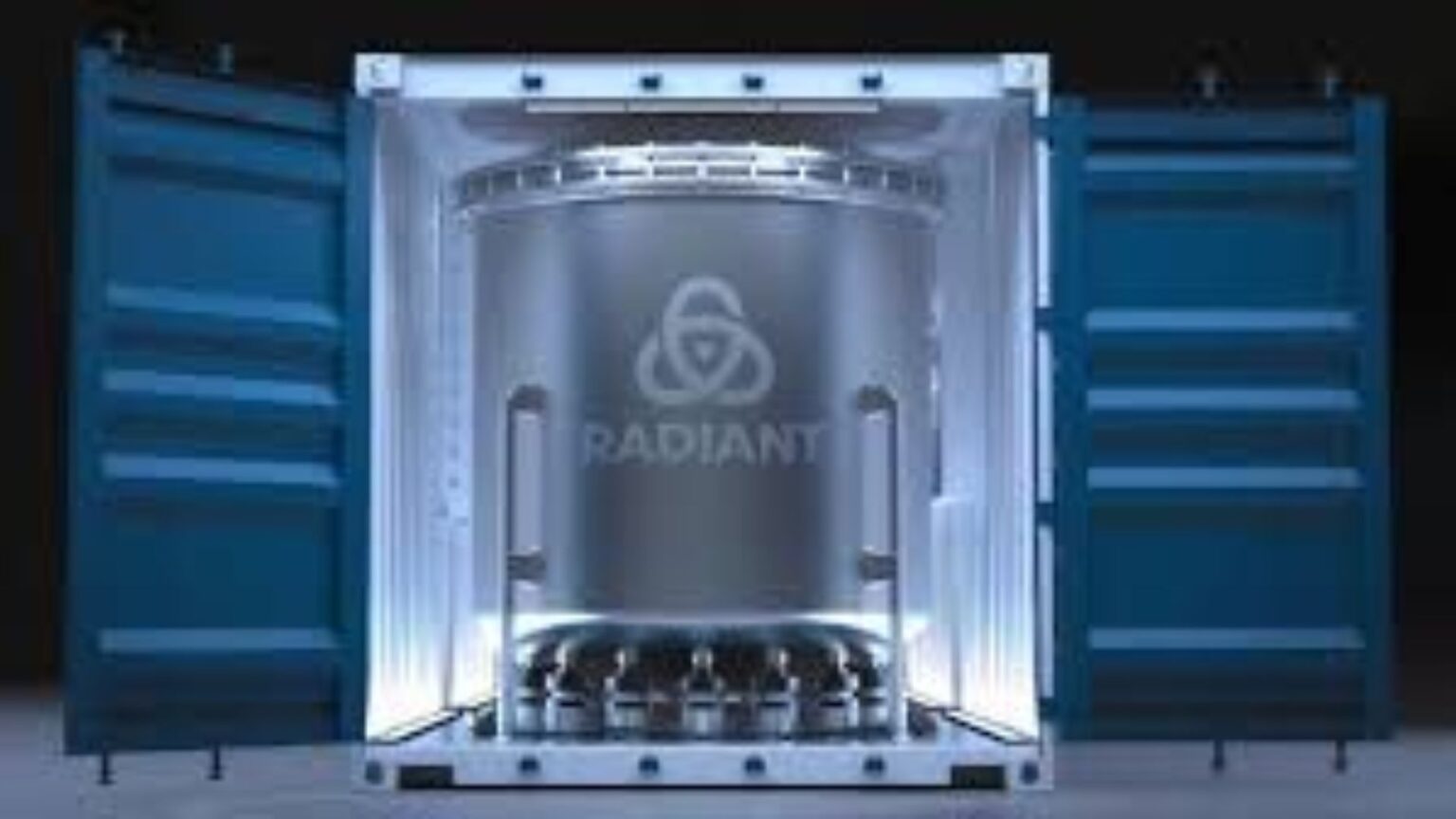
Radiant, a manufacturer of portable nuclear microreactors, has received approval from the US Department of Energy (DOE) for its DOE Authorization Request for Kaleidos (DARK).
This safety documentation allows the company to proceed toward a full-power test of its reactor design. The project follows a $300 million funding round closed in late 2025, with capital allocated to scale commercialization and build the R-50 factory in Oak Ridge, Tennessee.
“The DARK approval reflects close collaboration between our team, DOE, and INL to establish a repeatable, efficient regulatory model for advanced nuclear deployments,” said the company.
This facility is designed to produce 50 Kaleidos units per year for a scheduled 2028 commercial release.
Kaleidos nuclear reactor follows a specialized regulatory pathway
The approval of the DARK submission serves as a Preliminary Documented Safety Analysis (PDSA). It is the second of three safety milestones required under the DOE’s Authorization Pathway for Nuclear Facilities.
The 1-megawatt (electric) Kaleidos microreactor is built for diverse environments and provides 1.9 megawatts of thermal power for facility heating or desalination. The system does not require on-site water, as it uses fans and an air jacket to cool the core through natural convection.
This regulatory model uses federal oversight at national laboratories instead of the standard Nuclear Regulatory Commission (NRC) licensing process.
Radiant is now starting final readiness reviews for the reactor at the National Reactor Innovation Center’s (NRIC) DOME facility at Idaho National Laboratory (INL).
The system has a 20-year lifespan and fits within a standard shipping container for transport by truck or aircraft.
Advanced design features allow for portable and reliable energy
Dr. Rita Baranwal, Chief Nuclear Officer at Radiant, stated that the DOE’s approval of the DARK submission confirms the safety approach and the reactor design.
“Completing the second phase of the Authorization Pathway positions us to move confidently into startup activities and demonstrates that advanced nuclear systems can progress rapidly while meeting rigorous safety requirements,” she noted.
Radiant intends for these units to replace diesel generators in remote areas, military installations, and infrastructure such as hospitals and data centers.
“Our Kaleidos microreactor is designed to deliver reliable power in mission-critical environments, supporting both national security and commercial energy resilience objectives,” added the company.
Technical specifications protocols support the scheduled startup
The design uses TRISO fuel, which consists of ceramic-coated uranium particles. The system employs helium gas to transfer heat from the core.
Helium does not become radioactive, which minimizes the impact of potential leaks.
The Kaleidos Demonstration Unit will be among the first reactors to operate under this DOE framework and the first to start up at the INL’s DOME facility.
Radiant is preparing its final documented safety analysis and conducting readiness reviews. The company plans to achieve criticality by July 4, 2026, as part of the federal Nuclear Reactor Pilot Program.
Following the test at INL, the company will move toward initial deployments. Agreements have been signed with the US Air Force and commercial partners.