
After successfully launching its own internal chatbot and normalizing the use of artificial intelligence tools for translation, summarization and other diplomatically beneficial uses, the State Department is eyeing the next step in its journey with the emerging technology.
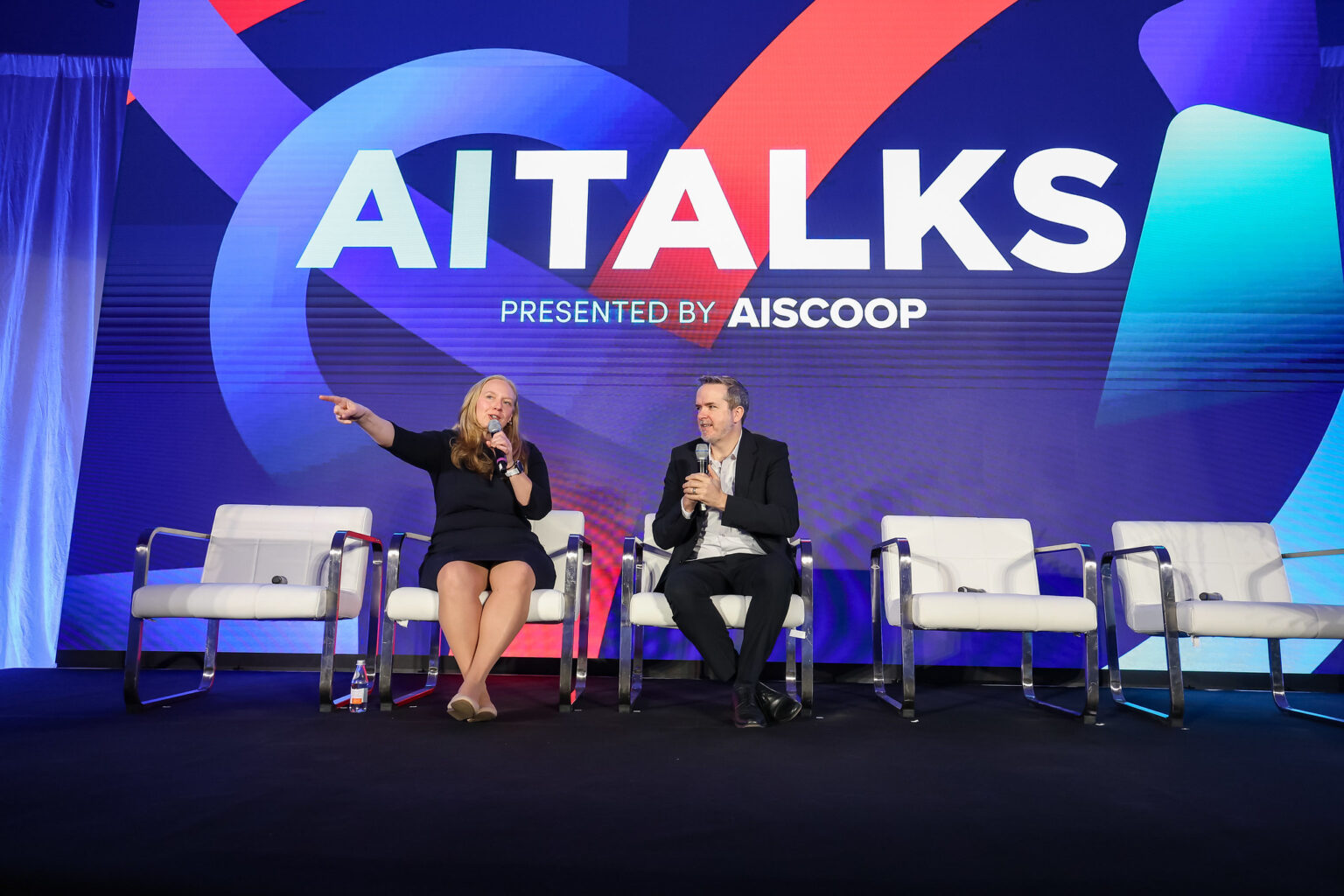
“We’re going to roll out agentic AI,” State Department CIO Kelly Fletcher said Thursday during the FedScoop-produced GDIT Emerge event in Washington, D.C. “We’re going to continue to embed AI in our systems.”
The State Department has been a federal leader in AI adoption, reflected in robust use case inventories and a general embrace of the technology at its highest levels. Current tech leaders remain focused on trying to “democratize access to generative AI” throughout the agency, Fletcher said. That likely means that any shift toward agentic AI won’t come with a snap of the fingers.
Still, the department is currently looking to “consolidate and standardize and simplify around commodities,” she said, which could cover everything from end-user devices to help desks.
“It sounds really wonky,” Fletcher added, but “the more you can make it easy for people to do their job, to reduce administrative friction, the better off you’re going to be, right? Part of that is agents. Part of that is consolidation.”
Agentic AI systems are able to create content in the way generative AI can, but agents can take it several steps further by operating autonomously. Having autonomous capabilities means AI agents can complete more complex tasks and make decisions without direction from a human in the loop.
A September 2025 report from the Government Accountability Office’s Science, Technology Assessment, and Analytics division noted that AI agents are currently used in areas such as software development and customer service. But there’s still plenty of maturing the technology has to do: Per the GAO, “a study found that the best performing AI agent tested was only able to autonomously perform about 30 percent of software development tasks to completion.”
Sarah Harvey, who authored the GAO report, said during an SNG Live event last month that it’s “pretty early to tell” how widespread agentic AI use is throughout the federal government, but the “opportunities are numerous.” She pointed specifically to operations and inventory management as areas of high potential for the technology’s usefulness.
Though the tech is in its relative infancy, there’s an expectation among some analysts that agentic AI could be built into a third of enterprise software applications by 2028. State’s 2025 use case inventory doesn’t explicitly list any agentic AI tools, but its workforce is growing increasingly comfortable experimenting with the tech in general.
“I love that people are building their own tools,” Fletcher said, “and they’re doing it in environments that are provisioned with safety, like security in place and with some amount of data available to them, and they’re building the tool that they need. So that’s sort of the overarching practice.”
For some department staffers, StateChat — the agency’s AI chatbot — may have been their gateway to artificial intelligence. State officials have worked toward a mobile version of the chatbot so employees can use it on their government-issued devices.
Fletcher said they’ve conducted training sessions at embassies to show diplomats how best to use the tool and what functionalities could be most useful for their work.
“We can look and see at that embassy, how does use of the tool change after that? And it grows by, you know, orders of magnitude,” Fletcher said.
At the January SNG Live event, a different State Department official revealed how StateChat has already leveled up after its late-2024 introduction. Isabel Rioja-Scott, the agency’s director for AI workforce enablement, said State had “just launched custom GPTs” for the chatbot.
“We’re seeing missions also kind of design their own solutions with these tools in hand,” Rioja-Scott said. “I think there are real challenges that we’re working through. … We need to write rules of the road to use this safely. It should also be enabling. It should be that balance so that we can use these tools effectively for our mission.”
As for Fletcher, she’s focused on other tech priorities for 2026, including the modernization of consular applications, such as visas, passports and an “underlying system” that “needs some work.” But she’s also focused on pushing generative AI adoption and setting the stage for the looming agentic AI revolution.
“My vision is that we’re going to slap AI agents on top of older systems to buy us some time, right?” Fletcher said. “We’re going to prioritize those systems that are, like, really expensive to maintain, lack resilience. We’re going to fix those first.”

Written by Matt Bracken
Matt Bracken is the editor in chief of FedScoop. Before joining Scoop News Group in 2023, Matt worked in various editing, reporting and digital roles at Morning Consult, The Baltimore Sun and the Arizona Daily Star. You can reach him on Signal at MattBracken.33 or email him at matt.bracken@scoopnewsgroup.com.