
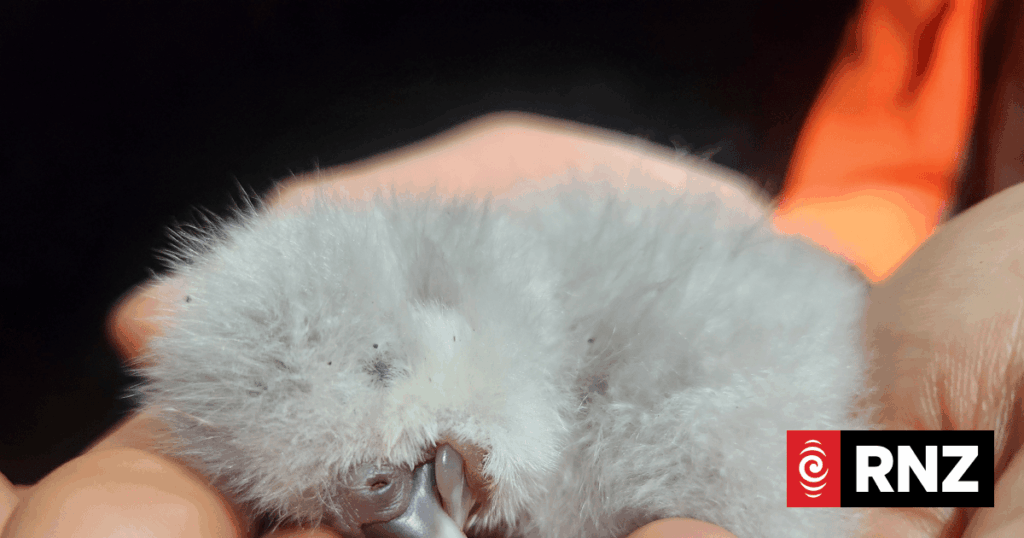
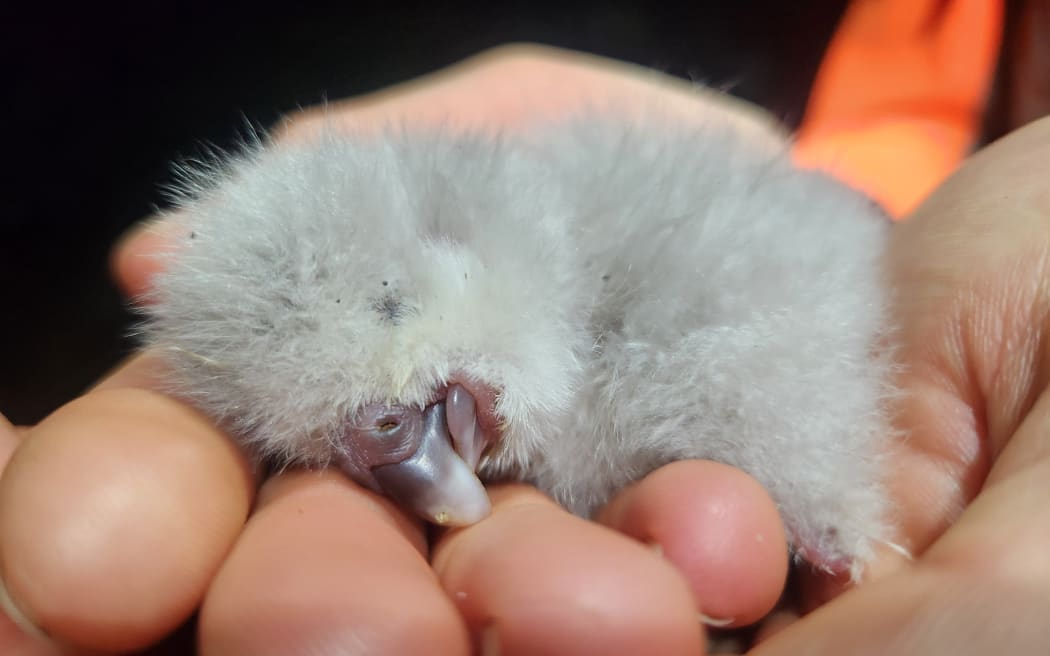
Tīwhiri’s new, one-day-old chick.
Photo: Lydia Uddstrom / DOC
Department of Conservation (DOC) staff are confident a kākāpō chick born on Valentine’s Day will be the first of many this breeding season.
Yasmine of Pukenui/Anchor Island hatched an egg on Saturday, bringing the total number of the critically endangered flightless parrot to 237.
While that is below the 2022 high of 252 individual kākāpō, DOC says with more breeding-age birds than ever before, hopes are high.
“The kākāpō population was once down to just 51 birds which created a genetic bottleneck we are still managing today,” DOC operations manager for kākāpō/takahē Deidre Vercoe said on Monday.
“Kākāpō are one of the most intensively managed species in the world and while numbers are still so low, the breeding season requires a lot of intervention.”
Kākāpō only breed every two to four years, and not every egg they lay is fertile. So far this season – the 13th of DOC’s Kākāpō Recovery Programme since it began in 1995 – there have been 187 eggs, just 74 of them are fertile.
Not all the fertile eggs will hatch, and not all chicks will survive long enough to leave the nest.
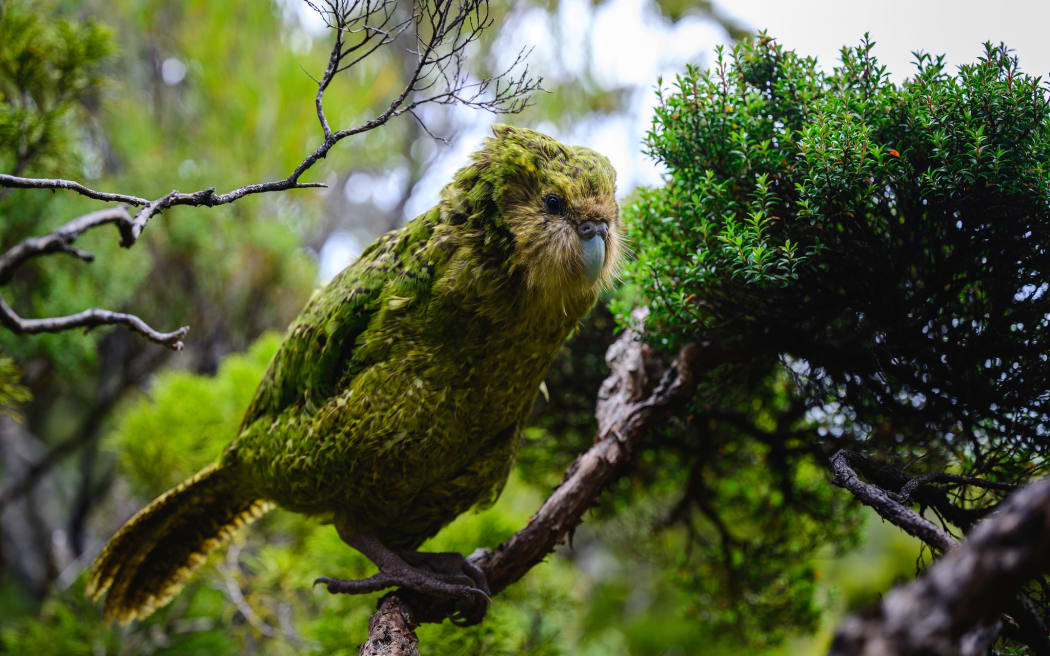
Alison hatched in 2019 and is named after Kākāpō Files producer Alison Ballance. She only has sight in one eye.
Photo: JAKE OSBORNE
The new chick’s biological mother is Tīwhiri, who has laid four fertile eggs this season, while Yasmine had none. Vercoe said kākāpō mums “typically have the best outcomes when raising a maximum of two chicks”, so Yasmine – an experienced foster mum to other birds’ babies – was given this one.
DOC prioritises “eggs and chicks that are less well-represented across the gene pool”, Vercoe said, and takes a “more hands-off approach” to others, hoping to “answer questions around what a natural breeding season might look like one day”.
Each of the 236 other kākāpō wore a small backpack radio transmitter to track where they went and how active they were.
In addition to Pukenui Anchor Island, there were breeding spots on Whenua Hou/Codfish Island near Rakiura and Te Kāhaku/Chalky Island.
The next kākāpō egg expected to hatch – in about a week – is currently being sat on by Rakiura on Whenua Hou/Codfish Island. DOC said it could be the first time viewers got to see a kākāpō born, via its live cam.
“We’re absolutely thrilled to welcome the first kākāpō chick, beginning what we hope will be a bumper breeding season,” Meridian Energy CEO Mike Roan said. Meridian has supported the breeding programme since 2016.
“Every chick is a milestone for the species, and we’re excited to play a part in helping these incredible birds thrive for generations to come.”
Ngāi Tahu, which has worked with DOC on the programme since it began, hoped to one day bring the species back to Rakiura.
“While it is wonderful to see the manu thriving on this island due to its predator free status, we need to continue our collective efforts to create other safe havens for the chicks of the future,” representative Tāne Davis said.
Sign up for Ngā Pitopito Kōrero, a daily newsletter curated by our editors and delivered straight to your inbox every weekday.