
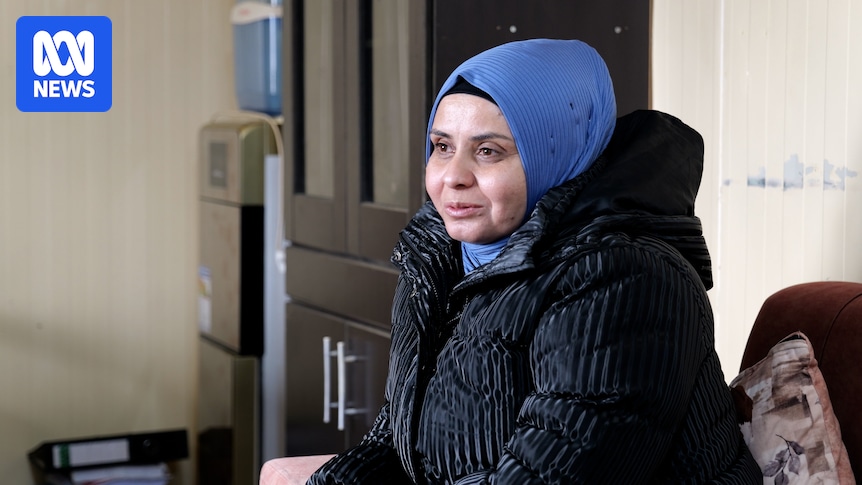
The question of whether — and how — to help the Australian families of Islamic State fighters return home has been one that governments have grappled with for years.
Despite pressure from aid agencies and some politicians in Australia, successive governments have been reluctant to facilitate their return.
Citing safety issues in and around the camps, and security concerns back home, Australia has made limited progress in clearing a passage for the Australian women and their children.
Now, these families are attempting to make their own way to the Syrian capital, Damascus, to begin the long journey home.
Who are they?
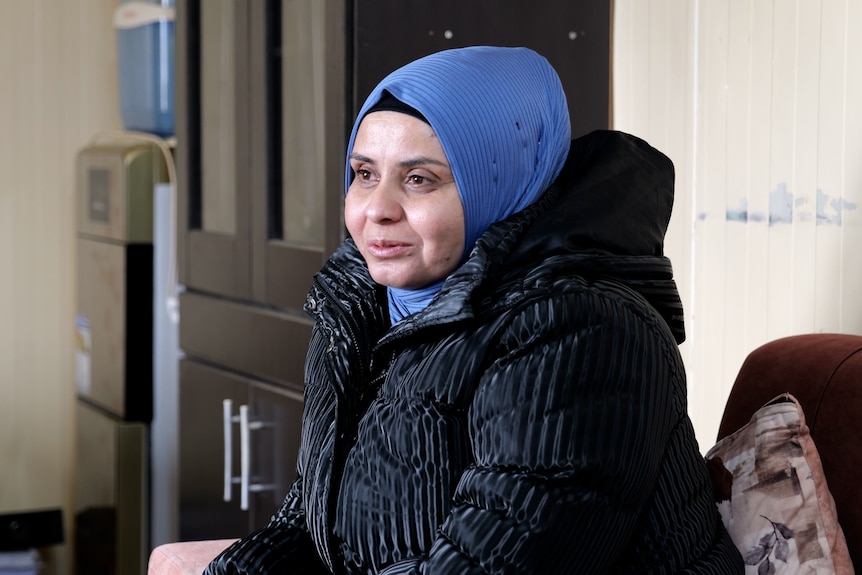
The women are not accused of any crimes in Syria, but the Australian government says they will face close scrutiny if they return. (ABC News: Heidi Pett)
This group is comprised of 34 Australians and local reports suggest there are 11 women and 23 children in the convoy.
Most — if not all — of the women were married to Islamic State group (IS) fighters, who were captured or killed when Kurdish forces, backed by the United States, helped to defeat IS in 2019.
Some of the Australian children who have been detained in Syrian camps were brought there, but others were born in Syria.
The women are not currently accused of any crimes in Syria, but the Australian government says they will face close scrutiny from police and intelligence agencies if they return.
Where have they been living?
Australian families of IS fighters are known to have lived in two camps in north-eastern Syria, Al-Hawl and Al-Roj.
The UN says most of the people in the larger Al-Hawl camp, which was captured by advancing Syrian forces, have now left and that Syria plans to relocate those who remain.
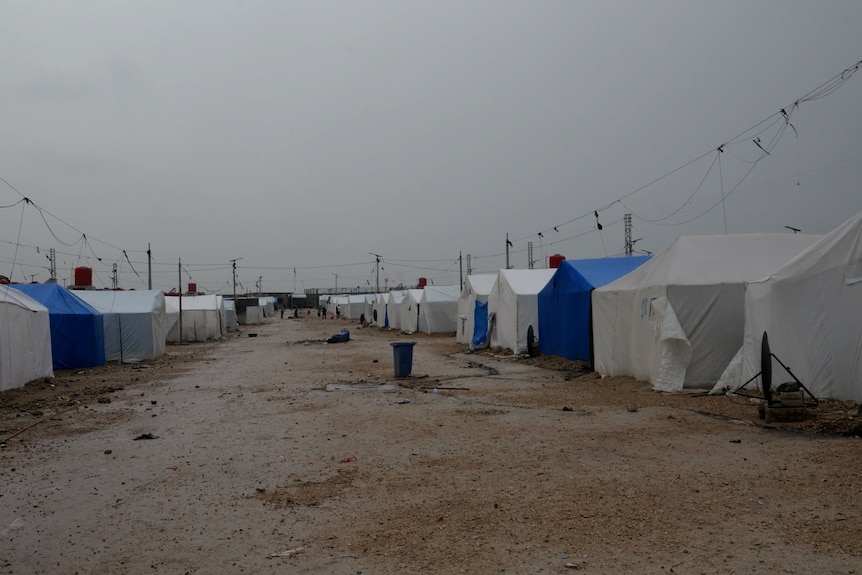
The Al-Roj camp in Syria has held thousands of people, including dozens of Australians. (ABC News: Heidi Pett)
It’s not clear if any Australians still live in Al-Hawl.
The women and children now trying to leave Syria have been living in Al-Roj camp, which is still controlled by the Kurdish-led Syrian Democratic Forces (SDF)
It is home to more than 2,000 people, from dozens of nationalities.
Amnesty International says the conditions in the camp are dangerous, with inadequate access to food, water and healthcare.
How many Australians have already left?
In 2019, the Morrison government — working with an aid agency — completed the repatriation of eight Australian orphans from Syrian camps, including the children of Islamic State fighter Khaled Sharrouf.
Australians with ISIS links leave Syrian camp
At the time, Mr Morrison said it was “despicable” that their parents had put them in harm’s way.
“However, children should not be punished for the crimes of their parents,” he said.
“Repatriating these children was not a decision the Australian government made lightly.
“As I have said repeatedly, my government would not allow any Australian to be put at risk.”
In 2022, the Australian government repatriated four Australian women and their 13 children from a Syrian camp.
Then-home affairs minister Clare O’Neil said the government had sought intelligence advice prior to that operation.
“The decision to repatriate these women and their children was informed by individual assessments following detailed work by national security agencies,” she said in 2022.
Last year, six women and children escaped Syria without Australian government assistance and made it to Beirut, where they were issued Australian passports.
They have since returned to Australia.
Will the government help this group home?
In the statement issued late on Monday, a government spokesperson said it “will not repatriate people from Syria”.
“People in this cohort need to know that if they have committed a crime and if they return to Australia they will be met with the full force of the law.”
That aligns with Foreign Minister Penny Wong’s evidence to a Senate estimates hearing last week, when she said no repatriation operations were being planned.
However, she also anticipated some of the Australians in Syria would try to make their own way back, without the government helping coordinate logistics.
“Australians in these situations may seek to return, in what we’ve described as a self-managed return,” she told a Senate estimates hearing.
When Liberal senator Sarah Henderson asked her to guarantee no “ISIS brides” would be granted passports, she said Australia had certain obligations.
“Australian citizens have various entitlements which are not discretionary under law and no government is able to make them discretionary,” Senator Wong said.
However, she said the government had the option of applying temporary exclusion orders (TEOs) to people returning from Syria.
TEOs allow the government to block Australians aged 14 and above from entering Australia, without a permit, if they are deemed to be a national security threat.
The minister for home affairs can apply conditions to such permits, like requiring the subjects to notify authorities about their movements and communications.
“Our first priority is to keep the Australian community safe,” Senator Wong said.
Who is helping the Australians try to leave?
It’s not clear who is coordinating the extraction efforts on the ground, or who will fund their transport to Australia once they reach Damascus.
Save the Children has long campaigned for the Australian government to repatriate the families from Syria.
Australian women who lived under Islamic State want to come home
In 2023, it took the Albanese government to the Federal Court on behalf of 20 children and 11 women who wanted to come to Australia.
That case was unsuccessful and in 2024, the High Court refused the charity special leave to appeal.
Despite its long-term advocacy, Save the Children says it hasn’t been involved in any operation to extract the Australians.
“Save the Children does not fund or conduct repatriations, nor do we ever intend to play such a role,” CEO Matt Tinkler said.
“These reports, if true, underscore what national security experts have repeatedly said: that the unmanaged return of Australian citizens would inevitably happen in the absence of federal government action to repatriate them.”
He said Australians should never be left without a safe or viable way home.
“These innocent children have already lost years of their childhood, and deserve the chance to rebuild their lives in safety at home, and to reintegrate into the Australian way of life.”