

Aside from the derivatives, fixed income, private equity and other markets which are very difficult to understand and assess, the energy and commodities sectors are ones which I think most investors may have difficulty grasping in terms of underlying fundamentals.
Other sectors such as precious metals, real estate and equity markets have broader macro and asset-specific catalysts which are somewhat easier to identify as catalysts or headwinds from time to time. In a sense, the energy complex resembles many of the sectors within the equity markets where investors can feel unreasonably confident in their assessment of which direction prices will move.
I have to say, the price of oil (and the corresponding moves made in the vast majority of energy stocks) can be difficult to project. Indeed, I’d suggest perhaps more so than most other sectors in the economy.
But with that said, I’m going to dive into what I think the recent moves made by the U.S. to capture Nicholas Maduro and play a larger role in South American affairs could mean for the price of oil, and therefore the value of energy stocks, through the remainder of 2026.
What to Make of This Recent Military Action
 eneas / Flickr
Nicholas Maduro
The Trump administration appears to be keen on signaling to the market that it’s going to be tough on international crime (and not be a passive player in geopolitics). Whether one agrees or disagrees with this most recent action in removing Maduro from Venezuela and charging him with a number of crimes he’s set to go on trial for in the U.S., the reality is that these moves have implications on markets.
Given Venezuela’s standing as the country with the world’s largest proven oil reserves, and president Trump’s rhetoric around increasing oil production in Venezuela (with the help of American companies), one might think that oil prices would take a breather as a result of this action.
Following the U.S. intervention in Venezuela in early January (when the price of Brent crude was trading around $60 per barrel), we’ve actually seen an uptick in the price of oil toward $70 per barrel at the time of writing. Some of this increase may be due to further anticipated strikes in key oil producing regions like Iran (which may or may not happen). But with geopolitical rhetoric heating up, it appears to me that oil and commodity traders are taking the “over” on what these military actions may mean for oil prices. In essence, it appears to me that an expectation exists in the market right now that oil production could decline as a result of these moves, raising prices for the global consumer.
What Does this Venezuela Operation Actually Change?
 Maksim Safaniuk / Shutterstock.com
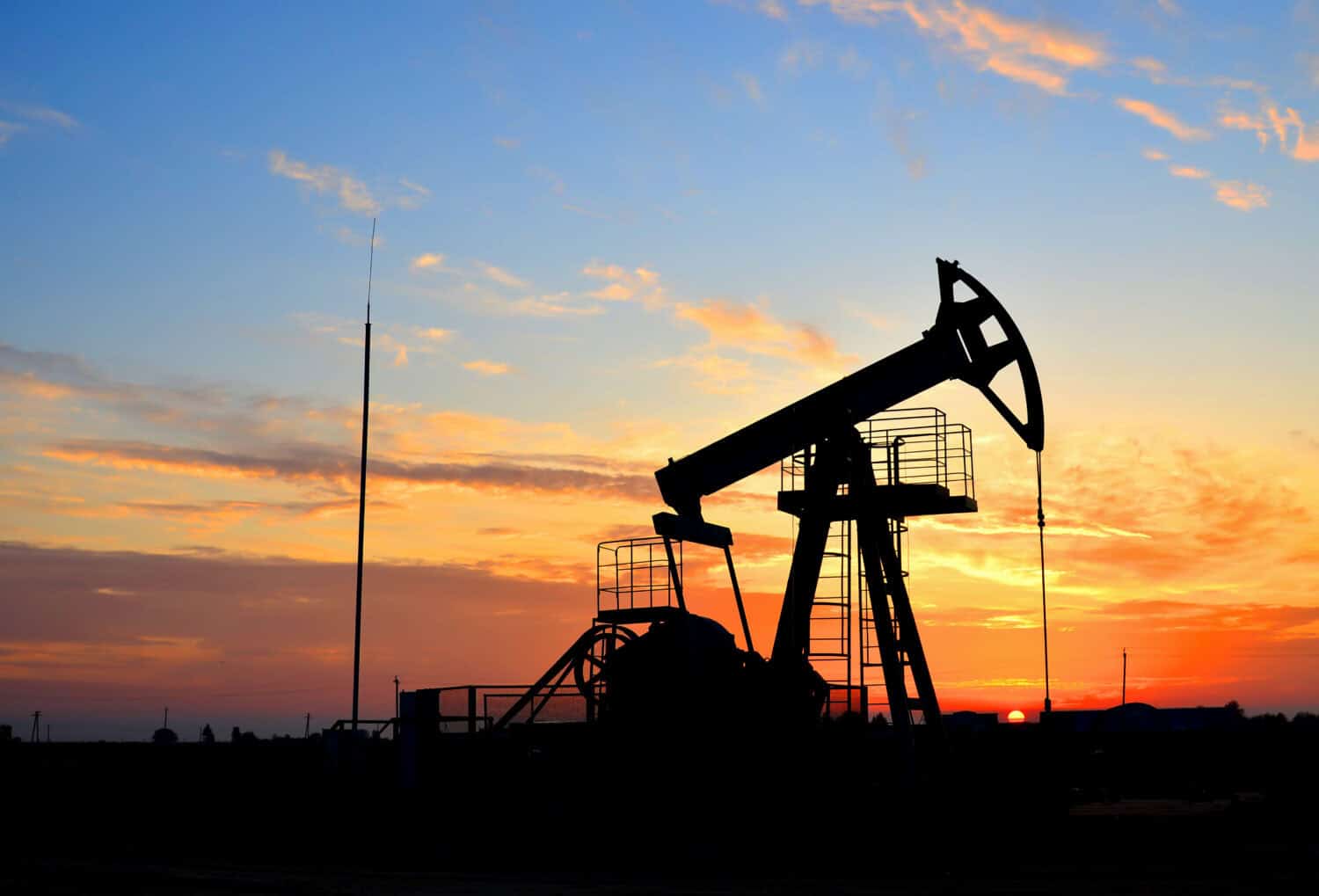
Oil rig visual.
Of course, the inverse of this argument could be made, if stability within the Venezuelan political sphere and U.S. investment in the country’s heavy oil production leads to a surge in oil production. Despite its oil reserves, Venezuela has not been a significant exporter of crude – and the crude it has exported has found its way to countries aside from the U.S. which are not necessarily friendly to the United States.
A removal or easing of sanctions could lead to an expansion of both supply and U.S. demand, but could also lead to more global turmoil and a struggle for resources. Thus, we’ll have to see how the rest of the year settles out.
That said, my base case is that we’ll likely see oil prices continue to remain in the $60 per barrel to $70 per barrel for most of this year, outside of spikes tied to global uncertainty (if we get some sort of macro shock one way or the other).
Catalysts to watch that could bring prices below this level would be structural in nature (OPEC related capacity increases, oversupply tied to Venezuela or other countries ramping up production, or a furthering of the energy transition in the West). In terms of upside surprises, I think a geopolitical spillover to Iran or a broader global conflict from oil-producing nations could be the most significant driver of higher oil prices, as this would increase the risk premium for oil and force traders to hedge for higher prices.