
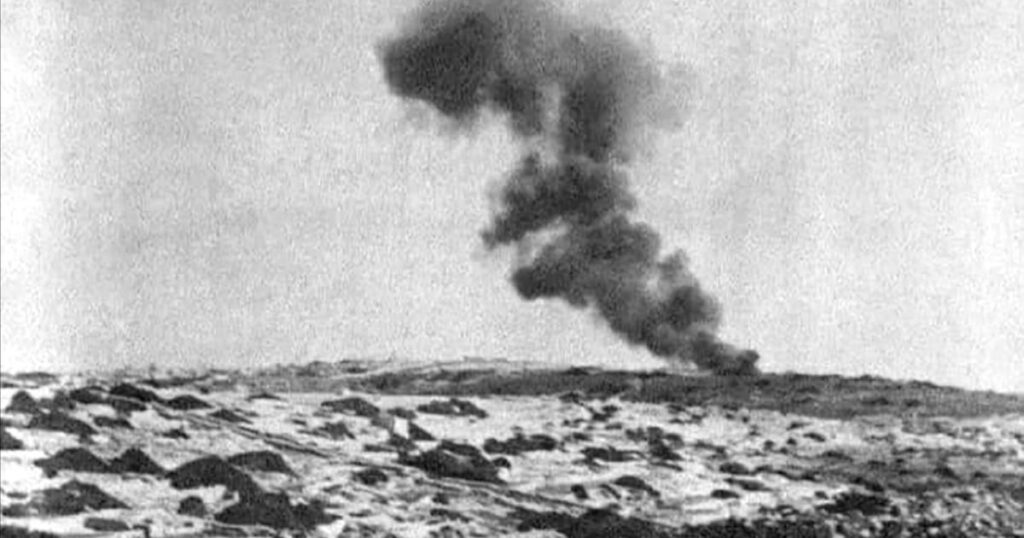
Seventy years ago today, Malta witnessed the worst plane crash in its history when 50 people lost their lives on the outskirts of Żurrieq.
The tragedy occurred on February 18, 1956, when five crew members and 45 passengers aboard the four-engine Avro York, registration G-ANSY, were killed after the aircraft crashed shortly after take-off.
The aircraft had been chartered by the Royal Air Force from Scottish Airlines. It was mainly carrying British troops travelling from Suez, Egypt, to Stansted in the United Kingdom, with a scheduled stopover in Malta.
“It is with the deepest regret that we chronicle the air disaster that occurred near Żurrieq yesterday in the early afternoon,” read the unusually sombre front-page introduction of The Sunday Times of Malta the day after the crash. The headline declared: ‘Air Disaster near Żurrieq’.
Eyewitnesses reported seeing smoke trailing from the aircraft shortly after it became airborne. “The aircraft was reported by eyewitnesses to be trailing smoke after take-off,” read the Times of Malta the following day.
According to the official report of the Court of Inquiry, the aircraft lifted off about two-thirds of the way down the runway and the undercarriage was retracted. At around that time, black smoke was observed coming from the number one engine.
Instead of turning right as instructed by ground control, the aircraft drifted left. The left wing dipped steeply and the plane nosedived into cliffs near Żurrieq.
“It blew up on impact,” said the report.
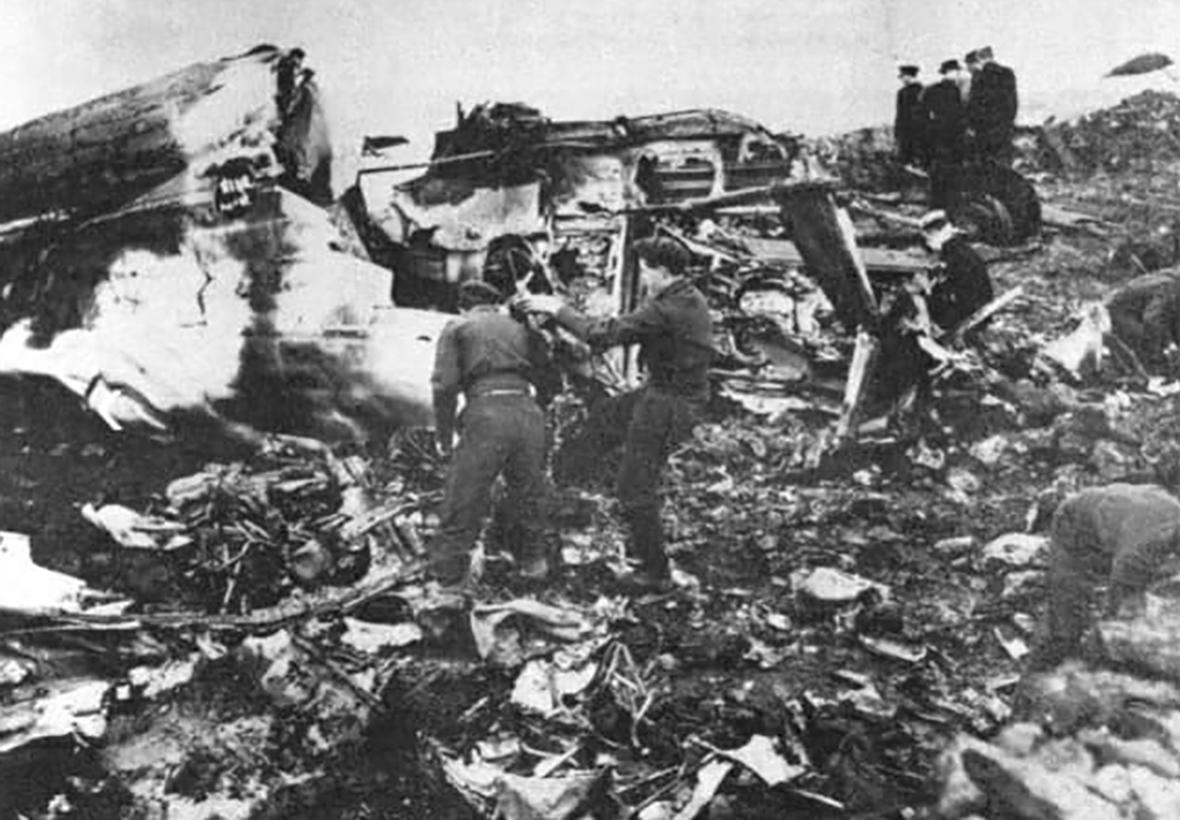 Men clearing debris at the crash site. Photo: The Bureau of Aircraft Accidents Archive
An inspection of the wreckage determined that the aircraft was almost vertical when it struck the ground. The entire fuselage forward of the freight door was destroyed on impact and all the engines were torn from their mountings.
RELATED STORIES
The RAF crash crew and members of the US Navy were among the first to arrive at the scene. It quickly became clear that there could be no survivors.
One of the first men to reach the wreckage later said: “There was nothing we could do except watch. It was much too hot to get near the plane.”
As the wreckage cooled and recovery teams began retrieving the bodies, a Times of Malta reporter described the haunting scene.
He wrote that he could see the remains of men among personal belongings scattered across the hillside, “a book on boxing lay next to a burnt uniform”. He continued: “Near the skeleton of the tail assembly lay some gramophone records, their coloured jackets being the only colour in the burnt area.”
By noon on February 19, 1956, the last body had been removed from the tangled wreckage on the steep hillside near Nigret in Żurrieq.
All those on board were RAF personnel, except for one passenger, an army private who had requested permission to travel to the UK because his father was ill.
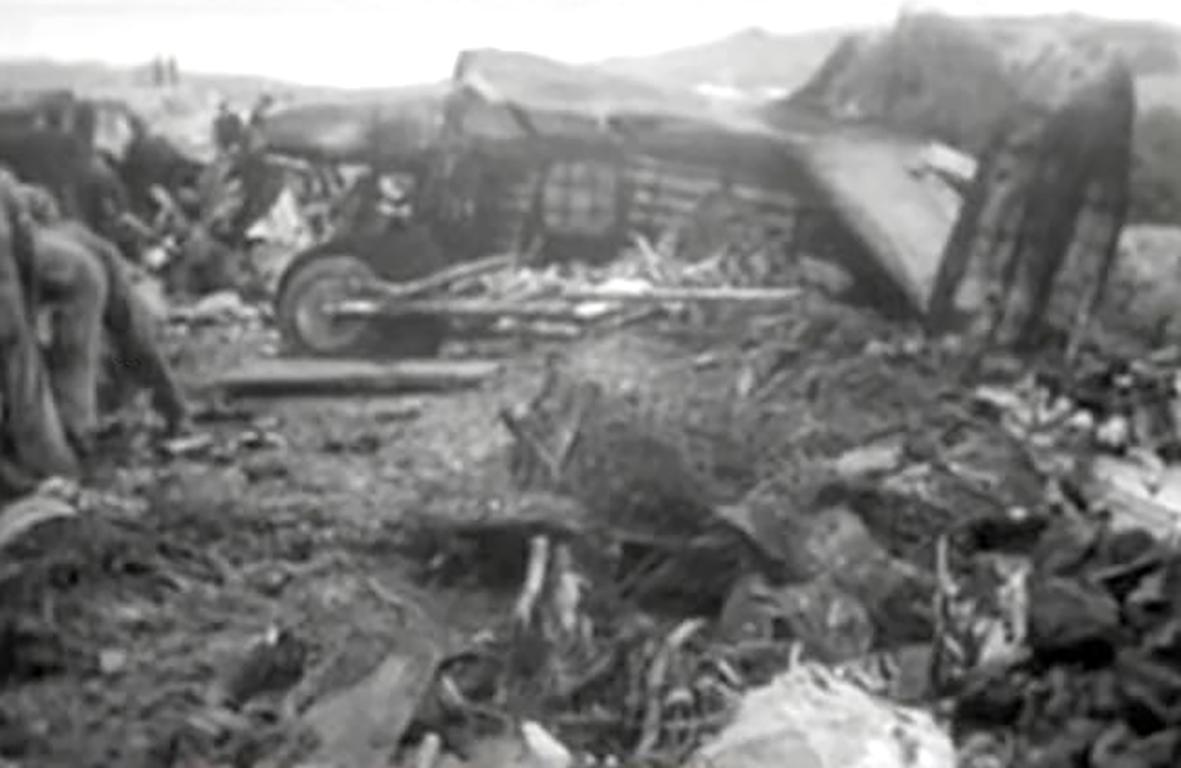 The crash site. Photo: The Bureau of Aircraft Accidents Archive
A further layer of tragedy emerged in the days that followed. Twelve of the RAF victims had secured their seats on the aircraft through a “lucky draw” at their station in the Suez Canal zone.
There was nothing we could do except watch. It was much too hot to get near the plane
On February 20, 1956, the Times of Malta reported that the father of one of the victims had received a letter from his son explaining that he was among the 12 men whose names had been drawn out of a hat to fly home instead of making the long journey by sea.
The Court of Inquiry found that the crash was caused in part by the failure of the number one engine. However, the engine failure alone did not cause the accident. The report concluded that the aircraft lost speed and control due to an error of judgement by the pilot.
The bodies of the co-pilot, navigator, radio officer and an air hostess were repatriated to the United Kingdom for burial. The remaining victims were laid to rest in Mtarfa.
The events of February 1956, however, left a particularly deep scar at a time when aviation was still closely associated with military service and post-war reconstruction.
Last year, former RAF serviceman Douglas Bennison travelled to Malta on his 91st birthday to pay tribute to his friend, Sergeant Brian Alberry, who died in the crash 70 years ago. Bennison had not boarded the flight; Alberry had.
Although the two men had known each other only briefly during their time in Egypt, they had become close friends.
Speaking to Times of Malta last year, Bennison said: “It’s still raw and fresh to me even today, even after all these years.”
Although the 1956 crash remains the deadliest aviation accident on Maltese soil, Malta’s aviation history was again marked by tragedy in November 1985, when 62 people died after a hijacked EgyptAir aircraft was stormed by Egyptian troops at Malta International Airport.