
The Croatian Government submitted a draft law on the development of nuclear energy for civilian purposes to the parliament. This is the first time Croatia has comprehensively regulated the legal framework for the civilian use of nuclear energy.
As Minister of Economy Ante Susnjar said, Croatia faces a triple challenge. It must ensure economic competitiveness, energy security and climate neutrality. He set a target of at least 30 per cent nuclear energy in the energy mix by 2040.
Under the law, the Minister will develop a programme to prepare a nuclear development plan within six months of the legislation’s adoption. The government will adopt the development plan within 12 months of the programme’s adoption. Possible locations will be determined by a separate law.
According to the government document, the new generation of nuclear power plants will be flexibly integrated with renewable energy sources and will also be suitable for industrial and district heating purposes, as well as for the economical production of large quantities of hydrogen.
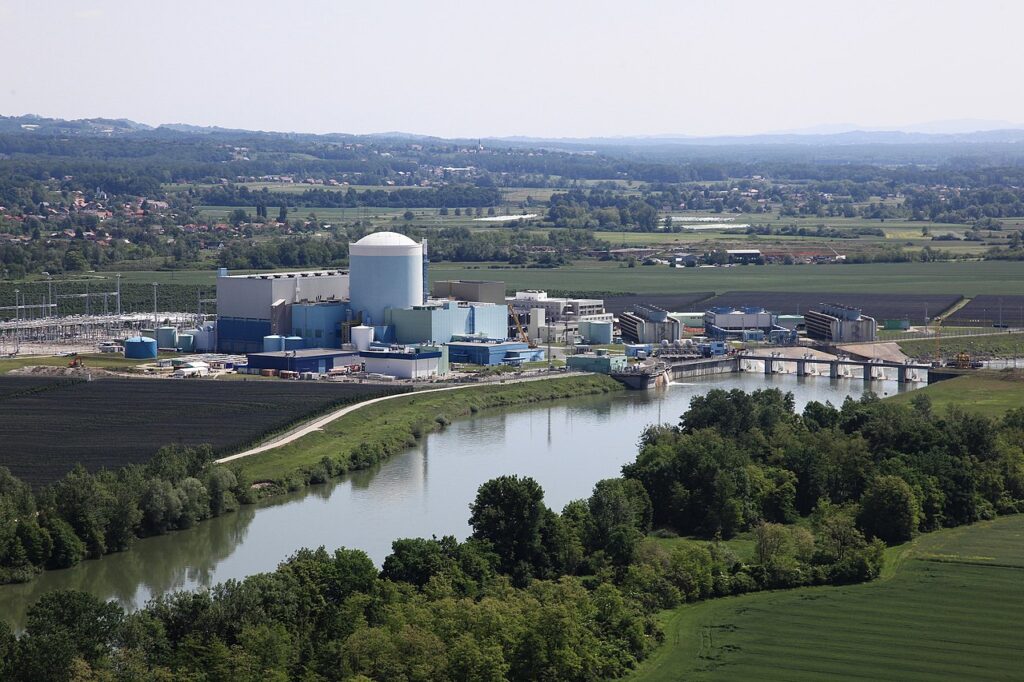
Croatia currently has a stake in the single-reactor pressurised water nuclear power plant at Krško in Slovenia, which began operating in 1983. The facility is owned 50-50 by Gen Energija and Croatian Electric Power Company (HEP).
Spatial plan for Krško 2
Meanwhile, Slovenia has begun drafting a national spatial plan for the location of Krsko 2, a new unit at the Krško nuclear power plant. The plan is expected to be adopted in 2028, with more than thirty expert studies being prepared for it. The initiative was launched in June 2025, and around fifty comments were received during the four-month public consultation.
The plans for the new unit will be made public next year. Once the spatial plan has been adopted, operational steps can begin, including preparations for a referendum.
The legal basis for the project was created by the spatial planning strategy adopted by parliament in 2023, which runs until 2050 and allows for the construction of a new nuclear unit.
Croatia had previously indicated that it is prepared to cover half of the investment costs if a new unit were to be built.