
SHERIDAN Ore. (KPTV) – Within 30 minutes, Sheridan resident Sarah Neupert says she knew something was wrong.
“I was having a hard time hearing,” she said. “Both of my ears felt like I had multiple earplugs in them. And I had a really bad headache too.”
At the time, Neupert was the site manager of a McMinnville electric motor and pump repair company. Her shop serviced equipment from the Stella-Jones wood treatment facility just outside Sheridan — a sprawling industrial site along Highway 18 that treats utility poles with chemical preservatives.
Pumps and motors would arrive coated in residue from inside the plant.
“I was under the assumption that Stella Jones was following the protocol on how to clean out the pumps before they even came to our property,” Neupert said.
But after describing her symptoms to a former Stella-Jones supervisor who later worked at her shop, she says she was told it sounded like exposure to DCOIT — one of the chemicals used at the facility.
She pulled out the Safety Data Sheets. She called poison control.
“They recommended that I go to the emergency room and get IV fluids if the symptoms got worse,” she said.
She ultimately waited it out. The symptoms subsided. But years later, she still questions what was happening behind the fence line in Sheridan.
“I don’t know if we’ll ever know the side effects of Stella Jones being in our town,” she said.
Now, state regulators say what was happening inside the facility was more than isolated exposure — it was a pattern.
Years of Violations
Stella-Jones treats utility poles using oil-based preservatives. They first acquired the Sheridan treatment facility in 2013.
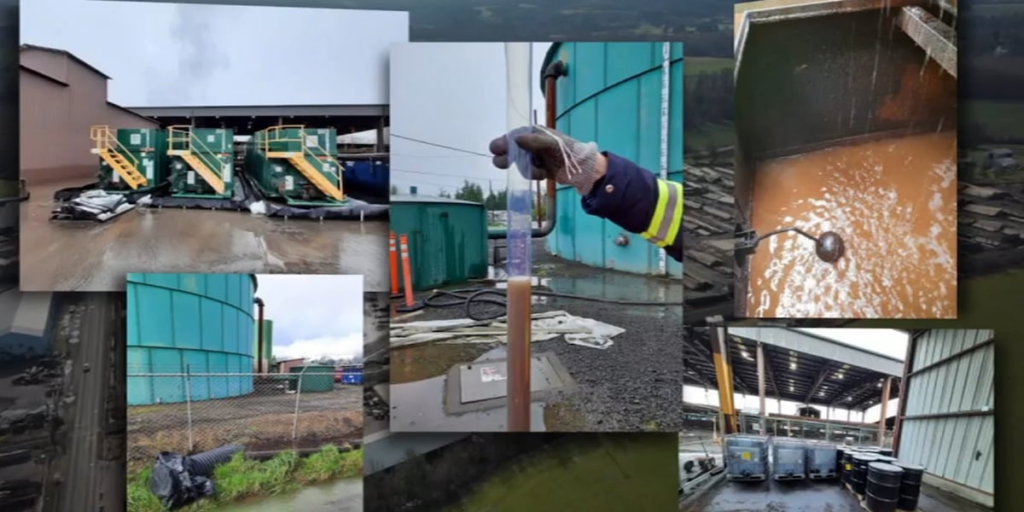
According to enforcement records from the Oregon Department of Environmental Quality, inspectors documented more than 30 incidents at the company’s Sheridan facility between 2021 and early 2025.
A lot of their evidence comes from photos, videos and personal accounts from an unnamed whistleblower.
FOX 12 tracked down the whistleblower and spoke with him about why he chose to come forward.
The whistleblower is a former Stella-Jones employee who worked as a cleanup worker and treating engineer from 2022 to 2023. He told FOX 12 he went to regulators after witnessing what he described as repeated chemical spills and contamination concerns inside the Sheridan facility.
“Because the chemicals were going directly into the stormwater,” he said.
Speaking on the condition of anonymity, the former worker alleged that one major spill released roughly 2,500 gallons of a diesel and pentachlorophenol mixture — far more than he believes was reported to regulators.
“There was over a hundred barrels of kitty litter and penta that had spilled out of the tank,” he said. “Stella Jones reported 25 gallons spilled.”
Similar under-reporting incidents are documented in the DEQ’s extensive case file.
The former employee described seeing what he called an area “the size of half of a football field” covered in chemical residue when he arrived at work one morning at 5 a.m., prompting him to deploy stormwater covers and pumps in an effort to contain the spread. The employee took videos and photos of the incident and sent them to FOX 12 and DEQ.
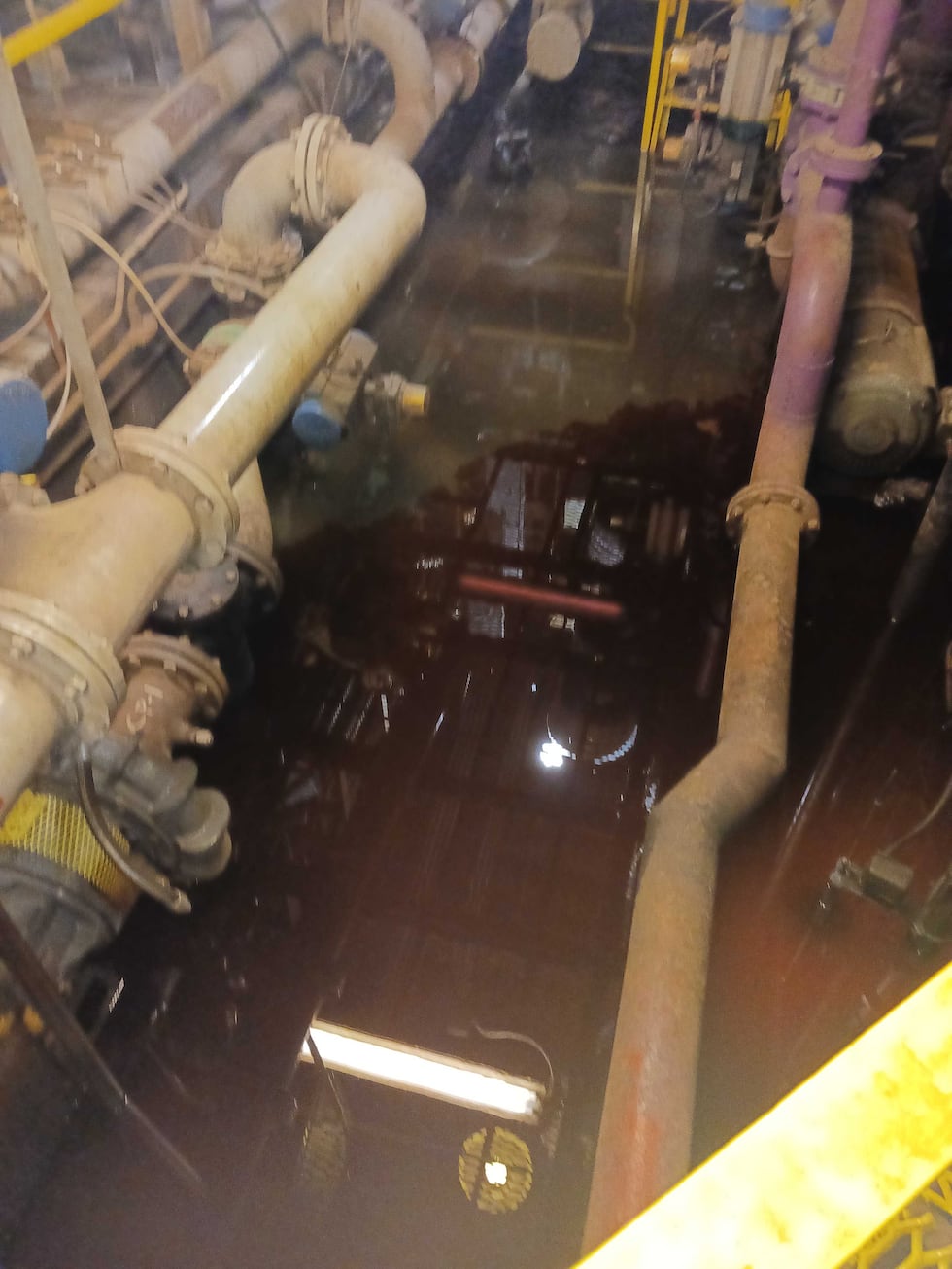
This photo was submitted to FOX 12 from a former Stella-Jones employee, who says chemical spills on site were common, and often down-played or not reported.(Former Stella-Jones employee)
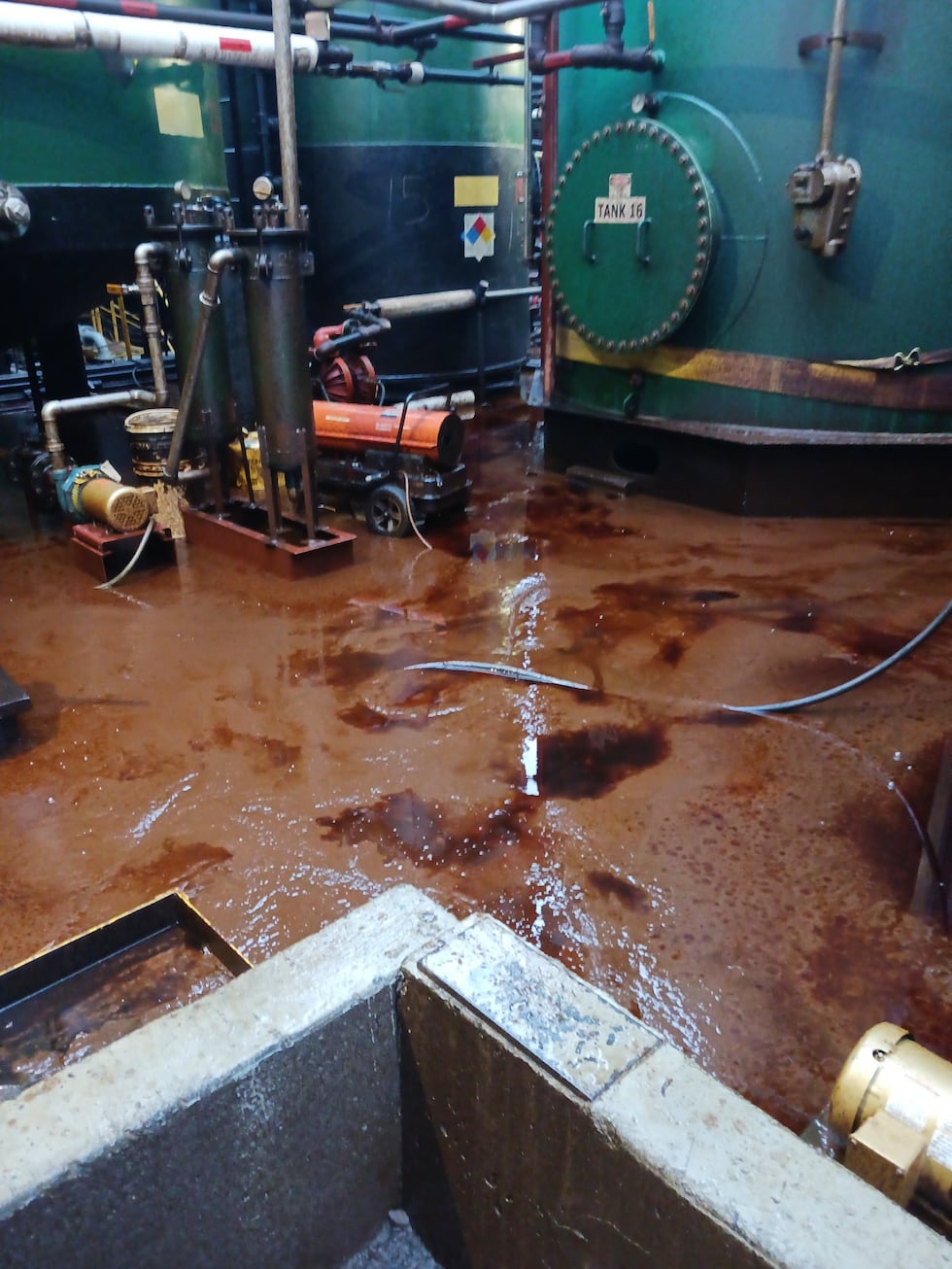
This photo was submitted to FOX 12 from a former Stella-Jones employee, who says chemical spills on site were common, and often down-played or not reported.(Former Stella Jones Employee)
“It immediately put me into a panic,” he said.
The whistleblower also alleged equipment failures and what he described as a breakdown in training after experienced supervisors left the facility.
“It was a domino effect,” he said. “People weren’t doing their jobs right. They weren’t servicing things.”
He further claimed he was instructed to stay silent when DEQ inspectors arrived.
“I was told to keep my mouth shut and not answer too many questions,” he said.
Stella-Jones disputes claims that incidents were misrepresented or mishandled and maintains the violations were limited, addressed, and in some cases overstated by regulators.
The company admits that for decades, they used the common wood preservative chemical pentachlorophenol — commonly known as “penta” — a chemical classified by the Environmental Protection Agency (EPA) as a probable human carcinogen. While penta has since been phased out in the U.S., it was historically used at the site, which was designated a federal Superfund cleanup location in 2001 due to contamination from prior operators.
Today, Stella-Jones primarily uses DCOIT, another wood preservative chemical.
Beyond the whistleblower’s claims, DEQ records also noted other repeated issues at the plant, including:
- Chemical spills that were not promptly reported
- Wastewater discharges exceeding permit limits
- Failure to properly characterize and manage hazardous waste
- Improper storage of contaminated cleanup material
- Violations related to stormwater and discharge monitoring
One of the most significant incidents occurred on August 21, 2023.
According to DEQ’s enforcement order, a full treatment tank — known as a retort — was mistakenly opened, releasing approximately 24,000 gallons of a diesel and DCOIT mixture, along with residual penta. Roughly 2,400 gallons escaped containment, flowing into the facility’s stormwater system and the City of Sheridan’s sanitary sewer system through a floor-level drain.
Cleanup residues from that spill remained stored on site for months, even after a temporary storage extension granted by DEQ expired.
DEQ also alleges that Stella-Jones, over the course of about ten years, dumped nearly 4 million pounds of hazardous waste in various municipal landfills that were not permitted to accept it. Furthermore, regulators note that the company was also never permitted by DEQ to store, handle or produce hazardous waste on site.
State investigators concluded the violations spanned years and noted that the company profited nearly $900,000 by not following regulations. DEQ assessed a civil penalty of more than $1 million.
Water Concerns
The Yamhill River runs near the facility, and during summer months, it serves as one of Sheridan’s drinking water sources.
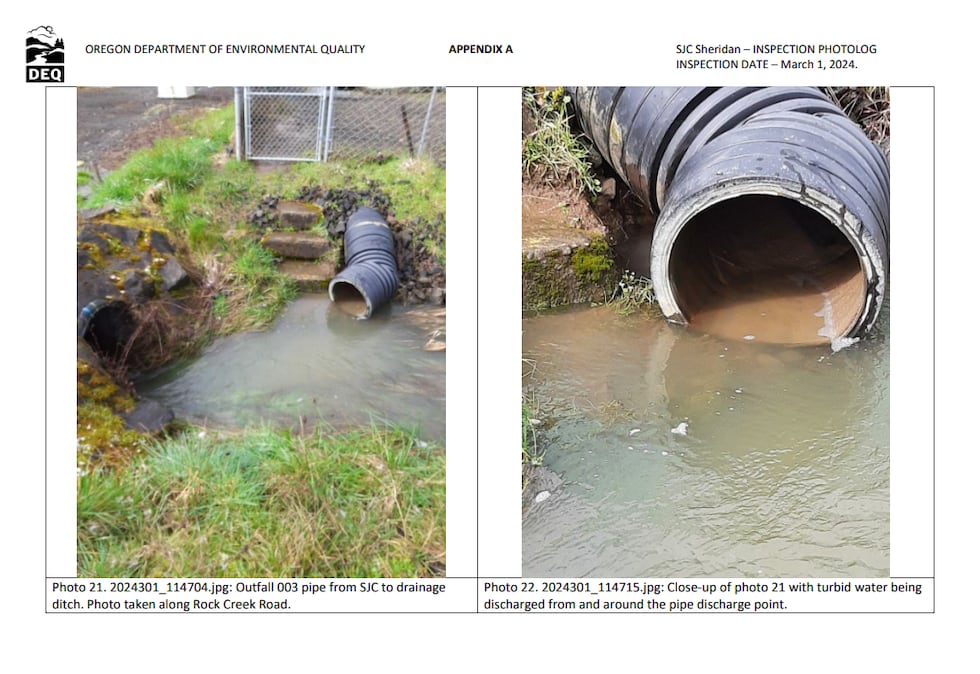
DEQ Records show chemical wastewater flowing from Stella-Jones into drainage ditches and the Yamhill River.(DEQ)
Mayor Cale George said city leaders were not informed about the extent of the investigations or the nature of the spills at Stella-Jones until the public learned about them, in a report first published by InvestigateWest.
“We knew when the public knew,” George said.
Testing conducted by the city and OHA has not shown contamination in treated drinking water, but George acknowledged the timing of the August 2023 spill raised concerns.
“If it happened a few weeks, a month before, in July, and we were pulling drinking water from the river, that could have gotten into the water system and people could have been drinking it,” he said.
In response to a pre-release segment regarding this story, Stella-Jones disagreed with the characterization of the incident, saying they conducted their own chemical testing of the Yamhill River after the August 2023 spill, and no chemicals were ever detected.
In a statement a Stella-Jones spokesperson said, “No chemical was detected in the Yamhill River from this incident. Nearly all of the spill was contained on Stella-Jones’s property. None of it went into the stormwater treatment system or directly into the river, and any small amount that may have entered the sewage system was properly treated. We took responsibility for this incident, conducted testing of the Yamhill River and sewage facility for weeks, and worked closely with DEQ to ensure the community’s safety. Stella-Jones remains focused on operating the Sheridan facility safely and responsibly.”
However, George said he and city council leadership are now planning on conducting their own, independent water testing, to ensure that drinking water in Sheridan remains safe. George said it’s because he now lacks the trust that incidents will be properly reported.
“They don’t have my complete trust,” George said. “Not now, not after what happened. And that will take a while to get it back, at least for me, to make sure to get, you know, my trust back.”
Criminal Charges
Beyond the civil fine, the case also drew criminal prosecution.
The Oregon Department of Justice charged Stella-Jones with 20 counts of unlawful water pollution. The company ultimately pleaded guilty in August 2025 to 10 criminal counts, paid $280,000 in fines, and accepted probation conditions.
Attorney General Dan Rayfield said the case stood out from typical environmental enforcement.
“This is one that rose to a different level,” Rayfield said, pointing to what prosecutors described as repeated violations over time rather than a single accidental event.
Rayfield said criminal enforcement is reserved for cases where conduct goes beyond regulatory noncompliance.
“We want to make sure companies understand that environmental laws are there for a reason,” he said. “The biggest issue that you have here, again, from our perspective, is obviously the harm that’s caused, but then most importantly, is the repeated nature and the culture that’s created.”
Company Pushback
Stella-Jones disputes the state’s characterization of the violations and is appealing the $1 million civil penalty.
Senior Vice President Kevin Comerford described the issues as limited in scope.
“I think they all stem from a small series of sort of — I’ll say — one-off incidents,” Comerford said.
Regarding the August 2023 spill, Comerford called it a mechanical and human error that was quickly addressed.
“That material was all cleaned up,” he said. “It didn’t get to the stormwater system.”
DEQ’s enforcement order states otherwise, concluding that some of the release did impact the facility’s stormwater system and municipal sewer.
Comerford said the Sheridan plant operates under strict state permits that set discharge limits, and he acknowledged there were instances where limits were exceeded.
“No exceedance is acceptable to us,” he said. “We take immediate action.”
He also emphasized that the company purchased the site in 2013 under a Prospective Purchaser Agreement with regulators, meaning it did not cause the historic contamination that led to the Superfund designation.
“We knew what we were getting into,” Comerford said, noting that the company has invested in upgrades, including expanded stormwater treatment and additional carbon filtration systems.
The facility remains open and operating while the appeal proceeds — a process that could take months or longer.
A Town Left With Questions
Sheridan is a small town where, as Mayor George puts it, “a lot more people know everybody.”
Industry rarely draws headlines here. But now, the case has forced residents to confront questions about what happens just outside city limits.
For Neupert, the issue isn’t abstract policy or permit language. It’s the memory of sudden symptoms. The call to poison control. The uncertainty.
“I was under the assumption that everything was being handled properly,” she said.
Years later, she’s not so sure.
“I don’t know if we’ll ever know the side effects of Stella Jones being in our town.”
Copyright 2026 KPTV-KPDX. All rights reserved.