
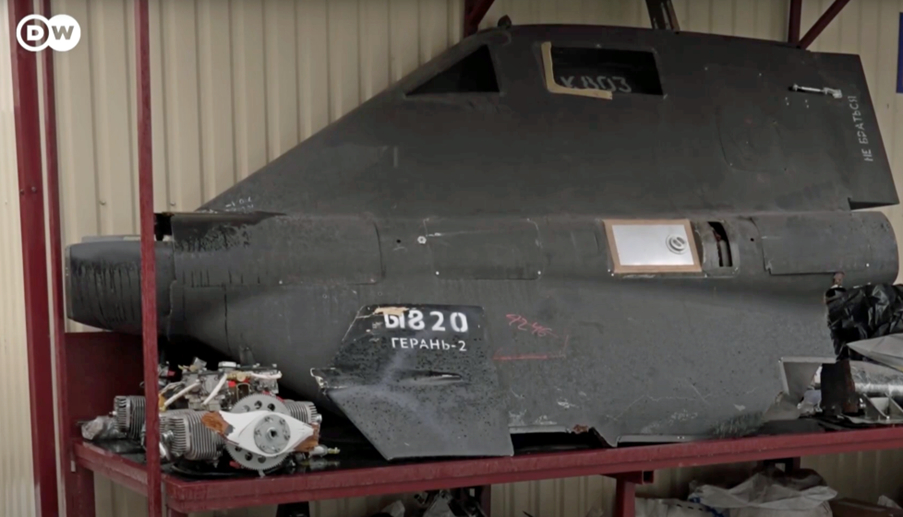
Hundreds of components made by European companies are still turning up in Russian ‘Geran-2’ attack drones despite EU sanctions aimed at crippling Moscow’s war machine, an investigation by Organized Crime and Corruption Reporting Project (OCCRP) and media partners has found.
The cheap, long-range drones – known in Ukraine as “Shahed” – have become a key weapon in Russia’s air campaign, striking cities and energy infrastructure.
Follow our coverage of the war on the @Kyivpost_official.
Ukrainian officials say 34,000 targeted the country in 2025 alone.
By dissecting downed drones, Ukraine’s military intelligence agency identified over 100 components produced by around 20 European firms across eight countries. The parts include microchips, receivers and fuel pumps.
One Polish company, Complex Automotive Bearings, was among the manufacturers identified.
There is no evidence the companies violated sanctions or exported directly to Russia.
Trade data shows 672 shipments of sanctioned components made by European firms were sent to Russia between January 2024 and March 2025 by 178 companies, mostly in China and Hong Kong.
Circumventing sanctions
In 2022, the EU banned exports of “dual-use” goods to Russia and later required firms to include a “no re-export to Russia” clause in contracts.
David O’Sullivan, the EU’s chief sanctions envoy, said tackling circumvention is a “key priority” and that recent packages have “added tools” to support enforcement.
Other Topics of Interest
‘Negotiation Theatre’: European Intelligence Sees No Path to Peace in 2026
Senior European intelligence officials say Moscow is not seeking a rapid end to the war and may be using talks with Washington to push for sanctions relief.
“We will not ignore cases of our sanctions being systematically circumvented through the jurisdictions of third countries,” he wrote.
Originally derived from an Iranian design and now mass-produced in Russia, the Geran-2 costs an estimated $20,000 to $50,000 and has been dubbed “the poor man’s cruise missile.”
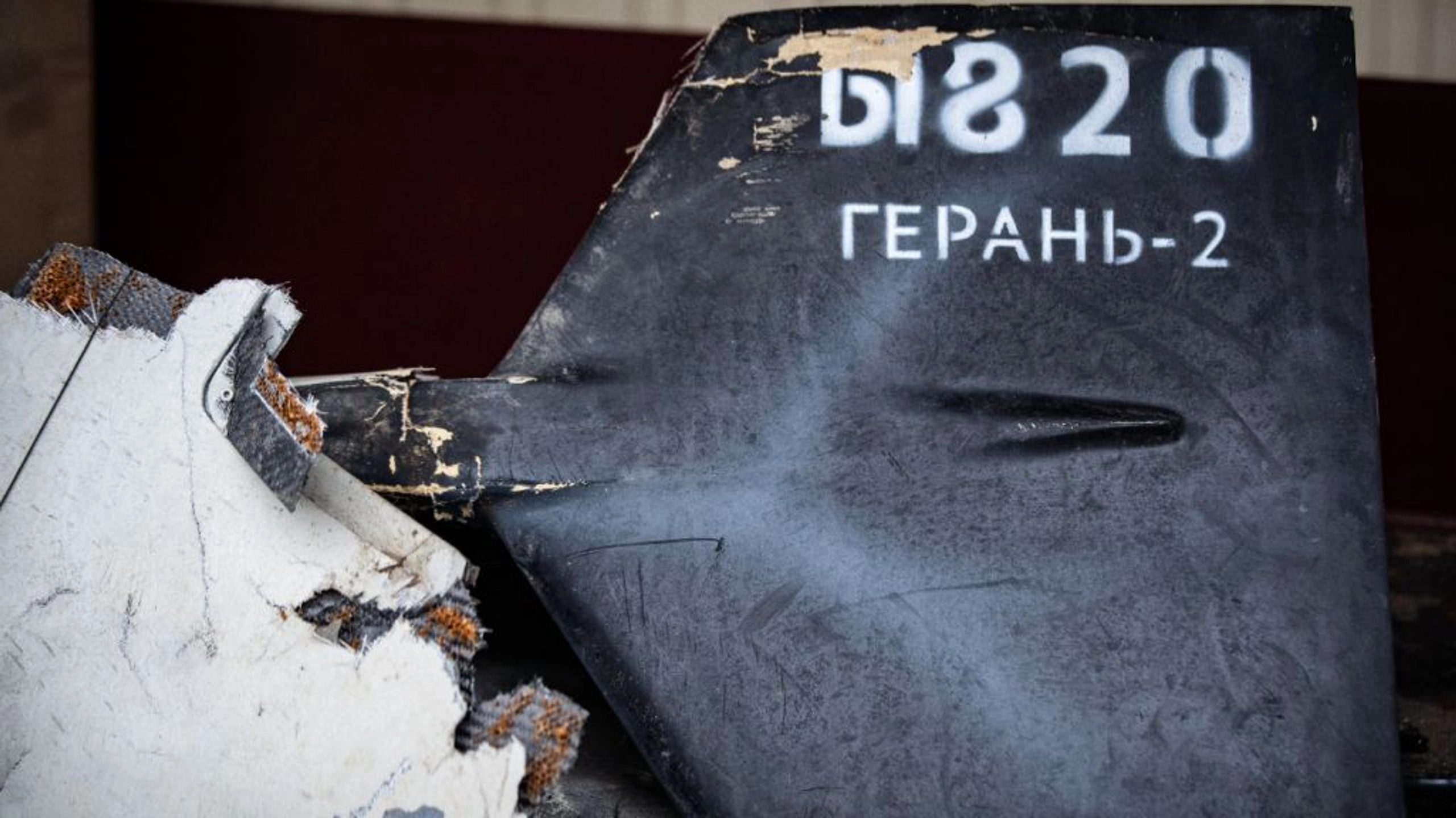 34,000 Geran-2 drones targeted the country in 2025 alone. Photo by Oleksii Samsonov/Global Images Ukraine via Getty Images. Photo by Oleksii Samsonov/Global Images Ukraine via Getty Images
“The Shahed is the only drone that can strike at a strategic depth of up to 2,500 kilometers,” said Ukrainian military expert Ivan Kirichevsky.
Ukraine’s Sanctions Commissioner Vladyslav Vlasiuk said Western technology remains essential for producing the drone.
“Without Western technologies, Russia would not be able to produce the Geran-2,” he said.
‘Whack-a-mole’
The investigation traced one key component – a satellite navigation (GNSS) receiver made by Swiss firm u-blox – from global distributors into Russian supply chains.
In a statement, u-blox said it “strongly condemns” Russia’s invasion and halted sales to Russia, Belarus and occupied Ukrainian territories immediately after the invasion.
It suggested its components may have been resold by intermediaries, smuggled, or removed from other products.
Dutch semiconductor maker Nexperia, whose parts appeared in nearly 300 shipments in trade data reviewed by reporters, said it “does not sell to Russia even through distributors.”
“We cannot determine how components may have reached Russia. Global semiconductor supply chains are complex, and diversion activities can happen without the manufacturer’s knowledge or involvement,” spokesperson Hannes van Raemdonck said.
“We work with authorities and NGOs to help stop such activities.”
Legal experts say enforcement remains a game of catch-up.
“It’s a game of whack-a-mole,” said Alex Prezanti, a UK barrister specializing in sanctions. “You can keep chasing corporate entities, but you’re always a step behind, because they can open 10 new companies every day.”