
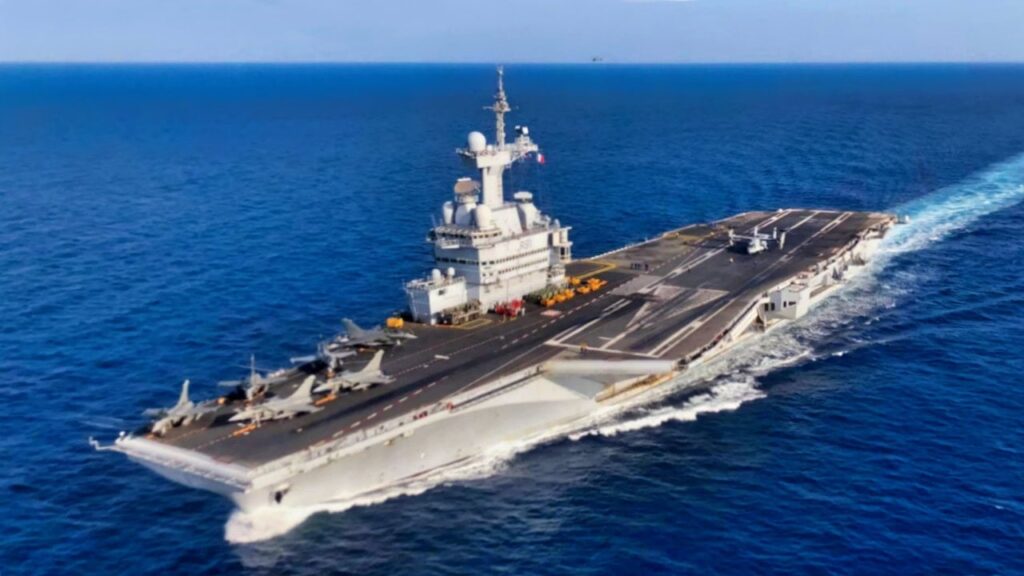
Summary and Key Points: The FS Charles de Gaulle (R91) nuclear aircraft carrier serves as a high-stakes bridge between 20th-century naval design and 21st-century interoperability.
-Despite a history of technical setbacks—including radioactivity concerns and propulsion faults—the nuclear-powered flagship has successfully integrated US Navy platforms like the E-2D Hawkeye and validated the 4.5-generation Rafale M in combat.
-As the 2038 PANG carrier approaches, a strategic debate is surfacing: should France retire the R91 after 40 years, or modernize it to create a dual-nuclear carrier fleet?
-In a post-Ukraine security environment, the ability to project power into the Baltic and Mediterranean simultaneously may outweigh sustainment costs.
“Nuclear Paradox”: France’s Charles de Gaulle Aircraft Carrier Summed Up in 2 Words
France’s flagship FS Charles de Gaulle aircraft carrier has a long, storied history filled with setbacks, damage, and, by contrast, a series of successes and effective deployments.
The carrier, which entered service in 2001 years after being launched in 1994, blasted onto the scene attacking the Taliban in support of Operation Enduring Freedom and has since conducted numerous deployments, including maritime warfare operations in conflicts with Libya and ISIS.
Along with many successful deployments, the Charles de Gaulle has also been plagued by setbacks, such as excessive radioactivity, pandemic outbreaks, and broken propellers.
The overall construction of the ship has been criticized for being of poor quality.
French – US Naval Cooperation
The ship was engineered to operate with many US Navy platforms, such as the F/A-18 and the E-2D Hawkeye surveillance plane, which greatly enhances critical interoperability and the potential for joint US-French operations.
The French Rafale fighter aircraft also operated successfully on US carriers.
The Charles de Gaulle also launches a carrier variant of the French-built Rafale fighter, a 4.5-generation fighter aircraft in service with as many as 9 countries.
At Mach 1.8, the Rafale is considered a multi-role fighter with air-to-air, air-to-surface, and air-to-ground attack capabilities.
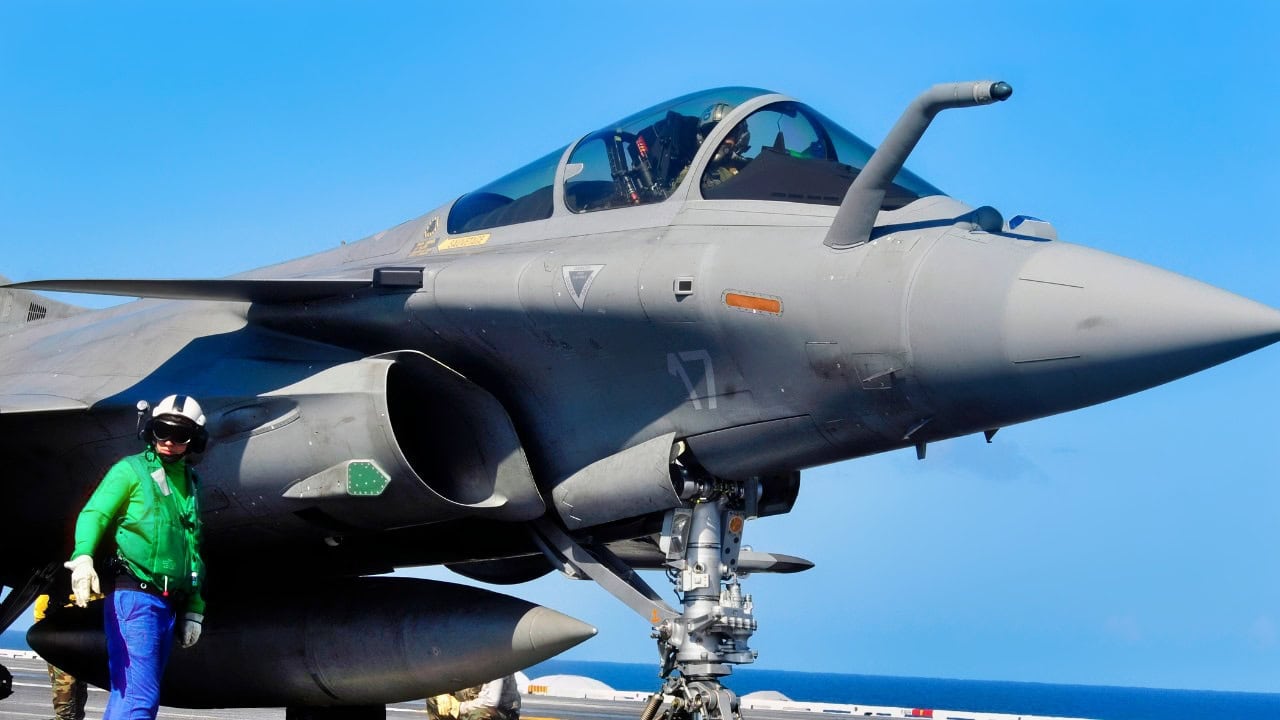
080719-N-3218H-011
ATLANTIC OCEAN (July 19, 2008) A French F-2 Rafale fighter prepares to launch during combined French and American carrier qualifications aboard the aircraft carrier USS Theodore Roosevelt (CVN 71). This event marks the first integrated U.S. and French carrier qualifications aboard a U.S. aircraft carrier. The Theodore Roosevelt Carrier Strike Group is participating in Joint Task Force Exercise “Operation Brimstone” off the Atlantic coast until the end of July. (U.S. Navy photo by Mass Communication Specialist 3rd Class Christopher Hall/Released)
The aircraft now operates with Active Electronically Scanned Array radar and InfraRed Search and Track targeting, similar to what is on the US Navy’s F/A-18. The De Gaulle can reportedly carry and launch as many as 40 Rafale fighters.
“The Charles De Gaulle is a 38,000 ton, nuclear powered French aircraft carrier launched in May 1994. The ship operates a fleet of 40 Rafale M combat aircraft, the Super Etendard and three E-2C Hawkeye airborne early warning aircraft. The ship also supports the AS 565 Panther and Dauphin helicopters. There are two lifts, measuring 19 x 13 m, which have a load capacity of 36 tons. The hangar has a floor area of 140 x 30 metres and a height 6.1 metres,” an essay by GlobalSecurity.org says.
PANG Is Coming
Given its mixed record, it appears France plans to retire the Charles de Gaulle as early as the 2030s, yet its existence has inspired the development of the PANG, France’s second nuclear-powered carrier, expected to emerge in 2038.
A life span of roughly 35 to 40 years for the Charles De Gaulle would seem rather short, given that US Navy Nimitz-class carriers serve as long as 50 years with one mid-life refueling. It may be that sustainment and maintenance costs make it more cost-effective to retire. At the same time, the ship has a record of success, and it seems conceivable that it could extend into the 2040s and 2050s, allowing France to operate multiple nuclear-powered carriers.
Should sustainment and modernization efforts be possible with the Charles De Gaulle, it would seem to make sense for France to operate as many carriers as possible.
The threat equation in Europe is much different now than it was years ago, given Russia’s ongoing war in Ukraine.
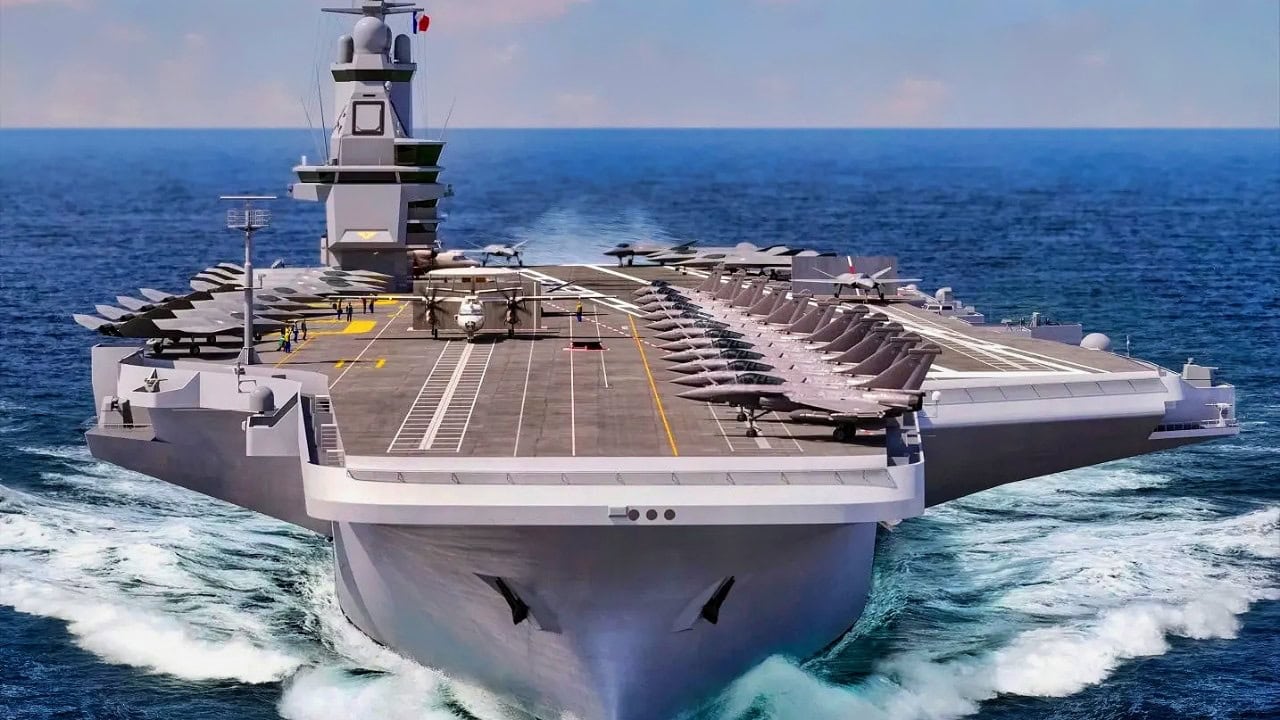
PANG Aircraft Carrier from France. Image Credit: Industry Handout.
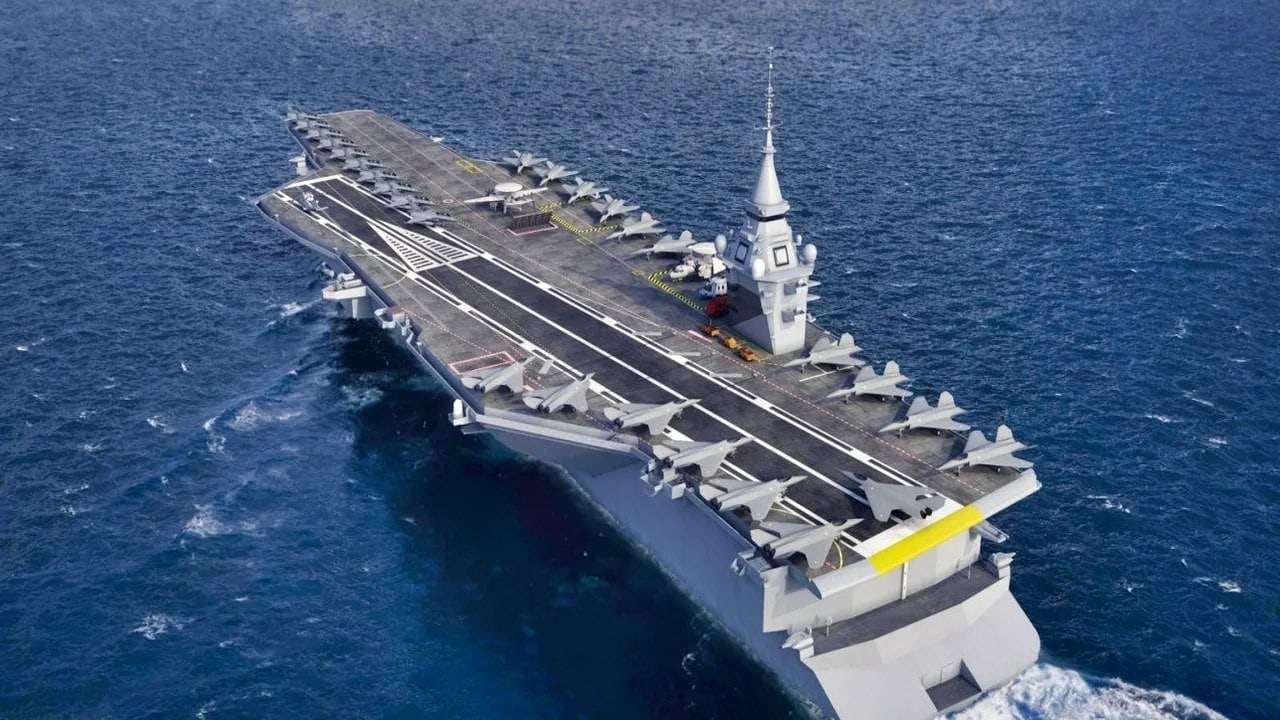
PANG Aircraft Carrier from France. Image Credit: French Navy.
A second carrier could operate in the Baltic Sea and, if needed, project power over Russian territory. With two carriers, the French could support US Navy deterrence operations in other key regions such as the Pacific or Mediterranean.
Charles De Gualle Carrier: Problems Remain
Despite the promise of potential success, the service life of the Charles De Gualle, in an overall sense, has been characterized by ongoing contradictions.
The ship was successfully upgraded in 2008 with massively increased satellite communications, advanced Rafale F3 fighter variants, nuclear missiles, and famous SCALP-EG stealthy Storm Shadow cruise missiles.
However, only two years after the upgrades, the French carrier experienced an electrical fault in its propulsion system.
About the Author: Kris Osborn, Warrior Maven President
Kris Osborn is the President of Warrior Maven – Center for Military Modernization. Osborn previously served at the Pentagon as a highly qualified expert in the Office of the Assistant Secretary of the Army—Acquisition, Logistics & Technology. Osborn has also worked as an anchor and on-air military specialist at national TV networks. He has appeared as a guest military expert on Fox News, MSNBC, The Military Channel, and The History Channel. He also has a Masters Degree in Comparative Literature from Columbia University.