
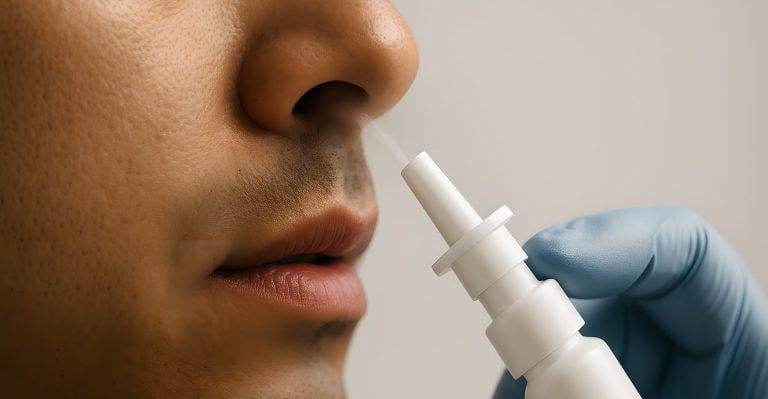
Scientists developed a universal vaccine formula that protects against a wide range of respiratory viruses, bacteria and even allergens. The vaccine is delivered intranasally — such as through a nasal spray — and provides broad protection in the lungs of mice for several months.
https://med.stanford.edu/news/all-news/2026/02/universal-vaccine.html
7 Comments
One vaccine may provide broad protection against many respiratory infections and allergens
Stanford Medicine researchers and their colleagues invented a new vaccine that protects mice from respiratory viruses, bacteria and allergens — the closest yet to a universal vaccine.
In the realm of medical advancements, a universal vaccine that can protect against any pathogen has long been a Holy Grail — and about as elusive as a mythological vessel.
But Stanford Medicine researchers and collaborators have taken an astonishing step forward in that quest, surprising even themselves. In a new study in mice, they have **developed a universal vaccine formula that protects against a wide range of respiratory viruses, bacteria and even allergens. The vaccine is delivered intranasally — such as through a nasal spray — and provides broad protection in the lungs for several months**.
In the study that was published Nov. 19 in Science, researchers showed that vaccinated mice were protected against SARS-CoV-2 and other coronaviruses, Staphylococcus aureus and Acinetobacter baumannii (common hospital-acquired infections), and house dust mites (a common allergen). In fact, the new vaccine has worked for a remarkably wide spectrum of respiratory threats the researchers have tested.
If translated into humans, such a vaccine could replace multiple jabs every year for seasonal respiratory infections and be on hand should a new pandemic virus emerge.
For those interested, here’s the link to the peer reviewed journal article:
https://www.science.org/doi/10.1126/science.aea1260
It will never be used in mass for the people as long as big Pharma is in power.
But no protection for the rats from Mycoplasma pulmonis? Poor little dudes, all of this testing and they still can’t avoid their own upper respiratory woes.
Can we stop normalizing calling something that “in mice, lasts for *several months*” a vaccine? Sorry, you can’t just decide to add to the definition of a word to increase sales. Either it is permanent with a large efficacy %; or it’s not a vaccine.
Flipping mice are getting cured all the time. I’m surprised there are any mouse illnesses left. When will these scientists start researching cures for humans? /s
Another great invention that will never leave the lab.
Would this not just lead to gnarlier viruses and bacteria?