
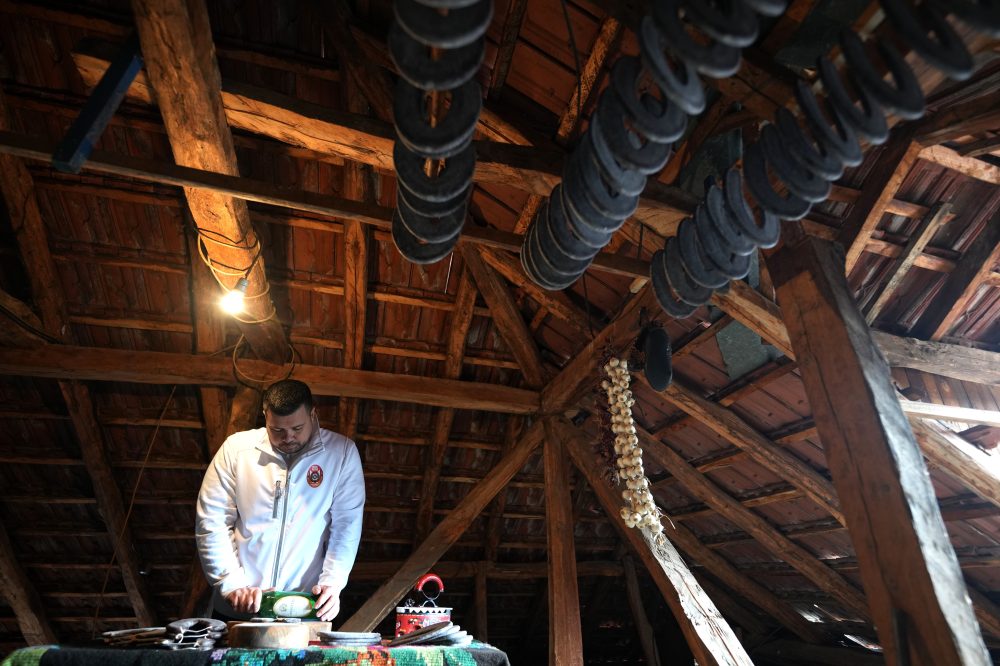
In the Serbian town of Pirot, locals have been crafting a unique horseshoe-shaped sausage called ‘peglana kobasica’ for over a century using a special flattening technique. The traditional delicacy, which received official recognition in 2022, now faces threats from declining goat populations and climate change affecting the drying process.
PIROT, Serbia — In the small Serbian town of Pirot near the Bulgarian border, residents have discovered the perfect remedy for harsh winter weather: a distinctive spiced sausage that locals say boosts both energy and morale during the coldest months.
Known locally as “peglana kobasica,” this specialty meat product gets its English name “ironed sausage” from an unusual preparation method that involves flattening the casing with a bottle, creating its characteristic horseshoe appearance. The delicacy combines carefully chosen meats with abundant spices and undergoes natural air-drying.
While this culinary tradition has passed through multiple generations in Pirot, the high-quality, sustainably produced sausage has recently attracted attention far beyond this quiet border community.
Serbian food safety officials recognized the product’s excellence in 2022, granting it a certificate for regional distinction and authenticity. This designation requires manufacturers to adhere to strict production standards to earn the official recognition.
“It is a supreme product,” declared Marjan Savic, who leads a local association of sausage producers, in comments to The Associated Press. “Our sausage is one of the best, if not the best.”
The sausage-making heritage in Pirot stretches back at least 100 years, with some historians suggesting it may have originated during Ottoman rule, which concluded in the Balkans in 1913.
Historical accounts describe early producers using meat from mature livestock to create their sausages, then air-drying them by suspending them on wooden handles in storage buildings and upper floors of homes.
Currently, approximately 35 to 40 licensed manufacturers operate in the region. They source locally raised cattle and goat meat, incorporating garlic, spicy peppers, and herbs gathered from the picturesque Stara Planina mountains in the vicinity.
Creating these ironed sausages requires “hard labor,” according to Savic. The initial step involves completely removing all fatty tissue and connective material from the meat, “which is probably the hardest part of the job,” he noted.
Workers then air-dry and manually flatten the sausages each day to achieve proper flavor and form. The entire process concludes in time for Pirot’s annual sausage festival each January, which draws thousands of attendees, including many visitors from Bulgaria.
However, increasing popularity hasn’t shielded the industry from significant challenges. Local goat populations are shrinking, while recent winters have become warmer and more moisture-laden, conditions that scientists partially attribute to changing climate patterns.
Misa Rajic acquired his sausage-making skills from his grandfather and recalls preparing ironed sausages each winter during his childhood. He currently operates a small production facility at his residence on Pirot’s periphery.
“It takes about a month to get a dry, dehydrated product that is ready for consumption,” Rajic explained while demonstrating how producers press the sausages with glass bottles, working from center to edges.
This technique, he continued, “helps further mix the meat inside the sausage and it helps with the drying because it extracts the moisture.”
Properly dried sausages develop a dark appearance with the grayish exterior of beef intestine casings, which consumers remove before eating. Pirot residents typically enjoy the sausage similar to an after-dinner digestive — following complete meals, including dessert. They slice it paper-thin and chew deliberately while sipping red wine to savor the flavor.
“We recommend red wines that are a bit robust to match the poignant aroma,” Savic advised. “It’s not so good with white wine.”