

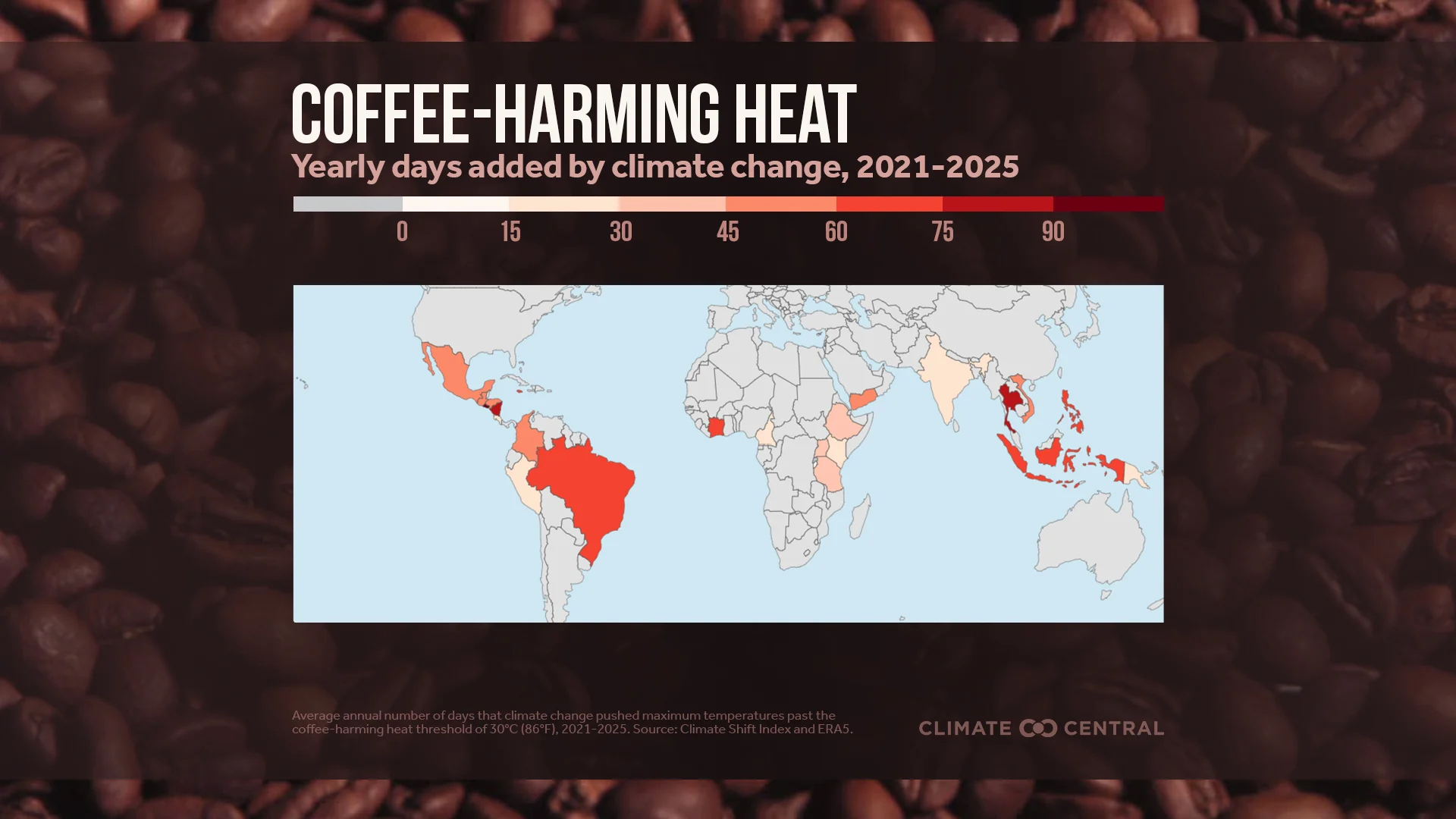
Brazil, which produces roughly 40 per cent of the world’s coffee beans, was among the most impacted, experiencing an extra 70 days of harmful heat annually.
There is one caveat: Arabica beans are typically farmed at higher elevations where temperatures tend to be cooler, and some of those crops may not have experienced the same number of heat-damaging days as those closer to sea level.
Other risks to coffee bean crops
Heat isn’t the only stressor impacting coffee beans: Unusual rainfall, either too much or too litte, along with pests and diseases, further impede production and influence coffee prices.
Speaking with the CBC Lily Peck, an evolutionary biologist at the University of California, Los Angeles, said extreme heat forces plants to divert resources from general functions to focus on survival, leaving them more susceptible to disease.
Higher humidity from warm temperatures or excess moisture from above-average rain could promote the growth of plant-damaging fungus, Peck said.
What is the future of coffee production?
The report suggests coffee production may have to migrate if bean belt countries become too warm. Without interventions, the report says that land suitable for coffee growth could be reduced by up to 50 per cent by 2050.