
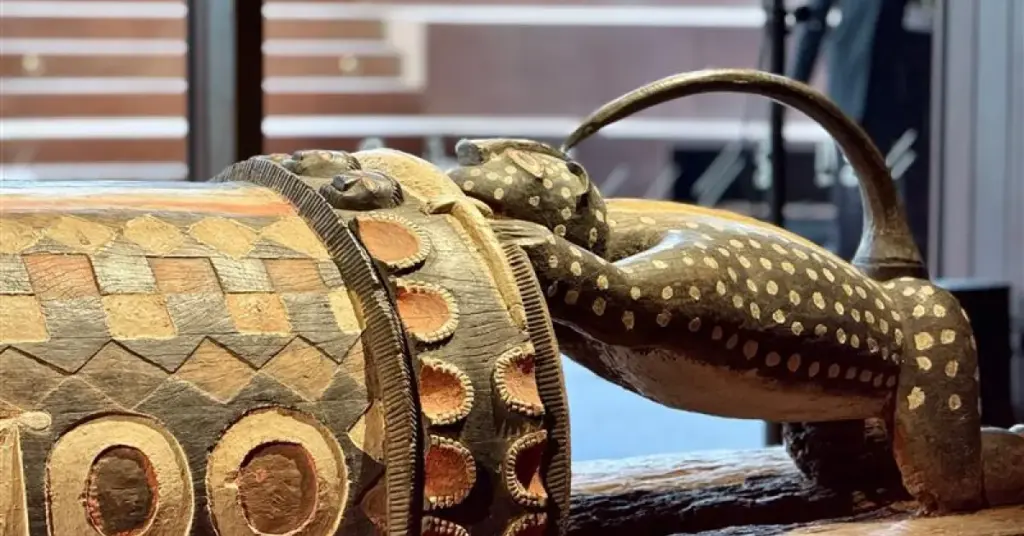
The Djidji Ayôkwé is a mythical object, a communication instrument, and a symbol of resistance. UNESCO supports and commends the long diplomatic, scientific, and memorial process that has resulted in one of the most emblematic restitutions between France and Africa.
The Djidji Ayôkwé, the talking drum of the Atchan people, is a slit drum carved from iroko wood, that measures 3.30 meters in length and weighs nearly 430 kg. Far more than a musical instrument, it was used to transmit ritual messages and to alert villagers, for example, during forced recruitment operations or military conscription. Colonial authorities regarded it as a strategic tool of communication and resistance.
In 1916, during a punitive expedition, French authorities seized the drum in Adjamé in order to break the resistance of the Atchan people. It was later transferred to France in 1929 and subsequently became part of the national public collections. It was successively housed in several museums, notably at the Musée de l’Homme, before being transferred in 2006 to the Musée du quai Branly – Jacques Chirac.