
Published on
February 21, 2026
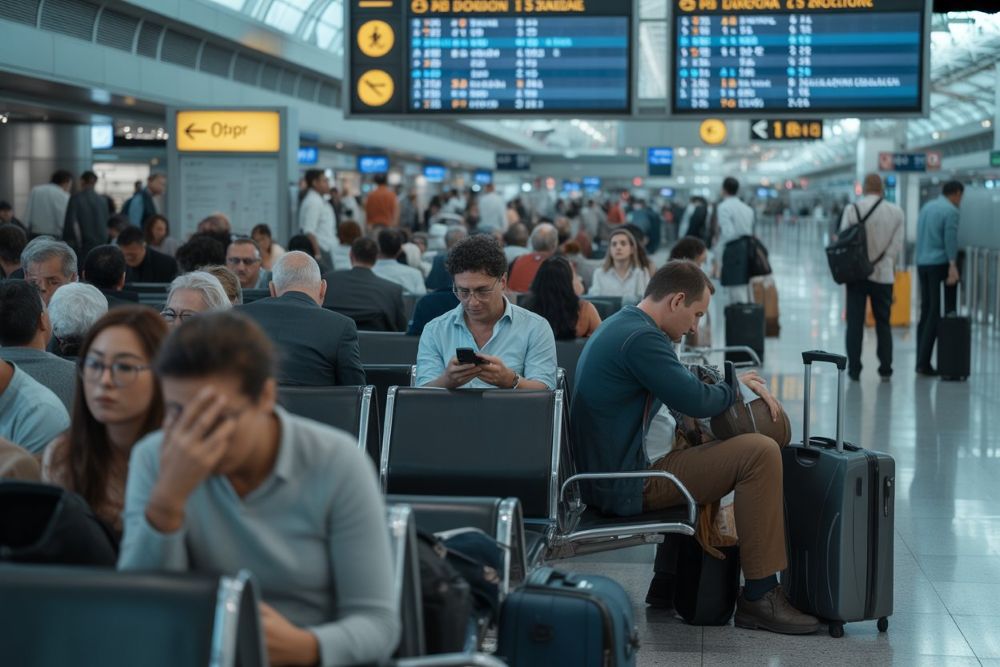
Image generated with Ai
Travelers are stranded in Europe as 43 flights are cancelled and 1,364 new delays wreak havoc across major European airports. Affected countries include the UK, France, Netherlands, Switzerland, and Turkey, with major cities like Birmingham, Paris, Amsterdam, Geneva, and Istanbul being hit the hardest. Airlines such as Air France, SAS, Helvetic, ITA Airways, and Pegasus Airlines are among the worst impacted. Passengers have faced significant disruptions, including long delays and multiple cancellations, causing frustration at some of Europe’s busiest hubs.
In Birmingham, Paris, Amsterdam, Geneva, and Istanbul, travelers are left scrambling to find alternative arrangements. With the ongoing disruptions, those affected must stay informed and remain flexible with their travel plans. Passengers should check for updates on their flights and take advantage of any available support services provided by the affected airlines.
Airports Facing Severe Disruptions
European airports have been some of the hardest hit, with many major hubs reporting significant delays. Frankfurt International Airport (FRA) stands out with the highest number of delays at 151, followed by Zurich Airport (ZRH), where 152 flights have been delayed. Other major airports like London Heathrow (LHR), Amsterdam Schiphol (AMS), and Copenhagen (CPH) are also experiencing widespread disruptions, each reporting significant delays.
- London Heathrow (LHR) and London Gatwick (LGW) have both seen considerable impacts, with 128 and 64 delays respectively, along with multiple cancellations.
- Frankfurt (FRA), known as one of Europe’s busiest transit hubs, has witnessed 2 cancellations and 151 delays, causing significant ripples across the region.
- Geneva Airport (GVA), Oslo Gardermoen (OSL), and Istanbul Sabiha Gokcen (SAW) are other notable airports where passengers have faced delays, ranging from 60 to 107, significantly affecting the flow of international and domestic flights.
In total, the European airports included in the analysis report 43 cancellations and 1,364 delays.
Advertisement
Advertisement
Airlines Impacted by the Disruptions
The airline industry has also felt the ripple effects of these disruptions. European carriers, including Air France, British Airways, KLM, and SAS, are among those experiencing the highest level of disruption.
- British Airways and its subsidiary BA Euroflyer have faced 4 cancellations and 57 delays, along with 13 delays respectively.
- SAS (Scandinavia), with 4 cancellations and 53 delays, and SAS Link, with 5 cancellations and 14 delays, have also had their operations severely impacted.
- Air France and Iberia (Spain) have been affected too, experiencing 1 cancellation each, alongside significant delays, totaling 58 for Air France and 22 for Iberia.
Overall, European airlines have collectively reported 25 cancellations and 401 delays, further complicating the travel experience for passengers.
Advertisement
Advertisement
Analysis: Affected Cities, Countries, and Airlines
Several cities and countries across Europe have been severely impacted by these delays and cancellations. Germany, with major hubs like Frankfurt and Hamburg, has seen its transportation system hit hard, while the UK’s London Heathrow and London Gatwick airports are among the busiest in Europe, affecting thousands of travelers daily. Switzerland’s Geneva Airport and Zurich have also experienced a significant number of delays, impacting travelers coming and going to Switzerland and other parts of Europe. The Scandinavian region, including Denmark, Norway, and Sweden, has felt the brunt of disruptions, particularly affecting SAS flights.
Meanwhile, France, Spain, and Italy are also facing challenges, particularly with Air France, Iberia, and ITA Airways. Turkey’s Pegasus Airlines, operating out of Istanbul, has experienced its fair share of cancellations and delays, contributing to the overall disruption.
Advertisement
Advertisement
What Can Affected Passengers Do Now?
For passengers facing disruptions, it’s crucial to stay informed and prepared. First and foremost, affected travelers should regularly check their airline’s website or mobile app for updates regarding their flight status. It’s advisable to sign up for real-time notifications if available.
If facing a flight cancellation, passengers are entitled to compensation under EU Regulation 261/2004 for flights departing from EU airports or operated by EU-based airlines. European travelers should also inquire about alternative flight arrangements and possible accommodation, especially if the delay or cancellation extends beyond several hours.
Additionally, passengers can contact customer service for immediate assistance regarding rebooking options or travel vouchers. If necessary, airlines may offer meal vouchers or hotel accommodations for overnight delays.
For those affected by delays, airlines typically offer assistance for delays lasting over 2-3 hours, including refreshments and meal options.
How to Minimize Travel Disruptions in the Future
Passengers can minimize the impact of travel disruptions by considering travel insurance, which can cover cancellations and delays. Early check-in and staying informed through flight tracking apps and social media channels are also crucial.
In the wake of these disruptions, travelers should ensure they have adequate support and are aware of their rights to compensation.
With 43 cancellations and 1,364 delays, Europe’s air travel network is clearly experiencing a challenging period. Passengers should remain flexible and prepared to adjust plans accordingly.
Source: FlightAware and affected airports
