

In recent years, Azerbaijan-China relations have experienced
notable growth, underscored by high-level exchanges, expanding
economic ties, and enhanced collaboration across strategic sectors.
This dynamic partnership reflects Azerbaijan’s increasingly
deliberate and forward-looking foreign policy as it navigates a
rapidly evolving geopolitical environment. Amid shifting global
power structures and the ongoing reorganization of international
supply chains, Azerbaijan’s deepening engagement with China is a
strategic choice driven by pragmatic considerations and mutual
interests.
A week ago, or more precisely on January 28-29, Azerbaijani
Foreign Minister Jeyhun Bayramov visited China. During his visit,
Bayramov engaged in detailed discussions with Chinese officials,
advancing the bilateral agenda and bringing substantive momentum to
the already burgeoning partnership. This visit, alongside other
high-level exchanges, illustrates a commitment to reinforcing
political and economic ties between the two nations.
Bayramov expressed Azerbaijan’s view of China as an
indispensable partner in a range of strategic areas, emphasizing
the depth and multidimensional nature of their cooperation. He
described Azerbaijan’s comprehensive strategic partnership with
China as a framework based on long-term mutual benefits. According
to Bayramov, the partnership rests on several pillars, including
robust political dialogue, shared economic goals, and collaboration
in multilateral frameworks. He stressed the importance of
high-level trust and coordination, especially in the areas of
transport infrastructure, renewable energy, green technologies, and
sustainable development.
As part of the growing bilateral cooperation, Chinese investment
in Azerbaijan has increased, particularly in the green energy
sector. This aligns with Azerbaijan’s long-term development
strategy, which emphasizes energy transition and sustainability.
Chinese companies are actively involved in the construction of
solar and wind power plants, as well as in the development of power
generation infrastructure and the production of electric buses.
These efforts position Azerbaijan as an emerging hub for green
energy development in the region. This expanding investment
cooperation not only supports China’s broader global strategy of
promoting sustainable infrastructure projects but also allows
Azerbaijan to diversify its economy, reducing its reliance on
hydrocarbons and advancing its broader economic goals.
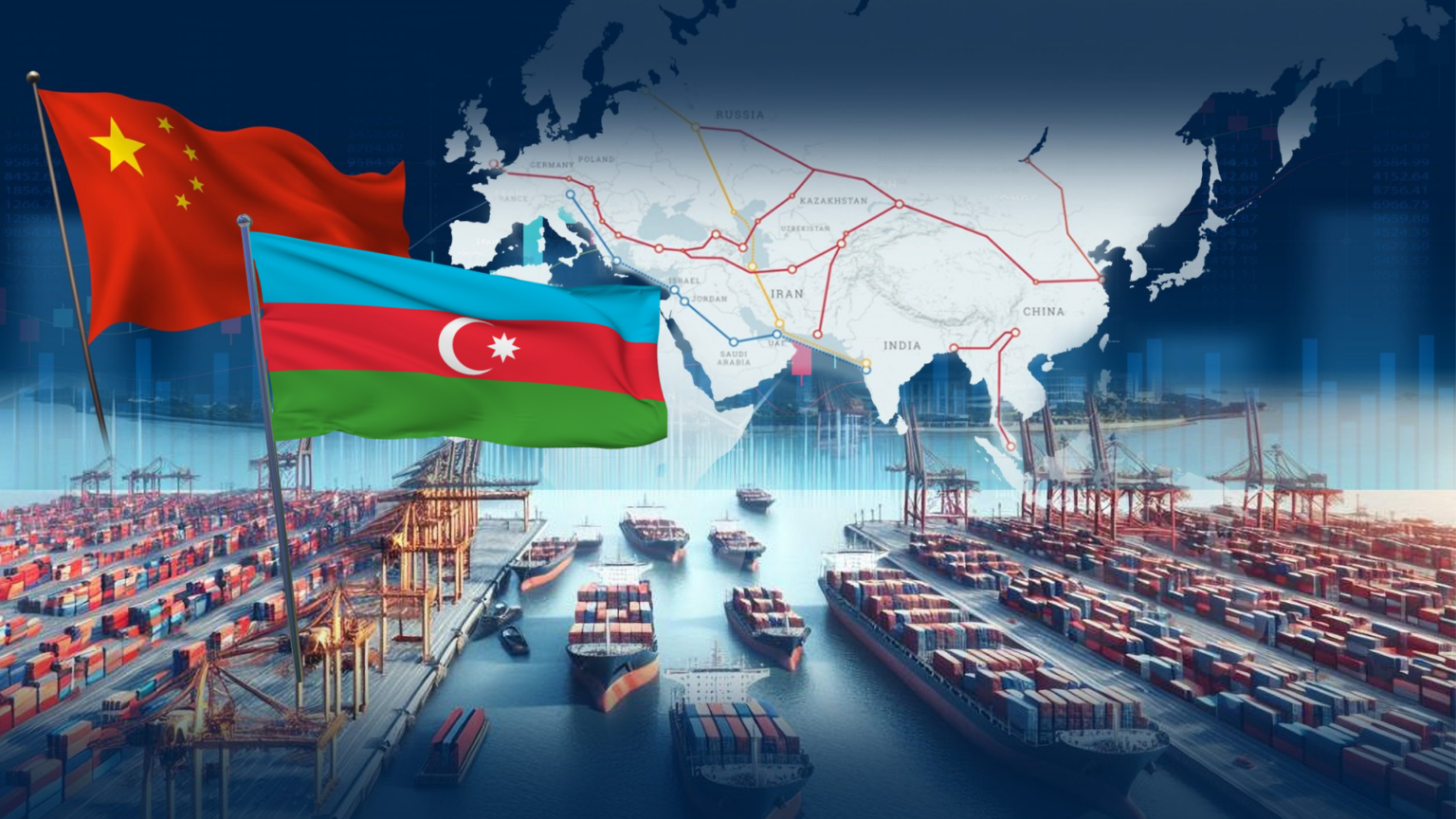
Azerbaijan’s alignment with China’s Belt and Road Initiative
(BRI) is a key component of this partnership, particularly with the
Middle Corridor, which connects China to Europe via Azerbaijan and
Central Asia. As global supply chains shift and regions reassess
their logistical routes, Azerbaijan’s strategic positioning as a
bridge between East and West is becoming increasingly critical.
This offers both Azerbaijan and China a unique opportunity to
enhance regional connectivity, which is of great importance for the
broader Eurasian economic framework.
Beyond bilateral engagement, Azerbaijan has consistently
emphasized the importance of multilateral diplomacy, using
international forums as platforms to advance regional stability and
foster dialogue. As a country that has built a reputation as a
bridge-builder in global diplomacy, Azerbaijan’s active leadership
in various multilateral institutions is instrumental in promoting
peace, stability, and sustainable development.
Notably, Azerbaijan’s chairmanship of the Conference on
Interaction and Confidence-Building Measures in Asia (CICA)
(2024-2026) is a significant development in this regard. CICA,
which aims to create a common security and cooperation space in
Asia, aligns with Azerbaijan’s broader diplomatic vision.
Azerbaijan’s commitment to fostering dialogue among countries with
diverse political and security interests complements China’s
growing regional influence, especially in the context of rising
geopolitical tensions and the fragmentation of the international
system.
Additionally, Azerbaijan’s leadership within the Non-Aligned
Movement (NAM) and its presidency of COP29 demonstrate the
country’s proactive approach to multilateralism. These forums
enable Azerbaijan to promote dialogue on pressing global issues,
such as climate change, security, and regional cooperation, where
Azerbaijan and China can work together in fostering a
consensus-driven approach.
Azerbaijan’s involvement with the Shanghai Cooperation
Organization (SCO) since 2015, when it was granted Dialogue Partner
status, further reflects its commitment to building strong ties
with China and other SCO members. Azerbaijan’s partnership with the
SCO – focused on counterterrorism, regional stability, and economic
cooperation – aligns closely with China’s priorities, and
facilitates collaboration in areas such as trade,
telecommunications, and investment. Azerbaijan’s participation in
the SCO’s mechanisms also provides a valuable avenue for promoting
regional security, combating extremism, and advancing economic
growth through greater connectivity.
In this broader context, Azerbaijan’s growing partnership with
China enhances its regional and global standing. By aligning with
both bilateral initiatives and multilateral frameworks, Azerbaijan
positions itself as a key player in Eurasian and global diplomacy,
with a vested interest in fostering stability and cooperation
across the continent.
One of the defining features of Azerbaijan-China relations is
their shared stance on several key international issues,
particularly with respect to territorial integrity and sovereignty.
Azerbaijan has consistently supported China’s position on the
Taiwan issue, reaffirming its commitment to the “One China” policy.
As Foreign Minister Bayramov reiterated, Azerbaijan’s position on
Taiwan is grounded in international law and respect for China’s
sovereignty, emphasizing the importance of regional stability and
the non-interference in internal affairs.
This shared commitment to safeguarding territorial integrity
underpins the broader partnership between the two nations.
Azerbaijan’s support for China is not merely symbolic but reflects
a broader foreign policy stance rooted in respect for international
norms, the sovereignty of states, and the importance of avoiding
actions that could destabilize the region. The strong mutual trust
in this regard further solidifies the strategic foundation of the
partnership.
Moreover, Azerbaijan’s support for China’s stance on Taiwan
aligns with its broader foreign policy principles, which emphasize
peace, stability, and the maintenance of a rules-based
international order. In this sense, Azerbaijan’s foreign policy is
shaped not only by bilateral considerations with China but also by
a commitment to multilateral diplomacy and adherence to the norms
of international law.
A partnership for the future
Azerbaijan’s evolving relationship with China is a testament to
the country’s strategic vision and its ability to navigate the
complexities of the modern geopolitical landscape. Through its
comprehensive strategic partnership with China, Azerbaijan has
positioned itself as a vital actor in regional and global
diplomacy, one that seeks to balance its ties with both East and
West while promoting stability, security, and sustainable
development.
Looking ahead, the partnership between Azerbaijan and China is
poised to deepen further, with both nations focusing on areas of
mutual interest, such as trade, energy, infrastructure, and
multilateral cooperation. As global power dynamics continue to
shift, Azerbaijan’s engagement with China will undoubtedly play an
increasingly pivotal role in shaping the future of Eurasian and
global diplomacy.
In conclusion, Azerbaijan’s strategic partnership with China is
more than just an economic or diplomatic alliance; it is a
forward-looking collaboration that reflects a shared vision for
regional stability, multilateralism, and sustainable growth. This
partnership, grounded in mutual trust and respect, is set to evolve
in ways that will shape the geopolitical landscape of the 21st
century.