
Published on
February 20, 2026

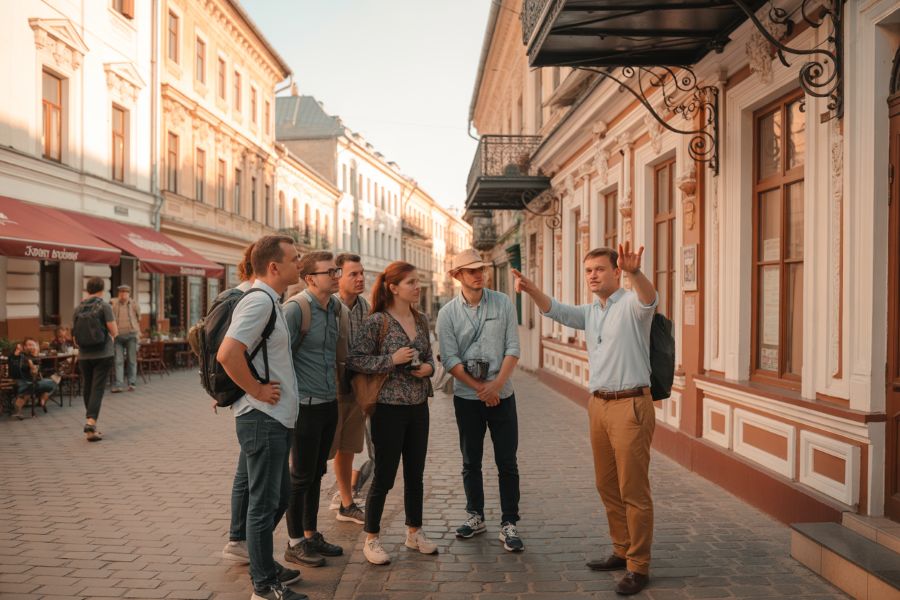
Image generated with Ai
The number of tourists staying in collective accommodation (i.e., hotels, motels, guesthouses, health resorts) in Moldova in 2025 exceeded 525,100, representing an increase of 10.7% over the previous year. This means that Moldova stands to gain even more from both resident and non-resident demand as collective accommodation keeps attracting the bulk of tourist arrivals.
Foreign tourism in Moldova is gaining even more strength as it registered a 12.7% increase in 2025 for the number of tourists that stayed in the country. Out of approximately 286,200 foreign tourists, an estimated 35.1% were from Ukraine and 20.4% were from Romania. This indicates the strong importance of cross-border mobility in the region. Tourists from the United States made up approximately 4.7% of total foreign arrivals, while Germany accounted for about 3.3%. This shows that there is a diverse range of long-haul and European markets. Though tourism statistics show that there is a slight dominance of foreign visitors over domestic visitors, this indicates that there are good reasons to continue efforts to promote tourism and improve direct air connections to Chișinău International Airport.
Length of stay and overnight stays
In 2025, tourists made approximately 1.63 million overnight stays in Moldova, representing an increase of around 4.4% annually. Foreign tourists made around 555,300 overnight stays, which is an increase of 10.8%, indicating a continual strengthening of international demand. The national statistics system shows resident tourists spent an average of 5.5 nights in domestic accommodation facilities, while foreign tourists spent an average of 2.9 nights. This indicates where tourism policymakers in Moldova can direct efforts while developing new tourism policies. In particular, tourism with a focus on wine, rural, and cultural themes is included in strategic government policies and is ideal to promote extended stays to international travelers.
Advertisement
Advertisement
Support for policies and updated infrastructure
Documents from the government detailing the growth of tourism in Moldova show the authorities’ continual focus on changes in the reception structures and the tourism infrastructure’s construction and design in accordance with the quality standards of the European Union. The national programs focus on the construction of access infrastructure, the availability and quality of tourist information, assistance to small and medium-sized tourism businesses, the promotion of digital marketing tools, and the marketing of destinations. The public and private sector partnership aims to improve service quality by training guides and operators, regulating the accommodation services, and extending the promotion of the flagship attractions, including Chișinău, rural wine regions, and cultural heritage attractions.
Advertisement
Advertisement
Moldova’s future tourism
Moldova is strengthening its presence as a developing tourism destination amongst Eastern European travelers in 2025, as tourist arrivals and foreign travelers are projected to increase. Updated projections of tourism growth for Moldova provide for an increase in air travel for tourism, more varied tourism destinations, and maintained government spending for tourism infrastructure and tourism marketing in the government sector. The Eastern European and European places of tourism remain integrated, and Moldova is anticipated to remain viable, using niche tourism, competitive pricing, and culturally authentic tourism and wine tourism, attracting both regional tourism and long-distance tourism.
Moldova’s tourism landscape in 2025 therefore appears increasingly aligned with broader European travel trends, where visitors seek authenticity, safety, and good value. Continued collaboration between aviation stakeholders, local authorities, and private investors is expected to further enhance accessibility via Chișinău International Airport and regional routes. At the same time, the diversification of products beyond traditional sightseeing toward experiential wine routes, village stays, and cultural festivals can help distribute tourism benefits more evenly across the country. This balanced approach positions Moldova to attract repeat visitors and new segments, reinforcing its long-term competitiveness in Eastern Europe.
Moldova’s growing visibility in digital travel media is also expected to play a critical role in shaping future demand, as engaging storytelling, high-quality imagery, and targeted campaigns highlight its distinctive identity. As international tour operators and online travel platforms add more Moldovan products to their portfolios, the country can reach a broader audience of curious travelers seeking emerging destinations. Stronger branding around themes such as “wine country of Eastern Europe” or “hidden gem between Romania and Ukraine” can further differentiate Moldova. Together, these efforts can translate statistical growth into sustained, inclusive development for local communities and tourism businesses.
