
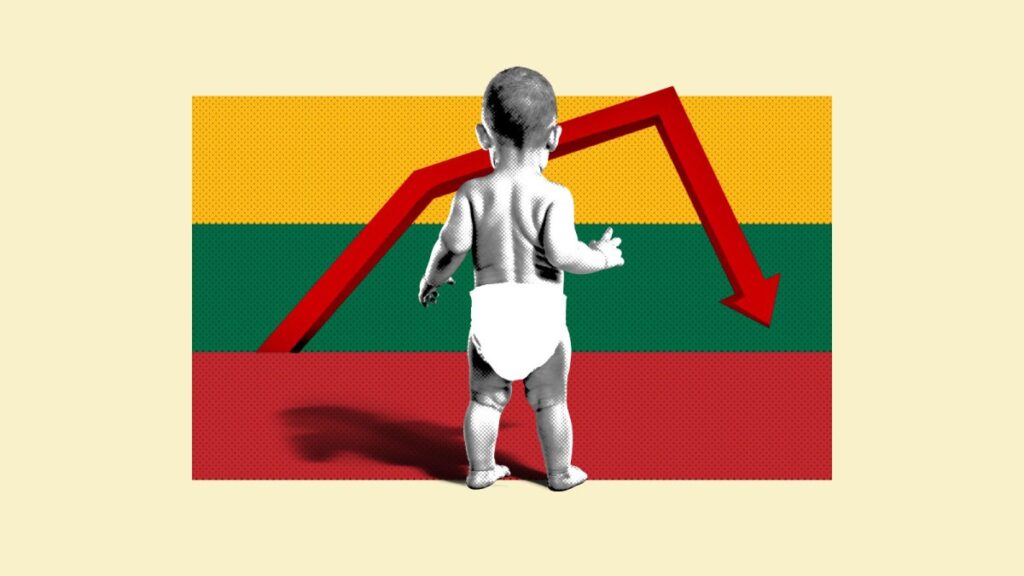
In a town nicknamed the “Lithuanian Chernobyl” for its many empty Soviet-built apartments, the country’s population crisis is palpable.
The district of Ignalina, an expanse of lakes and forests near Lithuania’s border with Latvia, has lost more than half of its population since the end of the Cold War.
In other parts of the country, there are as many as three deaths for every baby that is born. About a dozen towns have been so depleted of residents that they have been officially downgraded to mere “settlements”.
Inga Ruginiene, the Baltic state’s prime minister, told The Times that the demographic crisis had reached a point where it was a “matter of national security”. The parliament has formally declared the situation an “existential challenge to the survival of the Lithuanian nation”, on a par with the threat from Russia.

Inga Ruginiene, the Lithuanian prime minister
FLORIAN GAERTNER/PHOTOTHEK/GETTY IMAGES
Lithuania: a vision for the future?
After a slew of glum population forecasts across Europe and warnings about the Continent’s tumbling birthrates, Lithuania provides a vision of what may be to come — yet it is not necessarily as hopeless as it might seem.
• Could Britain’s population actually start shrinking soon?
The number of people in the country has dropped from 3.7 million in 1990 to 2.9 million today. The United Nations expects it to slide by another quarter over the next three decades, one of the sharpest falls projected anywhere in the world. By the end of the century, it may be as low as 1.2 million.
The total fertility rate, at roughly 1.1 births per woman, is the lowest in the European Union, alongside those of Malta and Spain, and has halved over the past 50 years. The workforce is predicted to shrink by more than a quarter in the next quarter-century, the biggest crunch in any advanced economy apart from South Korea and Italy.
It is an extreme example of a trend that is already rolling through the EU, whose population is expected to peak this year and then go into protracted decline.
This week the Ifo Institute for Economic Research in Munich published a paper showing that Germany’s population, which was previously predicted to keep growing until the mid-2030s, was already starting to dwindle and was likely to keep contracting by about 1 per cent every five years.
Poland’s GUS national statistics body has also recently revised its population forecasts downwards, from 37 million today to below 30 million by 2060. Southern Italy is expected to lose 3.4 million people by the middle of the century.
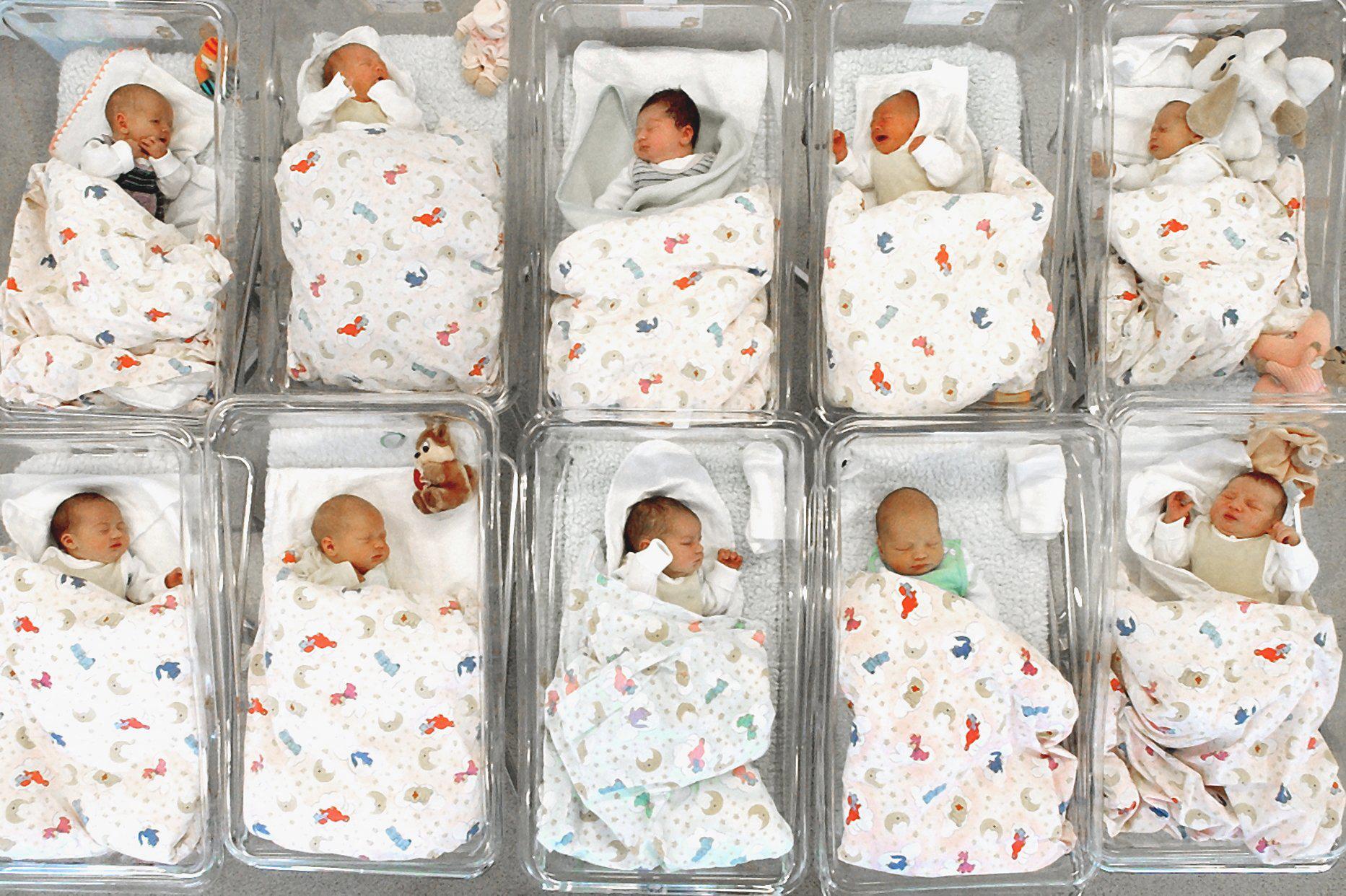
Newborn babies in the maternity ward of St Elisabeth Hospital in Leipzig, Germany
ALAMY
In Lithuania, depopulation has been a stark reality since the end of Soviet occupation at the dawn of the Nineties. Hundreds of thousands of Lithuanians moved west, and nearly half of those who left headed to the UK after their country joined the EU in 2004.
The years of migration took a particularly heavy toll on rural towns and villages, many of which emptied out as their residents either emigrated or upped sticks to larger cities such as Vilnius or Kaunas.
Return to the roots
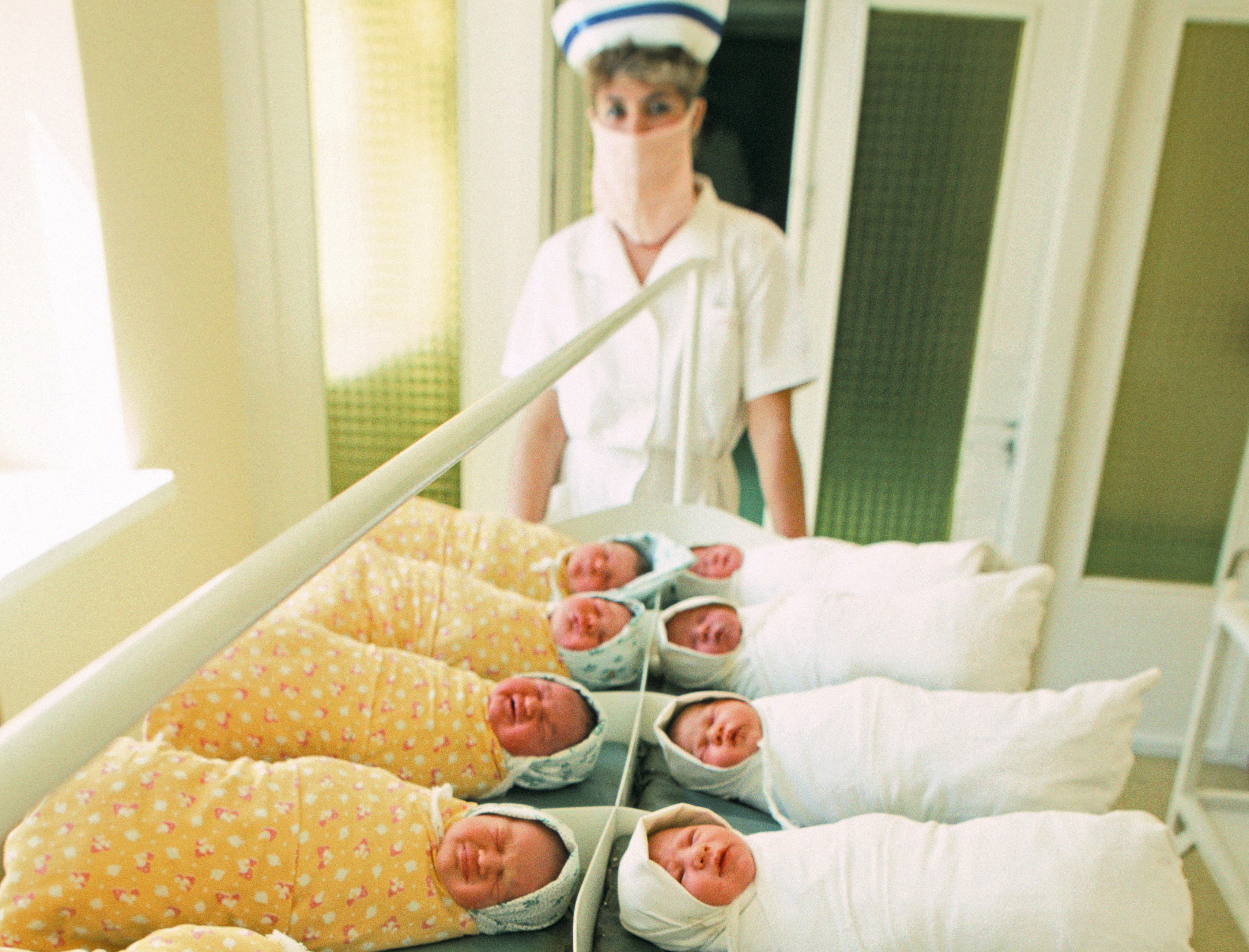
A maternity hospital in Vilnius, Lithuania, in 1900
CHIP HIRES/GAMMA-RAPHO VIA GETTY IMAGES
Today the exodus from Lithuania has abated and may even be going into reverse. “When we speak about Lithuanian citizens specifically, in recent years the [return migration] flow has exceeded emigration,” Ruginiene said. “We believe this is supported not only by economic growth, but also by the understanding that Lithuania offers favourable conditions for raising children.”
One of the returning Lithuanians is Ruta Ubareviciene, a geographer and depopulation expert at the Lithuanian Centre for Social Sciences in Vilnius. She and her husband moved to the Netherlands in 2012 but came back after the start of the pandemic.
“The [Lithuanian] economy got stronger, but also there were people who felt it was time to return and start a family, or had just had enough of being abroad and went back to Lithuania for their social contacts,” Ubareviciene said. “Brexit and Covid contributed a lot to the decisions to return.”
Over the past couple of years Lithuania’s population has even grown a little, bolstered by Ukrainian refugees and migrant “guest workers” from central Asian countries such as Uzbekistan and Tajikistan.
Yet Lithuania’s demographic destiny will ultimately be decided by the birthrate, which has been in freefall. Ubareviciene said that for all their apocalyptic language, the country’s political leaders had so far failed to grasp the nettle, aside from sporadic cash handouts of up to €1,500 per baby in some districts. “There’s no clear vision of how we would like to see Lithuania in the future,” she said.
Happy childless
Despite all this, an EU poll published a fortnight ago put the Lithuanians near the top of every table measuring optimism about the future of the world, their country and their own families.
According to another survey, a record 88 per cent of the population say they are broadly content with their lot. Meanwhile, in 2024 the country’s under-30s were found to have the highest life satisfaction levels on the planet.
Vytautas Matulevicius, a Lithuanian author and public relations entrepreneur based in Brussels, said this had a good deal to do with the thriving economy, which is powered by a broad manufacturing base and fast-growing technology firms such as Vinted, the online second-hand clothing marketplace.
Yet he suspects another reason for young Lithuanians’ sunny spirits is that many of them are enjoying a kind of extended adolescence and delaying settling down and starting families, partly because of relatively poor childcare provision.
Ruginiene, who previously wrestled with the problem as Lithuania’s social affairs minister, vowed to make it one of her top priorities when she came to power last summer. “We take the decline in population very seriously,” she said. “At present, the birth rate is the greatest cause for concern.”
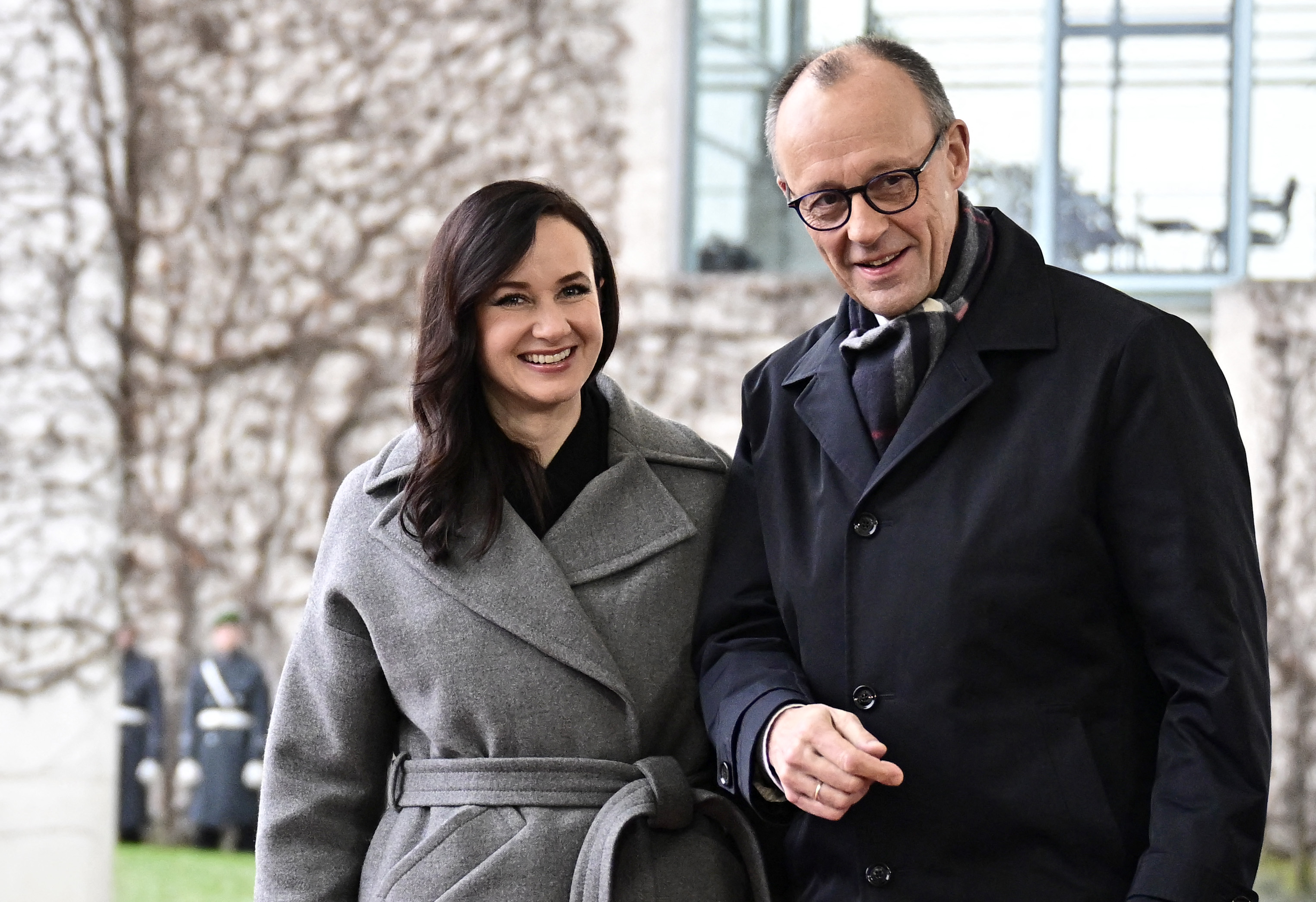
Inga Ruginiene with the German chancellor, Friedrich Merz
TOBIAS SCHWARZ / AFP VIA GETTY IMAGES
Ruginiene said bribing couples with “generous material incentives” to procreate did not work on a meaningful scale, as countries such as Hungary and Poland have discovered after throwing large sums of money at pro-natalist schemes.
Instead, she plans to concentrate on housing and other family-friendly social policies, at the same time as trying to shift cultural attitudes towards child-rearing, albeit without haranguing the childless.
“We see how societal values are changing, but policies that condemn young people have no positive effect,” she said. “Cultural factors can be influenced by creating more secure conditions for raising children, presenting positive examples of motherhood and fatherhood, educating the public and changing general attitudes … towards parenting.”
Ultimately, Ruginiene believes Lithuania will pull through. “We are not so pessimistic as to talk about a threat to the nation’s existence,” she said.
Bulgaria: brain drain and the grim reaper

The TV stars Andrey Arnaudov, left, and Ivan Hristov have launched a drive called Bulgaria Wants You
Eight hundred miles away to the south, Bulgaria is an equally dramatic but very different outlier. The country’s fertility rate is not only the highest in the EU, at 1.8 births per woman, but has actually bounced back robustly after a demographic crash in the 2000s.
Yet the population is plummeting, having fallen by roughly 80,000 a year over the past decade, and shrunk from 9 million to 6.5 million since the fall of the Berlin wall. The UN predicts it will drop to just above 5 million by the 2050s.
As in Lithuania, part of the story has been emigration, and particularly a brain drain of younger, better-educated and more highly skilled workers. Yet that accounts only for about a third of the total decline.
Bulgarians have the EU’s lowest life expectancy, at 75.9 years. In 2024 there were 100,000 deaths but only 53,000 births. A disproportionately large number of people die from preventable diseases and conditions linked to smoking, drinking, physical inactivity and unhealthy diets.
Milena Georgieva, professor of molecular biology at the Bulgarian Academy of Sciences, said the most significant failure was the absence of public health messaging.
“I think that the most important problem for Bulgarians is to understand that prevention for longer healthspan starts very early in life,” she said. “It doesn’t start the moment you are retired.”
Several years ago Georgieva and other leading scientists compiled a report for the health ministry on possible steps to curb the extraordinarily high rate of preventable premature deaths, but she said it had been wholly ignored by the government.
Adrian Nikolov, a researcher at the Institute for Market Economics think tank in Sofia, said it ought to be possible to stabilise Bulgaria’s population if only the state could get a grip on the death rate. “The question is what to do with mortality,” he said. “If we can improve the quality of healthcare dramatically, then we might also fix natural growth and then the population might even start increasing.”
Bulgaria has temporarily staunched the decline with immigration from Turkey, Ukraine, Russia, Syria and some of its Balkan neighbours.
Last autumn the labour ministry launched a scheme of incentives for highly qualified Bulgarian expats and other Europeans to move to the country, branded with the slogan “I choose Bulgaria”.
The celebrity television presenters Ivan Hristov and Andrey Arnaudov also launched a similar publicity drive called Bulgaria Wants You, trying to inspire the diaspora to come home and build a career.
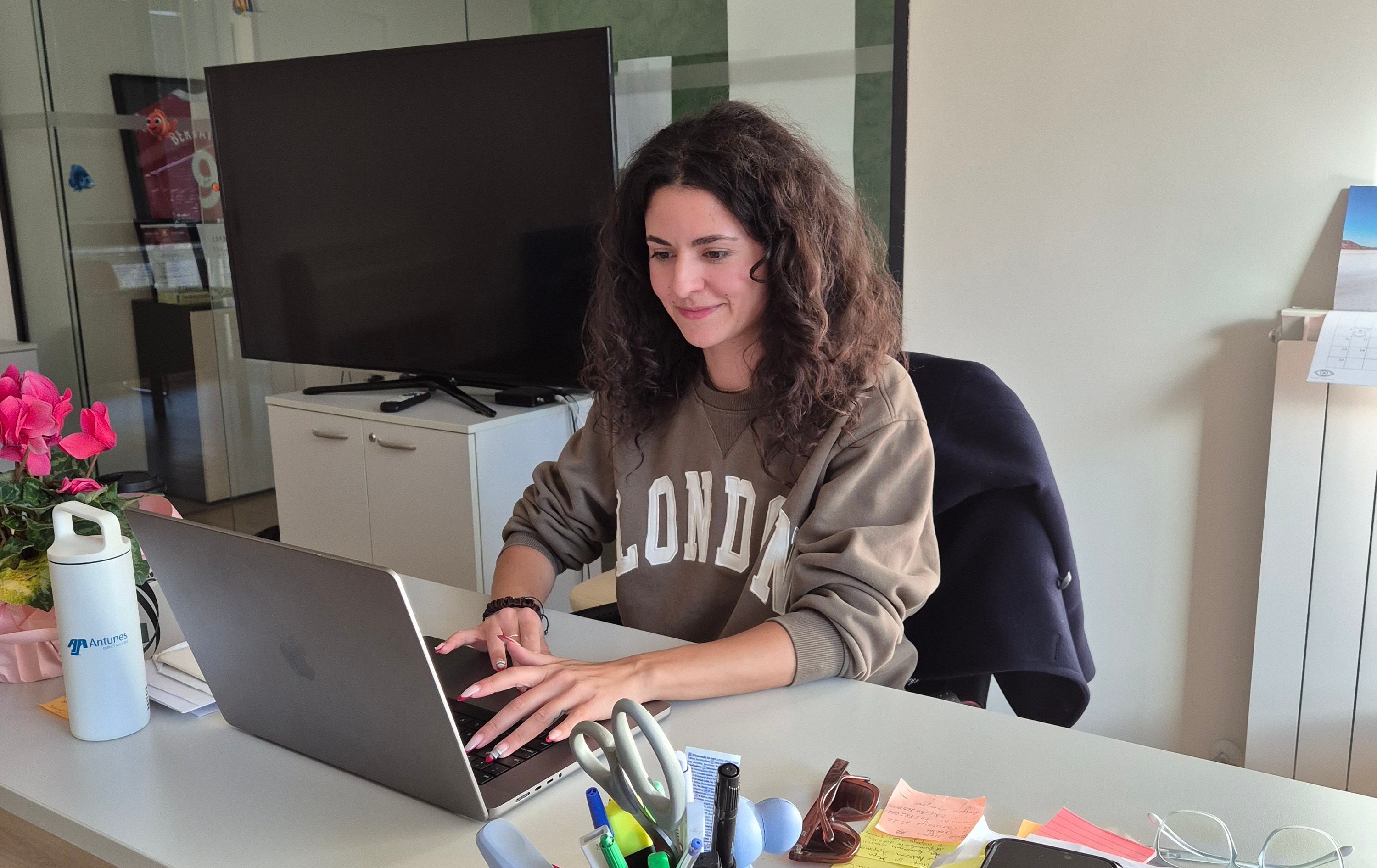
Kathrin Marinova is among the Bulgarians who have returned to their homeland
One Bulgarian who answered the call is Kathrin Marinova, who lived in the US for 11 years but moved back to her native country after attending a Bulgaria Wants You event in London. She now works for a film and advertising production firm in Sofia.
Marinova said her country had evolved for the better while she was away and she suspected more Bulgarians would follow in her wake. “Here people are just real and if you experience kindness, it’s genuine kindness. I can rely on people,” she said. “The lifestyle here is a little bit more laid back. We still get our stuff done but we still get to enjoy life.”